
Last updated October 31, 2026
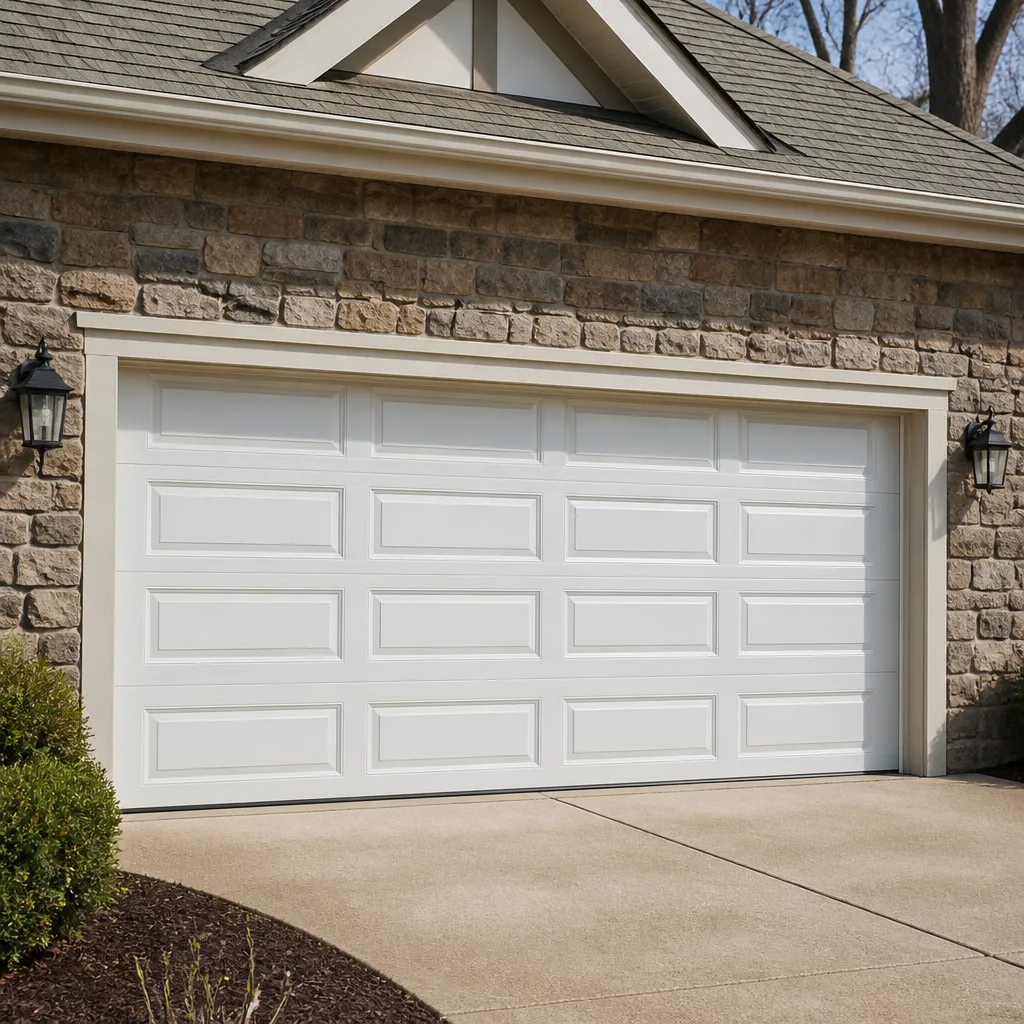 Raised-panel steel
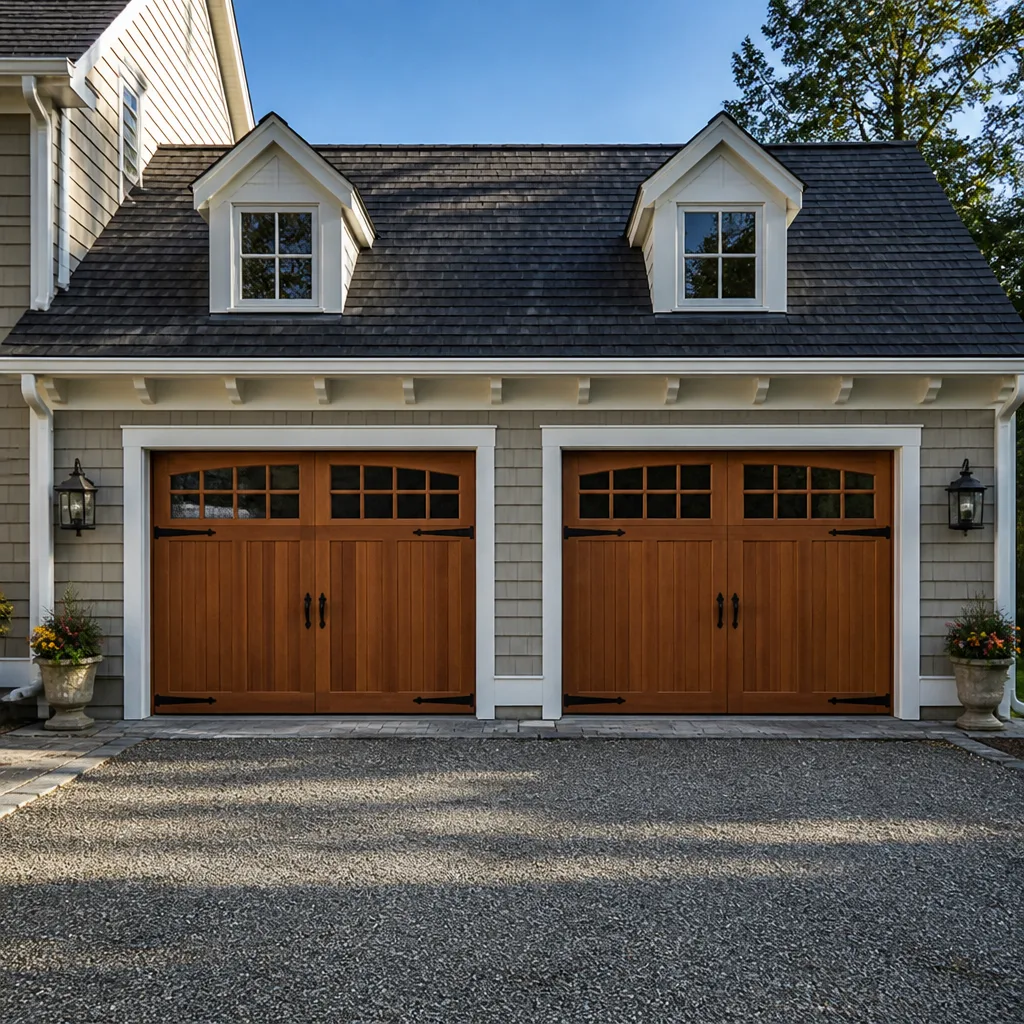 Carriage house
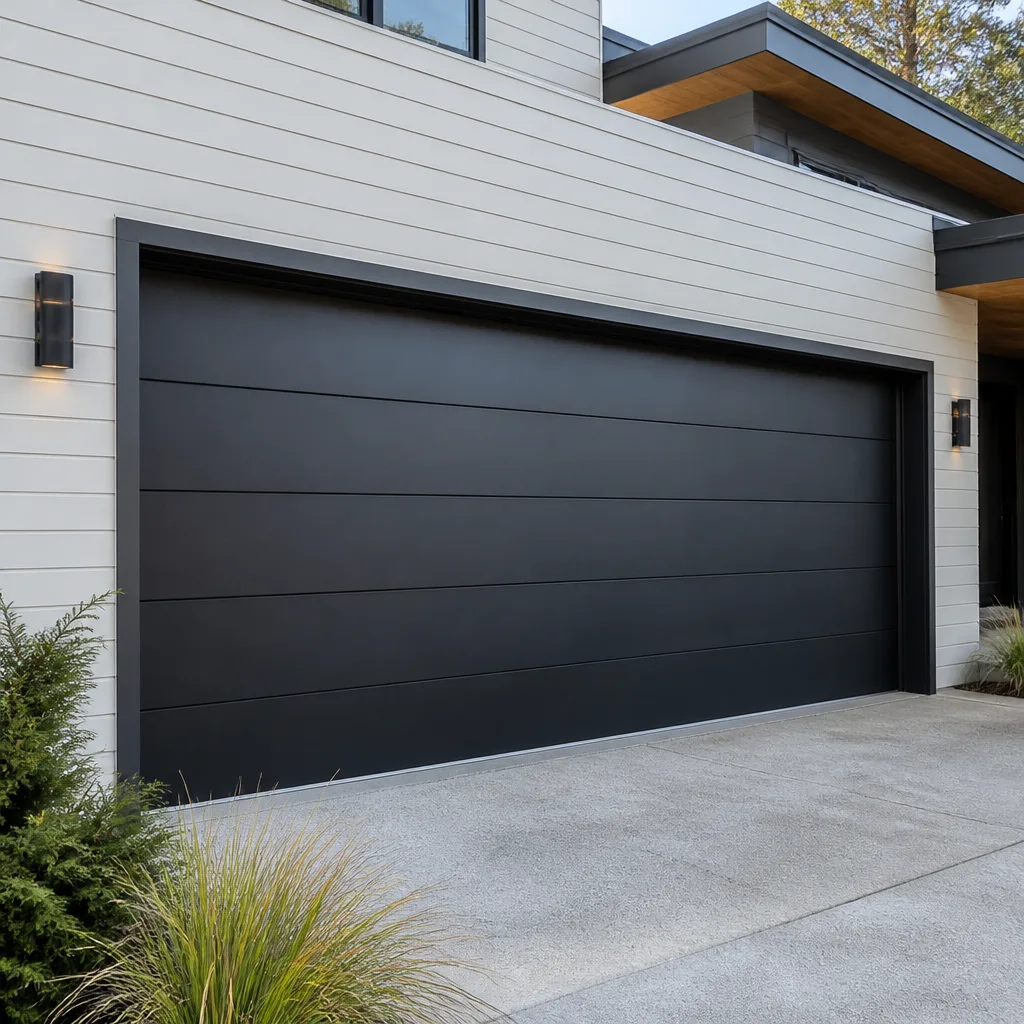 Modern flush
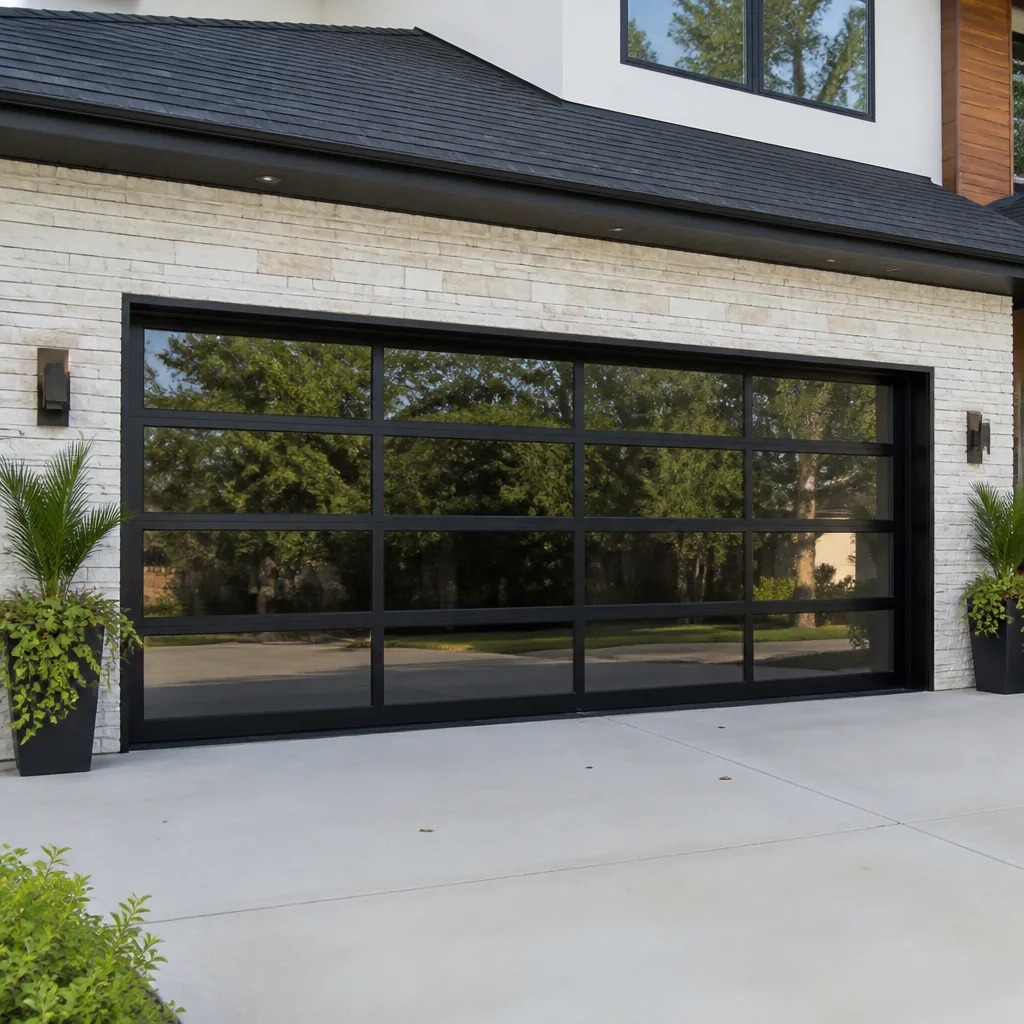 Full-view glass
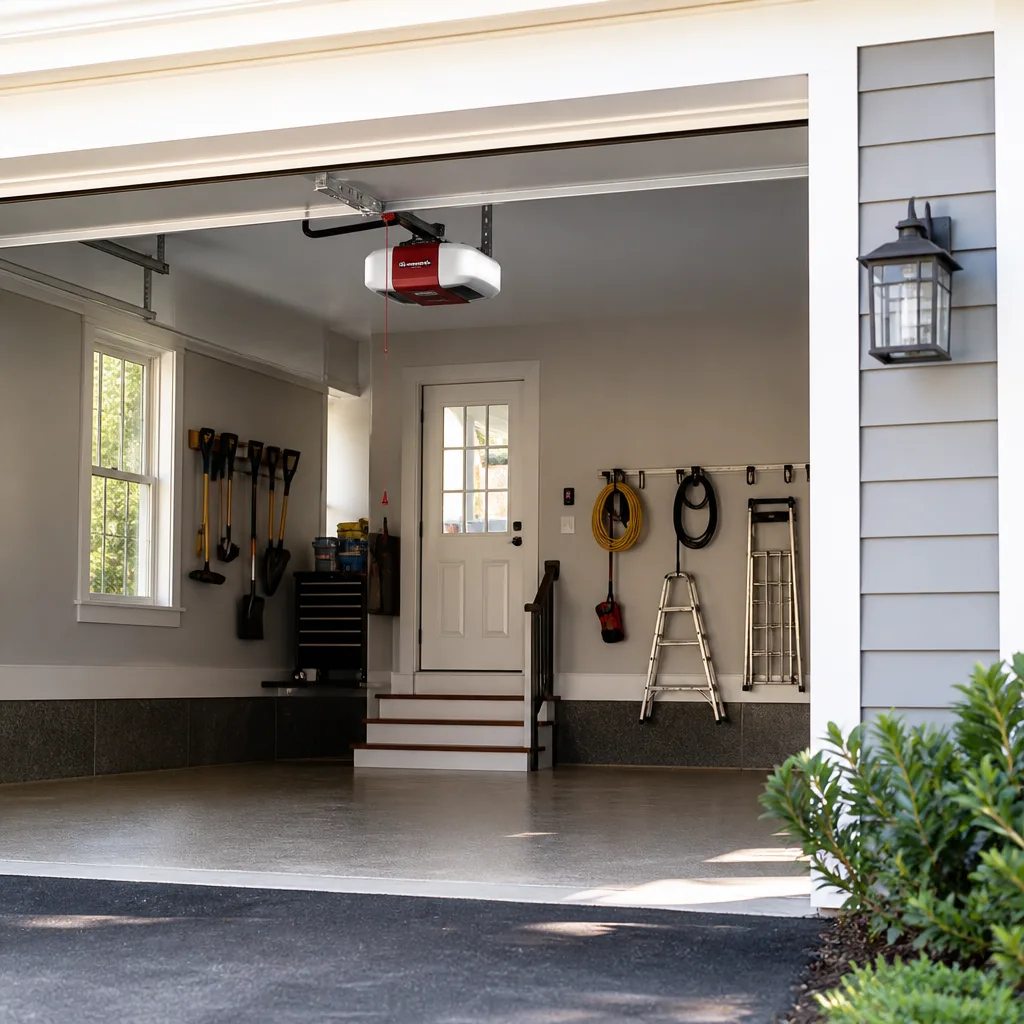 LiftMaster openers
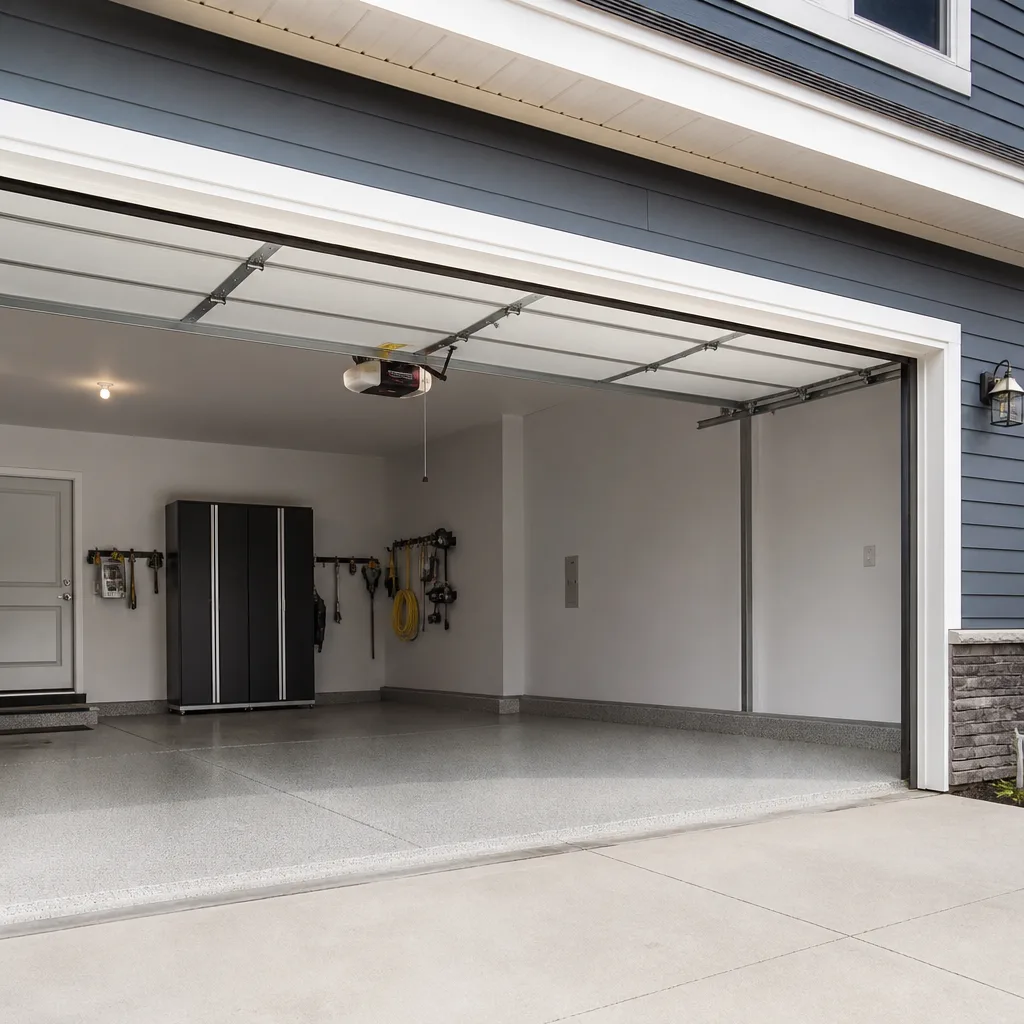 Chamberlain openers
Full 25-point door and opener safety check with every visit - springs, cables, rollers, tracks, and your LiftMaster or Chamberlain opener included
You get a price before we start. It does not change when the truck arrives.
Get your free estimateThe Complete Guide to Garage Door in Tampa
Tampa’s average humidity sits above 74% year-round, a figure that quietly destroys the springs, cables, and bottom seals most homeowners never inspect until something stops working. Add the salt air from Tampa Bay, the punishing afternoon sun, and wind-load codes written for hurricane country, and you have a garage door environment unlike almost anywhere else in the continental U.S. This guide explains what that means for your door, your opener, and your budget, and points you to more guides & resources for ongoing maintenance. We’ll walk through how Tampa’s climate shortens component life, what Hillsborough County wind requirements actually demand, and when a repair makes more sense than a replacement.
Styles & brands we work with
Quick Answer
A garage door in Tampa needs different care than the same door would in Orlando or Atlanta. The combination of corrosive salt air, extreme humidity, and hurricane wind-load requirements means springs fail faster, hardware rusts sooner, and certain panel materials warp under the heat cycle. Most Tampa garage doors last 8 to 12 years before replacement becomes the smarter financial choice, but springs and cables typically need replacement every 3 to 5 years in this climate. Working with a multi-brand specialist like Fieldstone Garage Door Repair matters because parts availability and correct diagnosis are the difference between a same-week fix and a month of frustration.
Table of Contents
- How Tampa’s Climate Changes Your Garage Door
- Wind-Load Requirements and Hurricane-Rated Doors
- The Tampa Heat Cycle and Panel Warping
- The Full Door Lifecycle: Component-by-Component Timelines
- Why Multi-Brand Service Matters in Tampa
- Repair vs. Replacement: The Tampa Math
- Garage Door Openers in Tampa: What Changes
- A Tampa-Specific Maintenance Schedule
- Common Mistakes to Avoid
- When to Call a Professional
- Frequently Asked Questions
- The Bottom Line
How Tampa’s Climate Changes Your Garage Door
The first thing to understand about owning a garage door in Tampa is that you are not fighting a typical wear-and-tear schedule. You are fighting an environment. Three forces work against your door every day.
Salt air is the one most people underestimate. If you live west of Dale Mabry Highway, within a few miles of the bay, airborne salt particles settle on your springs, hinges, and tracks. That salt attracts moisture, and moisture plus metal equals corrosion. We see doors in Westchase, South Tampa, and Harbour Island that need spring replacement a year or two earlier than identical doors in Brandon or Wesley Chapel, where the air is noticeably less saline. It is not dramatic rust you can see from across the street. It is pitting on the spring wire, weakening the steel until one morning it snaps.
Humidity is the second force. At 74% average relative humidity, the air in your garage is damp enough to accelerate rust on any exposed ferrous metal but not wet enough to wash the salt away. It also affects wooden doors more than steel. Wood absorbs ambient moisture, swells, and then contracts during the dry winter months. That repeated cycle causes warping, cracked panels, and doors that no longer sit square in the opening.
The third force is the daily temperature swing. Mornings in the 60s, afternoons in the 90s. That 30-degree daily swing makes metal expand and contract. Over years, the stress concentrates at connection points: the bolts holding your tracks, the screws on your hinges, the brackets on your opener rail. These loosen. A door that was quiet in January starts rattling by August.
Here is what this means practically, broken down by component:
- Torsion springs: Expect 3 to 5 years of life near the bay, maybe 5 to 7 inland. The average national lifespan is 7 to 9 years. Tampa cuts it short.
- Extension springs: Similar reduction. These are less common on newer installations but still present on many Tampa homes built in the 1990s and early 2000s.
- Rollers and hinges: Steel rollers will start squealing within 2 years without lubrication. Nylon rollers hold up better but still need attention.
- Bottom seal: The rubber strip at the base of the door dries and cracks in the heat. Once cracked, water, bugs, and humid air come in freely.
- Cables: Galvanized cables resist rust but fray under friction and humidity. A frayed cable is a warning sign that a snap is coming, and a snapped cable under tension is dangerous.
If you want the full breakdown of what Tampa repairs typically involve, our Garage Door Repair in Tampa page covers the most common failure points and how we address them.
Wind-Load Requirements and Hurricane-Rated Doors
Hillsborough County sits in a High Velocity Hurricane Zone, and that designation shows up in your garage door’s spec sheet whether you know it or not. Building code requires garage doors in this region to meet specific wind-load ratings, measured in pounds per square foot. For most of Tampa, that means a design pressure rating of at least 150 mph, and often higher for homes in flood zones or with certain exposure classifications.
What does “hurricane-rated” actually mean on a door? It means three things, and only one of them is the door itself.
- The door panels are reinforced. Manufacturers use thicker gauge steel or add internal struts that stiffen the door against positive and negative wind pressure. Without these, a strong storm can push the door inward or suck it outward, and once the garage opening is breached, roof lift pressure increases dramatically.
- The track system is upgraded. Standard tracks flex under high wind. Hurricane-rated tracks use heavier steel and more mounting points to anchor the system to the wall. If the track flexes, the rollers can pop out, and the door jams or collapses.
- The hardware is tested as a complete assembly. A door is only as strong as its weakest hinge, strut, or bolt. Products certified under Miami-Dade or Florida Building Code testing have been evaluated as an integrated system, not as individual parts.
You will also hear the term “impact-rated” or “impact-resistant,” especially in coastal neighborhoods like Davis Islands or Bayshore Beautiful. Impact-rated doors have additional reinforcement, often laminated glass or multi-layer steel construction, designed to resist flying debris. These doors cost more, but they may also qualify you for wind mitigation credits on your homeowners insurance, which in Florida can be substantial.
Here is the part that surprises most Tampa homeowners: a door installed in 2008 may not meet current code. Standards tightened significantly after Hurricane Charley in 2004 and again after Irma in 2017. If your door predates those changes, replacement with a code-compliant door is not just an upgrade. It is a structural decision that affects your home’s performance in the next storm. Our Garage Door Installation in Tampa page walks through what a code-compliant installation involves, from measuring to final anchoring.
The Tampa Heat Cycle and Panel Warping
Tampa does not get the extreme highs of Phoenix or Las Vegas, but what we get is a sustained daily cycle that punishes panels in a specific way. The sun hits your garage door directly for hours in the afternoon. The surface temperature of a dark-colored steel door can reach 140 to 160 degrees on a July afternoon, even when the air temperature is only 92. At night, it drops back into the 70s. That 70-degree surface temperature swing happens every single day from April through October.
Steel panels expand when they heat and contract when they cool. The expansion is most pronounced in the center of each panel, which bulges slightly outward during peak heat. Over years, this repeated flexing weakens the panel’s rigidity. Doors with a single layer of steel, or thin 24-gauge steel without insulation backing, are the most susceptible. You will see the result as a door that looks slightly bowed or panels that no longer sit flush against each other.
Fiberglass panels have their own Tampa problem. While they do not warp from heat the way thin steel does, they embrittle under UV exposure. Florida’s intense sunlight breaks down the resin in fiberglass over 6 to 10 years, leaving panels that crack under pressure instead of flexing.
The most Tampa-resistant materials, based on what we have seen hold up over a decade or more:
- Insulated steel, 25-gauge or thicker, with a polyurethane core: The insulation backing stiffens the panel, and the thicker steel resists bowing. White or light colors reduce surface heat absorption by 20 to 30 degrees versus dark colors.
- Aluminum with a full-frame reinforcement system: Aluminum does not rust, an advantage near the bay, but it must be reinforced for wind load. Most modern aluminum doors are.
- Vinyl composite doors: These resist both corrosion and UV damage. They are less common in Tampa but perform well in coastal exposures.
Wood doors are the most climate-sensitive option in Tampa and generally the worst choice for this environment without significant, ongoing maintenance. If you have a wooden door that was never refinished after installation, the warping you see is partly preventable. With proper sealing every two to three years, wood can survive, but it will never be the set-it-and-forget-it option that steel or aluminum is.
The Full Door Lifecycle: Component-by-Component Timelines
Every garage door is a system of moving parts, and in Tampa, those parts fail on different schedules. Knowing these timelines helps you budget, plan, and recognize when a “cheap fix” is actually a sign that the door is nearing the end of its useful life.
Year 0 to 3: The Settling Period
A new door in Tampa settles into its first few years with minimal issues. You may need to rebalance the door once as the springs settle, a normal adjustment different from a spring replacement. The opener’s belt or chain will stretch slightly and may need tension adjustment. Bottom seals should still be soft and functional. This is also the period when installation mistakes show up: a door that was installed out of square will start binding at the rollers, and an improperly tensioned cable will begin to fray.
Year 3 to 5: The Spring Window
In Tampa’s humid, salt-laden air, torsion springs typically reach the end of their rated cycle life between years 3 and 5. A standard 10,000-cycle spring, used four times a day, hits that limit in roughly 7 years under ideal conditions, but corrosion reduces the spring’s effective strength before the cycle count does. When a spring snaps, the door usually will not open, and attempting to force it with the opener is how people strip gears and damage panels. Spring replacement is a two-at-a-time job; when one breaks, the other is at the same stage of fatigue.
Year 5 to 8: Hardware Fatigue
Rollers wear out. Steel rollers with ball bearings start to wobble and grind. Hinges develop play. Cables show visible fraying at the drum. The opener’s drive mechanism, whether belt or chain, accumulates enough wear to become noisy. This is the period when most Tampa doors need their first substantive repair beyond the springs: a roller set replacement, a hinge replacement, or a cable replacement done proactively before it snaps.
Year 8 to 12: The Decision Point
By year 8, most doors in Tampa show enough cumulative wear that individual repairs start to stack up. The panels may have dents or heat-related bowing. The tracks may be misaligned. The opener may be on its last legs. At this stage, the math question becomes acute: a $400 repair on a 10-year-old door is often a bridge to a $1,800 replacement within 24 months. In our experience, when a customer calls us for the third repair in 12 months on a door this age, an honest discussion about replacement is warranted, and it is not a sales pitch. It is the cheaper path over the next three years.
Why Multi-Brand Service Matters in Tampa
Tampa’s garage door market is dominated by dealer networks tied to single manufacturers. A Clopay dealer installs Clopay doors and stocks Clopay parts. A Wayne Dalton dealer does the same. That model works fine when your door matches the dealer, but Tampa homes have doors from every manufacturer that has sold in Florida over the past 40 years, and parts availability is the bottleneck when something breaks.
Here is where a brand-agnostic approach changes the outcome. Fieldstone Garage Door Repair services equipment from LiftMaster, Chamberlain, Genie, Clopay, Amarr, Wayne Dalton, Craftsman, and Raynor. When a Wayne Dalton TorqueMaster spring fails, a single-brand dealer for another manufacturer may not stock the internal spring system those units use. That can mean a multi-day wait for parts while the door stays stuck. A multi-brand shop has either the part on hand or the supplier relationships to source it quickly, because we work across the full manufacturer ecosystem, not within one company’s catalog.
There is also the diagnostic side. A technician who works on Craftsman openers, LiftMaster openers, and Genie openers in the same week develops an instinct for what failure patterns look like across different drive systems. A technician who only sees one brand, or mostly installs one brand, is more likely to recommend replacing the opener than repairing it, because that is what the dealership model rewards. Brand-agnostic means recommendations are based on what the door actually needs, not what we are incentivized to push.
In a market like Tampa, where homes range from 1920s bungalows in Seminole Heights to 2018 builders’ grade in FishHawk Ranch, that breadth matters. The right fix the first time is not a slogan. It is what makes a repair visit work, especially when your garage door is your daily exit and entry point.
Repair vs. Replacement: The Tampa Math
The question every Tampa homeowner reaches eventually—DIY vs Professional Garage Door: The Tampa Homeowner’s Decision Guide tackles this directly—is whether to fix the door they have or replace it entirely. The answer is usually straightforward once you know the math.
First, the numbers. A typical spring replacement in Tampa runs $180 to $340 for a standard two-car door, including parts and labor. A full door replacement ranges from $1,200 for a basic single-layer steel door to $3,500 or more for an insulated, hurricane-rated, multi-layer door with upgraded hardware; see our Garage Door Cost Breakdown: The Tampa Homeowner’s Reference for 2026 for detailed pricing. At those price points, a $300 spring job on an otherwise healthy door is almost always the right call.
Here is a decision framework, in order of what matters most:
- Age of the door: Under 8 years, repair almost always makes sense unless the door is severely damaged. Over 12 years, replacement is usually smarter for anything beyond a spring or roller job.
- Structural condition of the panels: If the panels are bowed from heat, dented, or rusting through, you are repairing a compromised substrate. New springs on a warping door are a bridge to nowhere.
- Code compliance: If your door predates current Hillsborough County wind-load requirements and you are already facing a substantial repair, replacing with a code-compliant door may reduce your insurance exposure. That changes the financial calculation significantly.
- Opener condition: A functioning opener on a failing door can sometimes be retained, but if the opener is also aging, replacing both together often saves on labor by doing the work in one visit.
- Frequency of recent repairs: Two or more repairs in 18 months is the strongest signal that the door is in the downward spiral of its lifecycle. Each repair buys less time than the previous one.
If you are not sure where your door falls, this is exactly the kind of assessment a good technician should give you before quoting anything. The honest answer is sometimes “this repair will get you two more years,” and that is worth knowing, not hiding.
Garage Door Openers in Tampa: What Changes
The opener is the most overlooked part of the garage door system, and in Tampa, it has its own climate-specific failure modes. We treat the opener as part of the integrated system, which is uncommon among door-only companies. Your opener is part of the system. We treat it that way.
Humidity hits electronic components harder than people expect. The circuit boards inside your opener are coated at the factory, but years of exposure to damp garage air degrades that coating. Capacitors, in particular, are sensitive to heat and humidity, and capacitor failure is one of the most common reasons an opener stops responding during Tampa’s summer months. A capacitor that costs $15 to replace can strand your door closed if diagnosed as “needs a new opener” by someone who did not open the unit.
The drive mechanism also wears differently here. Chain-driven openers, still common on older Tampa homes, stretch under heat and require tension adjustment. Belt-driven openers, now the standard on most new installations, hold up better but the rubber belt itself eventually cracks from heat exposure, especially in garages that face west and absorb afternoon sun directly.
LiftMaster and Chamberlain systems dominate Tampa’s installed base, though we work on Genie, Craftsman, and Raynor units regularly as well. Older Genie screw-drive units, popular in the 1990s, have their own signature failure: the carriage wears out, and replacement parts become harder to source as models age out. A multi-brand opener repair specialist can tell you within minutes whether your unit is worth repairing or whether the parts availability makes replacement the honest answer.
For a deeper look at opener-specific issues, including remote programming, sensor alignment, and motor replacement, our Garage Door Opener Repair in Tampa page covers the full scope of what we diagnose and fix.
A Tampa-Specific Maintenance Schedule
Most garage door maintenance advice online is generic: lubricate twice a year, inspect the balance, tighten bolts. That advice is fine, but Tampa’s conditions demand a slightly different rhythm. Here is the schedule we recommend for Hillsborough County homeowners.
Every 3 months
- Inspect the bottom seal. Look for cracks, flattening, or gaps where daylight comes through. Replace annually if you notice deterioration, more often if your garage faces south or west.
- Check cables for fraying. Run a gloved hand along the cable while the door is closed. Any broken strands mean replacement is due. Do not attempt this with the door open; the cables are under tension only when the door is closed.
- Listen. Open and close the door and listen for grinding, squealing, or rattling. New noises are early warnings of roller, hinge, or opener issues.
Every 6 months
- Lubricate moving parts. Use a lithium-based grease on hinges and a garage-door-specific lubricant on rollers, springs, and the opener rail. In Tampa’s humidity, light lubrication every 6 months prevents rust from getting a foothold.
- Check the auto-reverse function. Place a 2×4 flat on the ground under the door and close it. The door should reverse immediately upon contact. This is a safety system, and testing it is non-negotiable.
- Inspect the tracks for alignment. Look at the gap between the rollers and the track. It should be uniform. A door that has settled or shifted will show uneven wear patterns.
Every 12 months
- Rebalance test. Disconnect the opener and open the door manually. It should lift smoothly, stay put at half-open, and close without dropping. If not, the springs need adjustment or replacement. Spring work is a professional job; the tension involved can cause serious injury.
- Inspect all hardware. Tighten bolts on the tracks, hinges, and opener brackets. The daily heat cycle in Tampa loosens these over 12 months, and loose hardware is the root cause of many “mysterious” rattles and binding issues.
- Check weatherstripping on the sides and top. Just like the bottom seal, side seals degrade in Tampa’s UV and humidity. Replace anything cracked or brittle to keep humid air and insects out.
This is the maintenance schedule we recommend to every Tampa homeowner after an installation or major repair. The 30 minutes per quarter it takes is the cheapest insurance you can buy for a system that costs thousands to replace. Our Fieldstone Garage Door Repair home page has more on our approach to keeping doors running long-term.
Common Mistakes to Avoid
- Lubricating with WD-40. WD-40 is a solvent, not a lubricant. It displaces the grease on your rollers and hinges, leaving them less protected than before. Use a silicone or lithium-based lubricant specifically made for garage doors.
- Attempting a DIY spring replacement. Torsion springs are under several hundred pounds of tension. A spring that releases unexpectedly can break bones or worse. This is not a YouTube-tutorial job, and we say that from experience with the injuries these springs cause.
- Ignoring a frayed cable. A frayed cable is a countdown, not a cosmetic issue. When it snaps, the door can come down unevenly and violently, damaging panels, tracks, and anything in its path.
- Forcing a door that won’t open. When a spring snaps or a cable jams, the door becomes extremely heavy. Hitting the opener button repeatedly or yanking on the manual release can strip opener gears and throw the door off its tracks. Stop, assess, and call for repair.
- Choosing a door based on looks alone. In Tampa, the prettiest wood door can be a maintenance nightmare, and the cheapest steel door can bow within three summers. Material choice must account for humidity, salt exposure, and wind load, not just curb appeal.
- Skipping the annual balance test. A door that is out of balance forces the opener to work harder on every cycle, shortening its life by years. The balance test takes three minutes and reveals spring fatigue before it becomes a snapped-spring emergency.
- Assuming builder-grade doors meet current code. Many Tampa homes built in the 1990s and 2000s have doors that would not pass today’s wind-load requirements. If you are replacing anyway, install a code-compliant door. Your insurance may reward you for it.
When to Call a Professional
A snapped spring, a frayed cable, a door off its tracks, an opener that will not respond, a panel that has shattered or buckled: these are not DIY situations, and our Garage Door Emergency Preparedness Guide for Tampa Homes explains why immediate professional help matters. The forces involved in a garage door system, particularly the springs and cables, can cause serious injury when handled incorrectly. If the door will not open or close smoothly, or if you hear a loud bang from the garage followed by the door refusing to move, stop using it and make the call. Same for any door that has come partially off its tracks, which usually means rollers and hinges are damaged and the door is now an unstable weight. Fieldstone Garage Door Repair offers free estimates in Tampa. Call (855) 360-5925.
Frequently Asked Questions
Expect 8 to 12 years for a typical steel door in Hillsborough County, with coastal-area doors trending toward the lower end due to salt-air corrosion. Springs and cables have shorter lives: 3 to 5 years near the bay, 5 to 7 years inland. A well-maintained insulated steel door can push past 15 years, but that requires consistent lubrication, seal replacement, and timely hardware repairs.
A standard two-car garage door replacement in Tampa typically runs $1,200 to $2,500 for non-insulated or lightly insulated steel, with hurricane-rated and impact-resistant doors running $2,500 to $4,500 installed. The price is quoted and agreed before any work starts, so there are no surprises after the fact. Call (855) 360-5925 for an exact quote on your door.
Yes, current building code in Hillsborough County requires garage doors to meet specific wind-load ratings, typically 150 mph or higher depending on exposure. Impact-rated doors, which resist flying debris, are required in some coastal areas and recommended wherever you want maximum insurance benefits. If your door predates current code and you are replacing it, install a compliant door.
For common failures like snapped torsion springs, broken cables, and misaligned tracks, same-day repair is often possible if the parts are on hand. We stock parts for the most common brands in Tampa: LiftMaster, Chamberlain, Genie, Clopay, Amarr, Wayne Dalton, Craftsman, and Raynor. Less common parts may require a 24 to 48 hour order window. Call (855) 360-5925 and we will tell you what to expect for your specific door.
The daily heat cycle in Tampa, with surface temperatures on dark doors reaching 140 to 160 degrees, causes steel panels to expand and contract repeatedly. Over years, thin-gauge or non-insulated steel loses rigidity and bows. Dark colors accelerate the problem by absorbing more heat. Light-colored, insulated steel panels are the most warp-resistant choice for Tampa’s climate.
Every 6 months, using a lithium-based grease on hinges and a garage-door-specific silicone lubricant on rollers, springs, and the opener rail. Tampa’s humidity means moving parts rust and bind faster than they would in drier climates. If you live near the bay, consider lubricating every 4 months instead.
The Bottom Line
A garage door in Tampa is a working system under constant environmental stress. Humidity corrodes springs, salt air accelerates rust near the bay, the heat cycle warps thin panels, and wind-load codes mean your next replacement needs to be stronger than your last one. The door lifecycle in this climate runs 8 to 12 years for the door itself and 3 to 5 years for springs, with maintenance making the difference at every stage. When something fails, working with a multi-brand specialist, someone who is brand-agnostic on parts and repairs and treats the opener as part of the integrated system, saves time and money on the back end. From a stuck spring to a full replacement, the right fix the first time is what keeps a Tampa garage working.
Written by the team at Fieldstone Garage Door Repair, serving Tampa since 2013.
See the difference
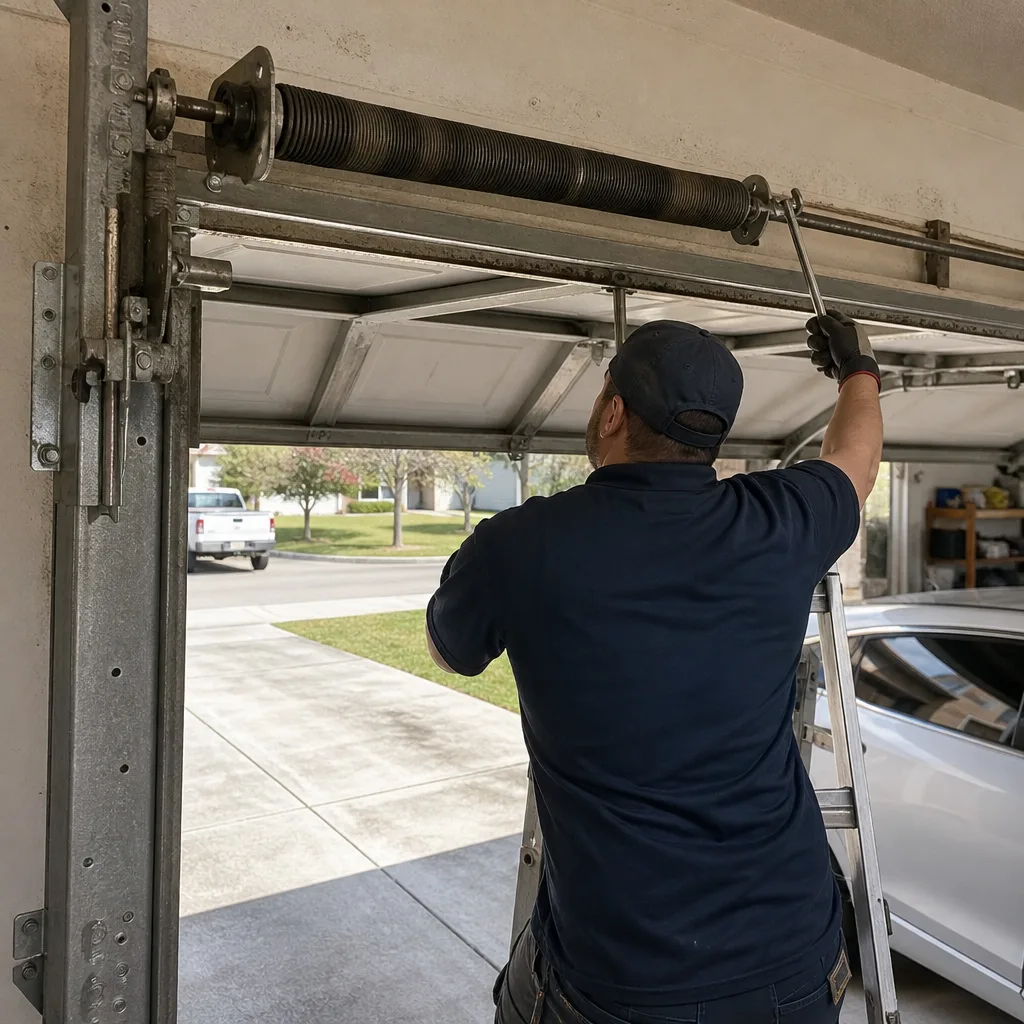 Before
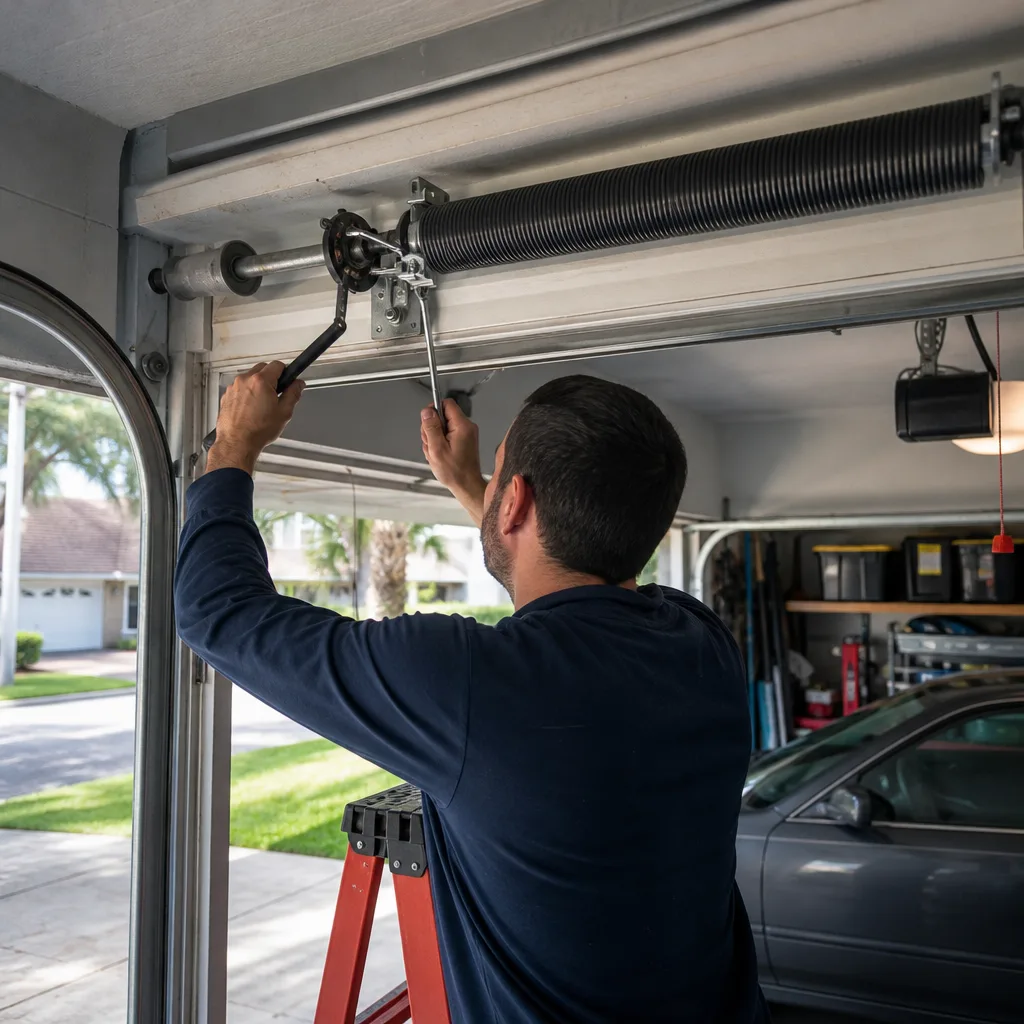 After
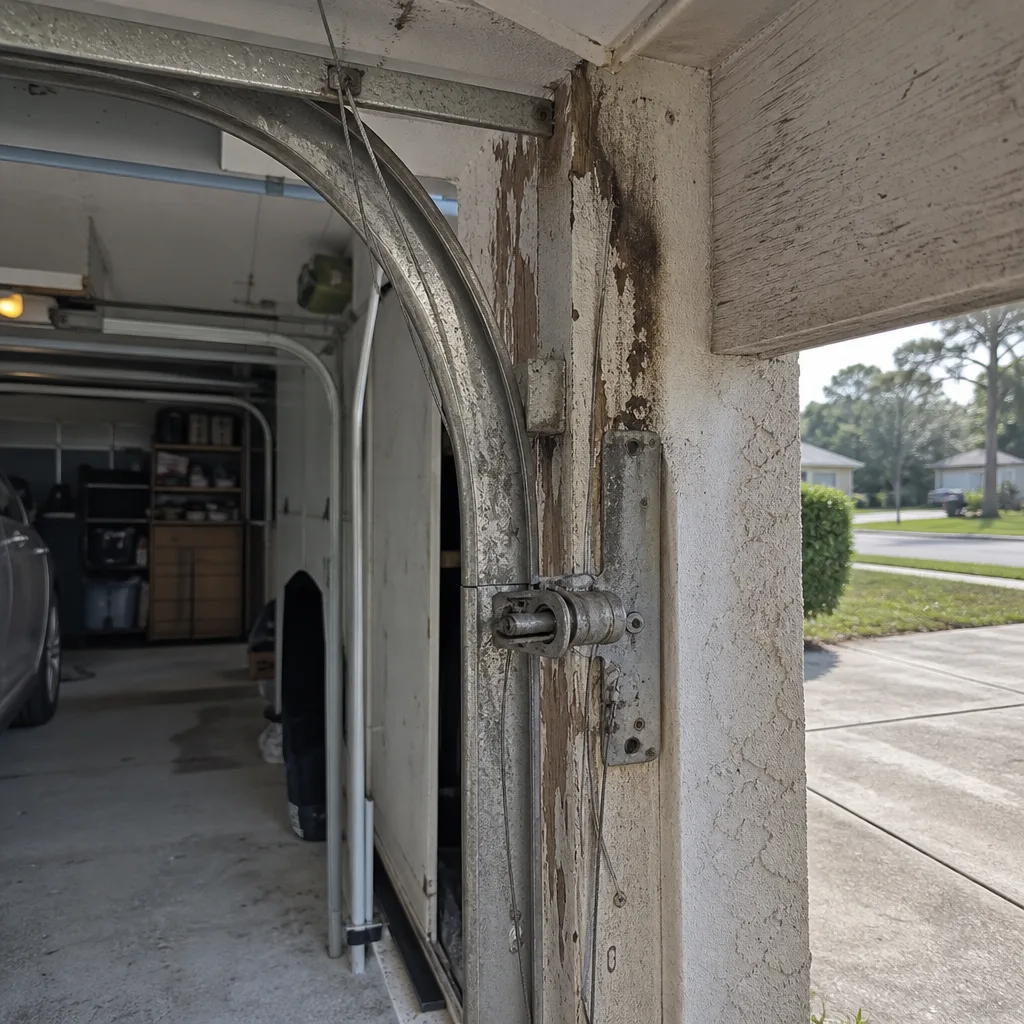 Before
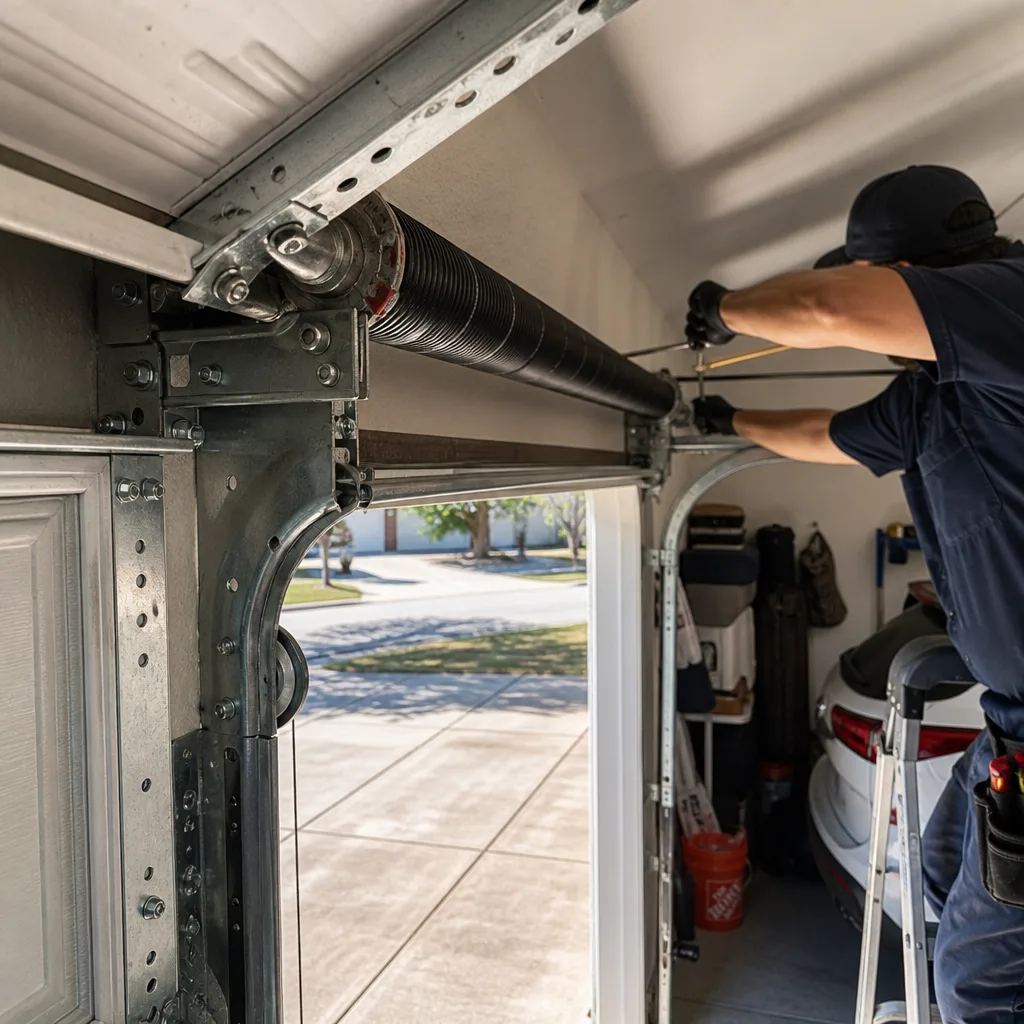 After
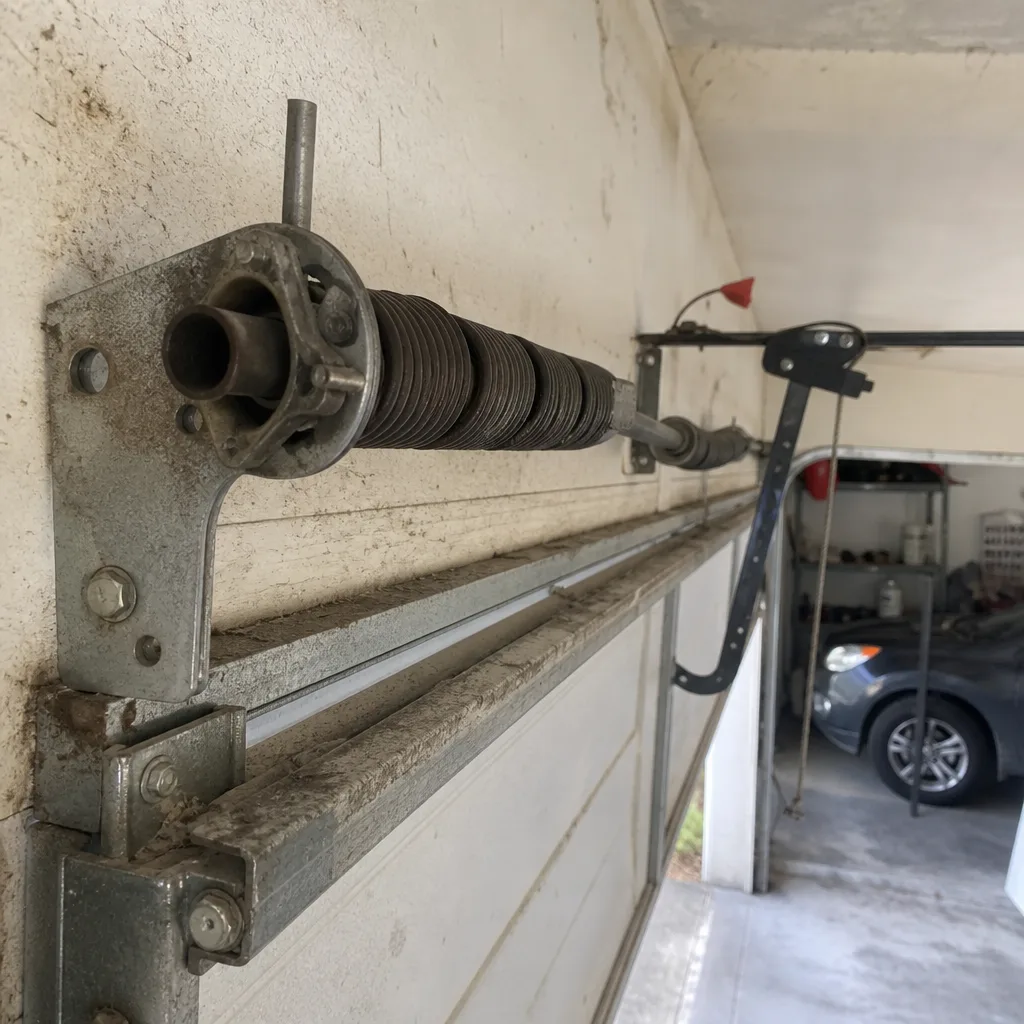 Before
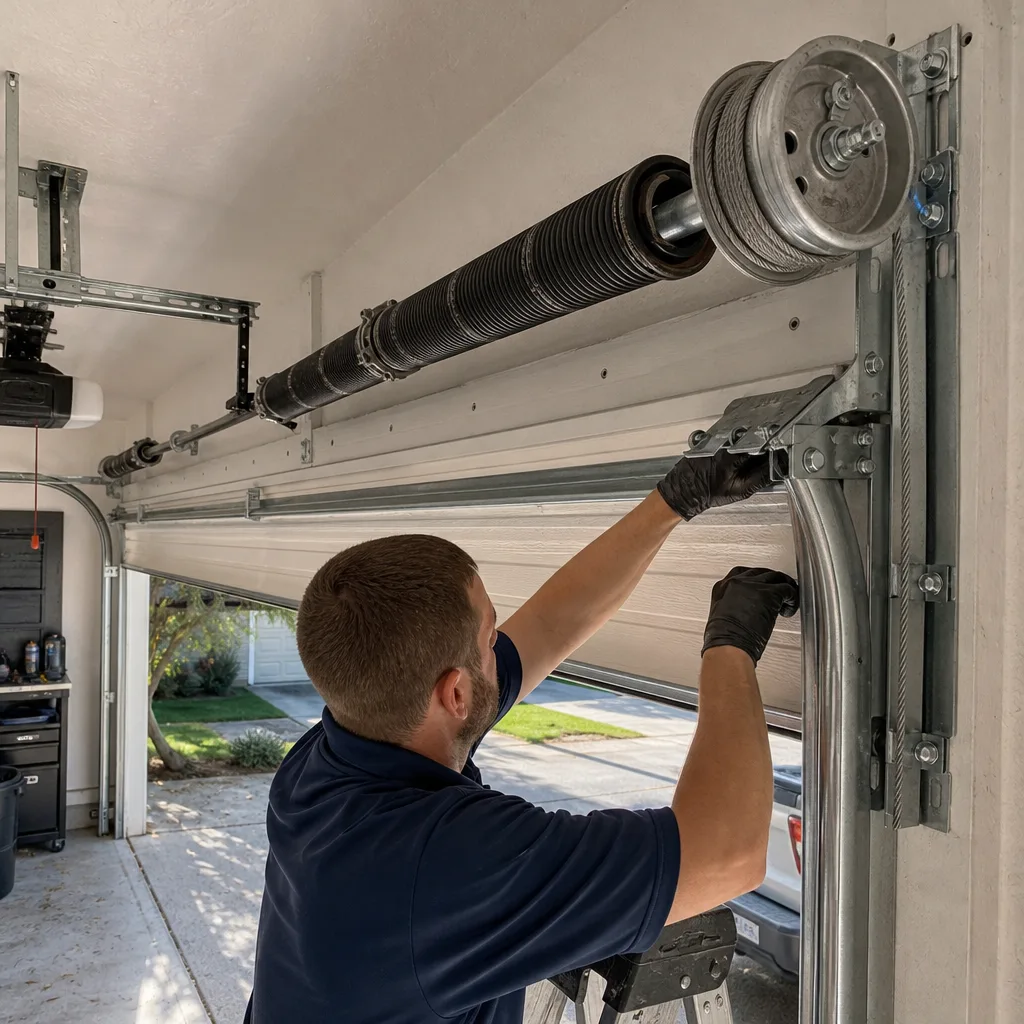 After