
Last updated October 31, 2026
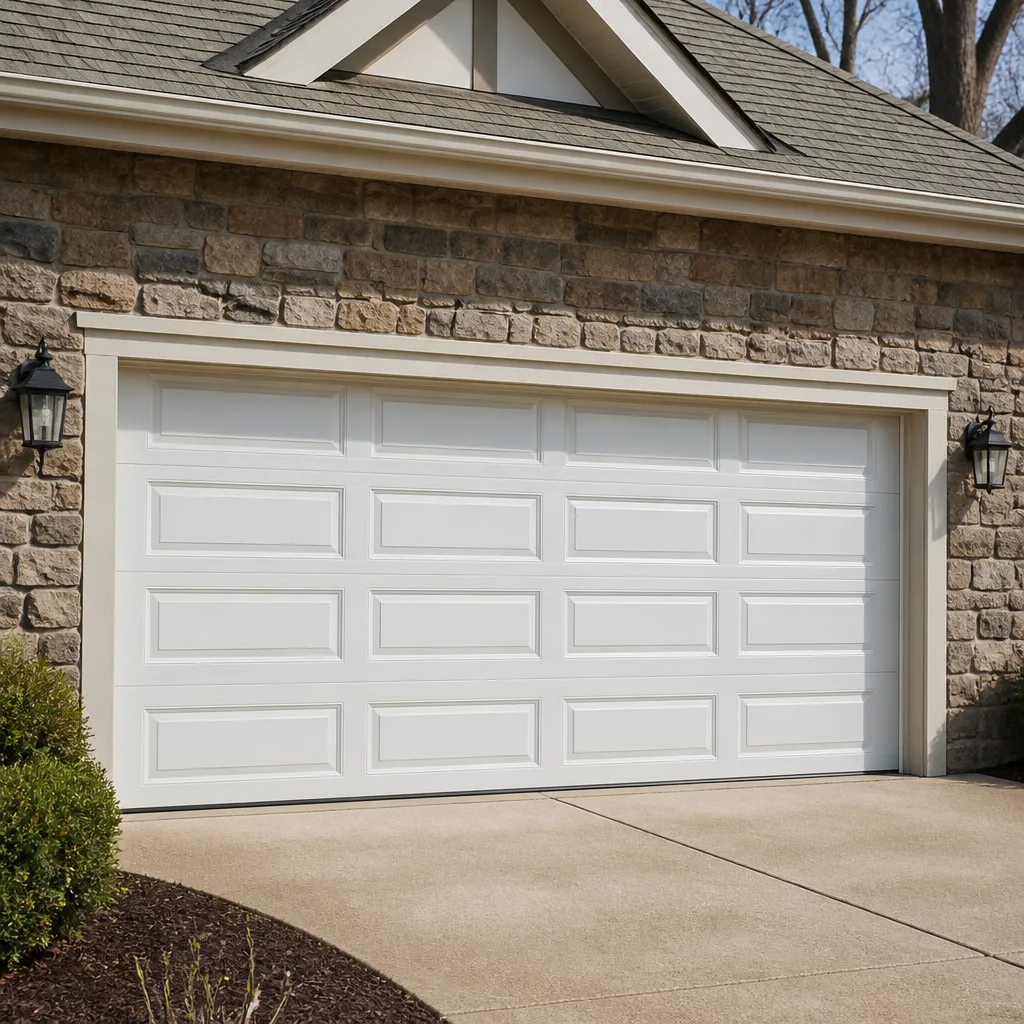 Raised-panel steel
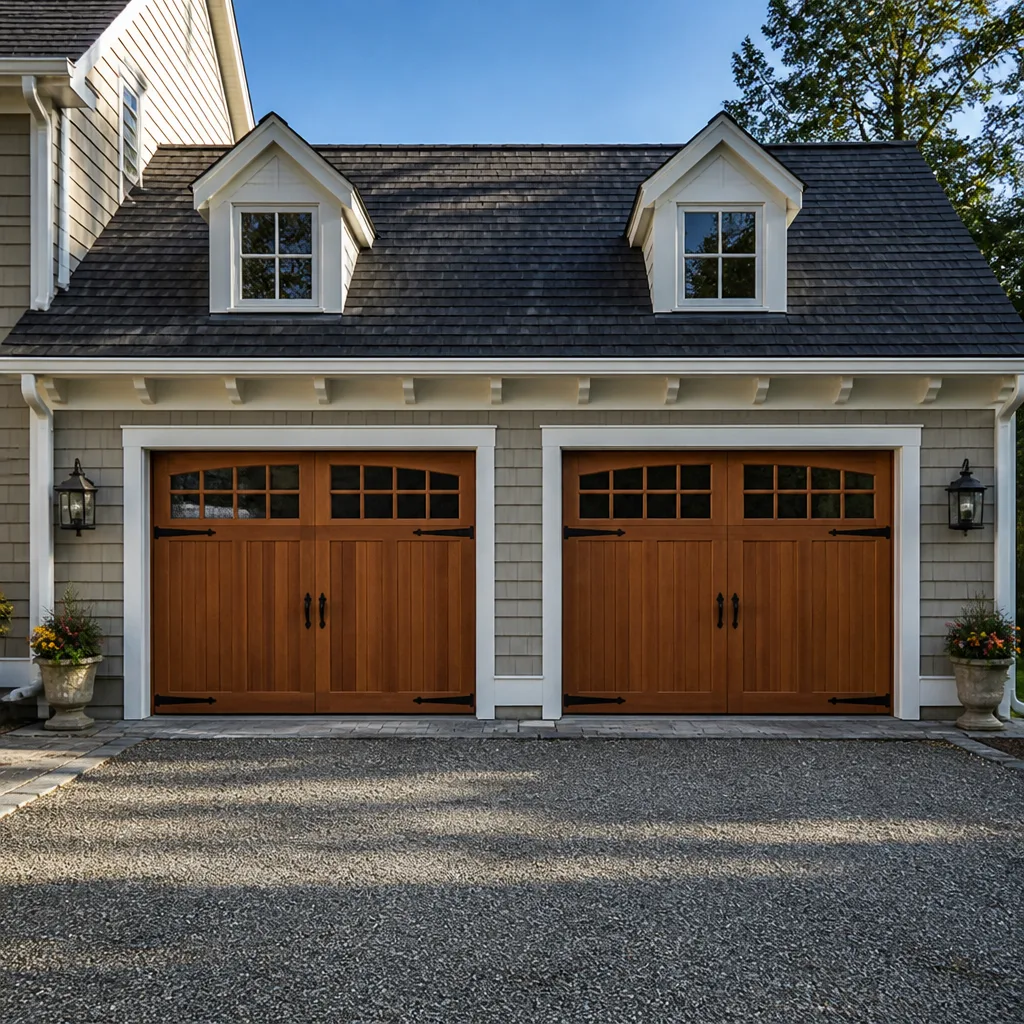 Carriage house
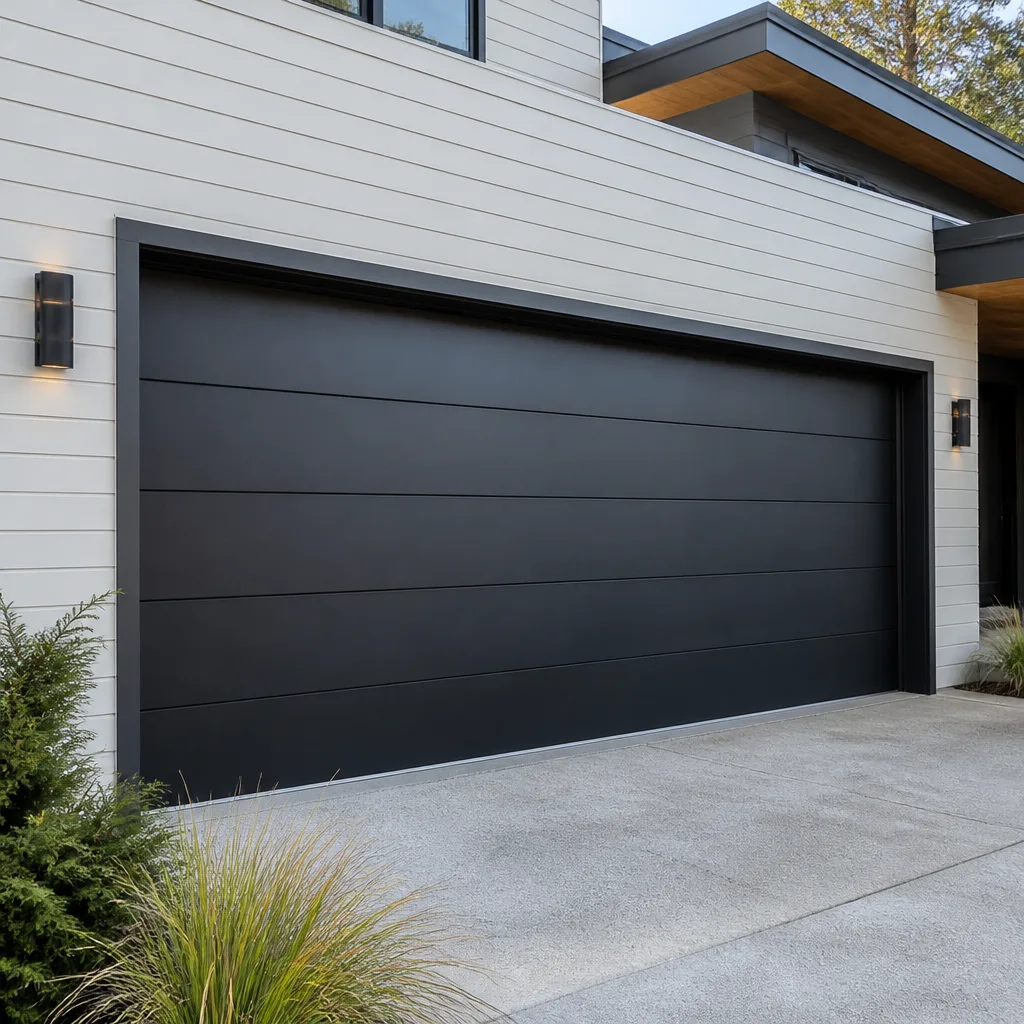 Modern flush
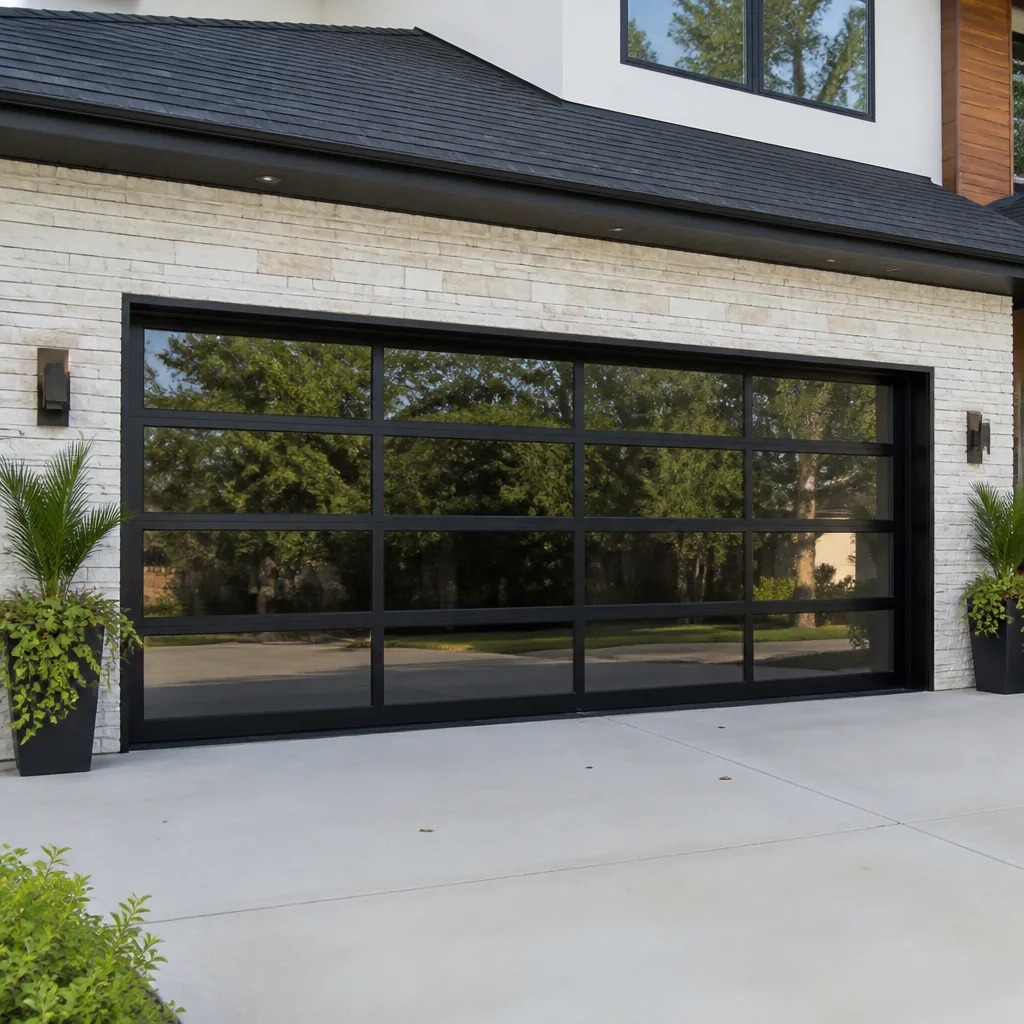 Full-view glass
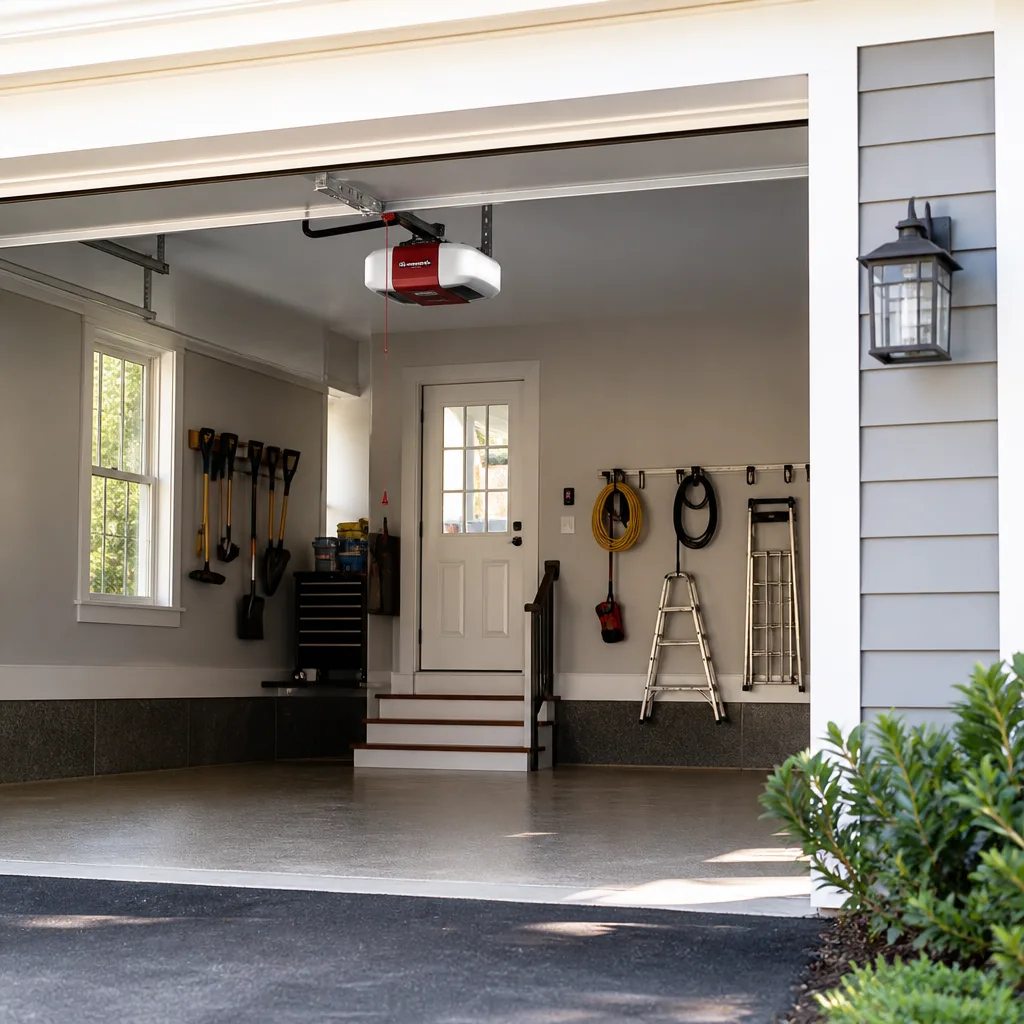 LiftMaster openers
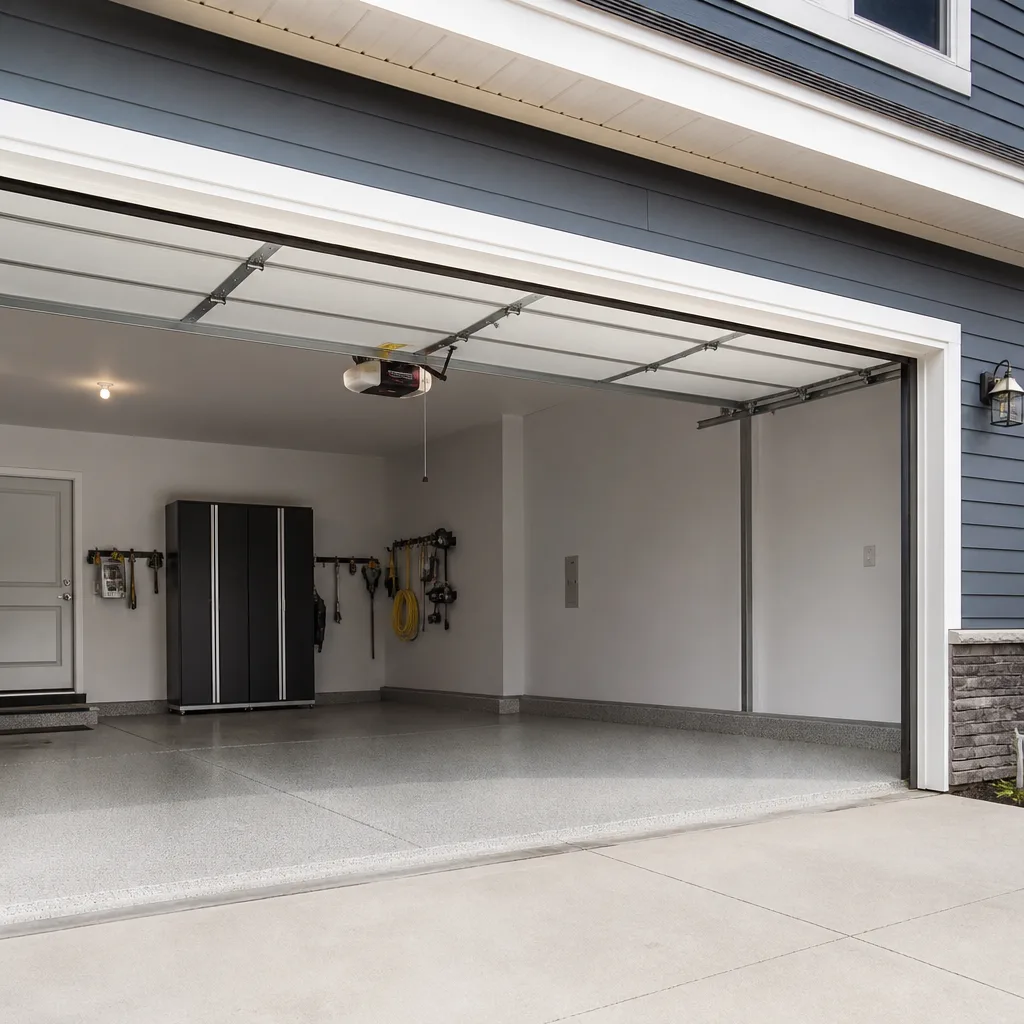 Chamberlain openers
Full 25-point door and opener safety check with every visit - springs, cables, rollers, tracks, and your LiftMaster or Chamberlain opener included
You get a price before we start. It does not change when the truck arrives.
Get your free estimateDIY vs Professional Garage Door: The Tampa Homeowner’s Decision Guide
Torsion spring replacement sends roughly 2,000 Americans to emergency rooms every year. Not because those homeowners were clumsy or careless, but because the stored kinetic energy in a wound spring is entirely indifferent to how competent the person holding the winding bar happens to be. This guide exists to give Tampa homeowners something most Google results don’t: an honest breakdown of which garage door tasks you can safely handle with a socket set and a free Saturday, and which ones carry consequences severe enough, in cost and in physical risk, that calling a pro isn’t the cautious choice. It’s the only rational one.
Styles & brands we work with
Quick Answer
For Tampa homeowners, the DIY-versus-professional garage door question breaks down by task, not by how handy you are. Lubrication, weatherstripping, and sensor cleaning are genuinely safe DIY jobs that save you a service call. Anything involving torsion springs, lift cables, full door removal, or opener electronics crosses into professional territory because the failure mode is a hospital visit, a code violation, or a voided warranty. The realistic answer: do the maintenance yourself, pay for the repair.
Table of Contents
- What’s Actually DIY-Safe on a Garage Door in Tampa
- The Three Jobs You Never Touch: Springs, Cables, and Full Door Removal
- Florida Wind-Load Code: The Liability You Didn’t Know You Had
- Warranty Reality: What DIY Actually Voids on Amarr, Wayne Dalton, and Craftsman Doors
- The Parts and Tools Problem: What Homeowners Can’t Actually Source
- When DIY Math Breaks Down: The Cost of a Botched Fix
- The Tampa Climate Factor: Humidity, Salt Air, and What It Does to Your Door
- Common Mistakes to Avoid
- When to Call a Professional
- Frequently Asked Questions
- The Bottom Line
What’s Actually DIY-Safe on a Garage Door in Tampa
The list of garage door tasks a homeowner can genuinely handle without meaningful risk is shorter than most YouTube tutorials suggest. That doesn’t mean it’s empty. It means the safe zone is maintenance, not repair. Here’s what we tell Tampa homeowners they can absolutely do themselves, with no special tools beyond a can of lubricant, a rag, and a screwdriver: clean and align the photo-eye sensors, lubricate the rollers and hinges with a silicone spray, replace the bottom weatherstripping seal, tighten loose hinge bolts, and replace the batteries in the opener remote and keypad. Each of these tasks addresses wear without ever putting you in the path of stored mechanical energy or a load-bearing component.
One Tampa-specific note: in our climate, lubrication is a recurring chore, not a once-a-year thing. The humidity combines with the fine grit that blows off the bay and works its way into roller bearings and hinge pins. We see doors in South Tampa and Westchase that run noticeably quieter after twenty minutes of proper lubrication, and it’s something you can safely do quarterly. The Garage Door Repair in Tampa calls we get for noise and rough operation are often solvable at home first, simply by addressing what the humidity does to unlubricated metal-on-metal contact.
The Three Jobs You Never Touch: Springs, Cables, and Full Door Removal
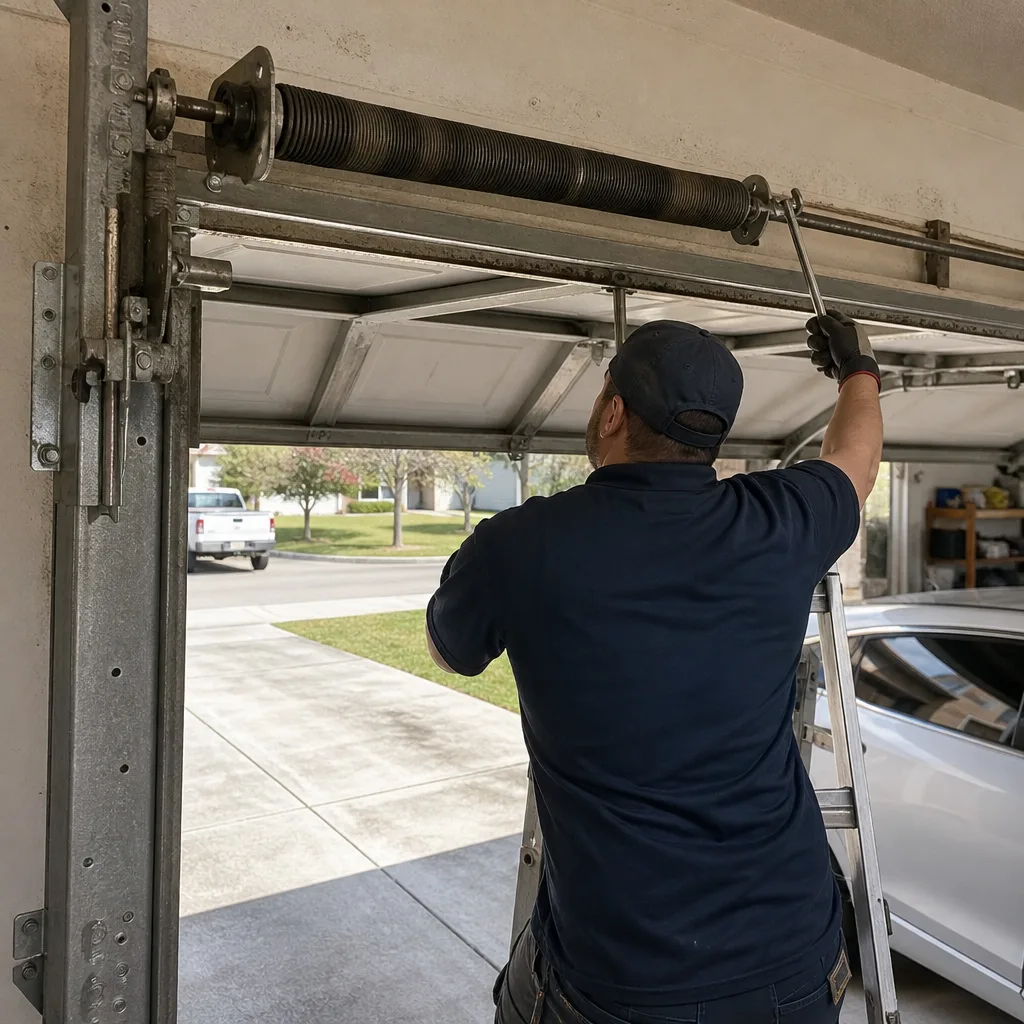
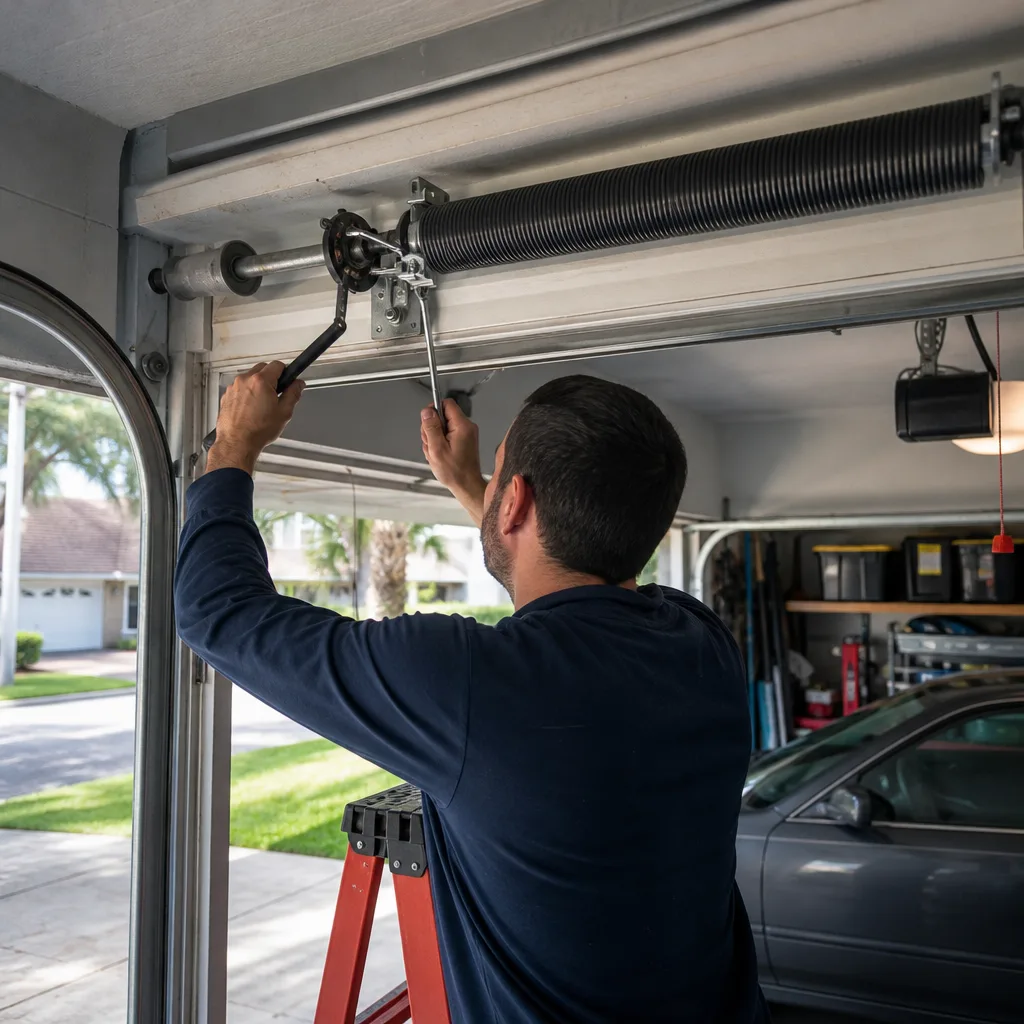
Now the line. There are three garage door components where the consequence of a mistake isn’t a misaligned door, it’s a catastrophic release of energy that sends metal parts through the air with enough force to fracture bone. Torsion springs are the obvious one, the 2,000-ER-visits-a-year one. A torsion spring on a standard two-car door in Tampa holds roughly 50 to 70 foot-pounds of torque when fully wound. When that spring fails during an amateur replacement, the winding bar becomes a projectile traveling faster than you can react. Extension springs on older Tampa homes are somewhat less dangerous, but they fail by stretching and snapping, and an unsecured spring can still take out a hand or an eye. The safety cable requirement on extension springs in Florida is a code response to exactly that failure.
Lift cables are the second no-touch item, and this is the one that surprises people. The cable itself looks benign, a braided steel line running up the side of the door. But the cable is under constant tension from the spring system, holding several hundred pounds of door weight. When a cable snaps or is removed incorrectly, the door drops. Every year, doors dropped by amateur cable work damage vehicles, close on occupants, or injure the person standing underneath. The third is full door removal. A single garage door panel weighs between 60 and 90 pounds, and a full door assembly is heavy enough that the safe removal process requires a second person, winding the springs down in the correct sequence, and bracing the remaining sections. None of this is a one-person Saturday project.
This is where the Fieldstone standard on garage door repair in Tampa applies: we work on the tension components and load-bearing hardware the way the manufacturer specifies, because the failure mode of getting it wrong is permanent. If you’re considering touching any of these three, the right fix the first time means calling someone whose job it is to be on the other end of that spring.
Florida Wind-Load Code: The Liability You Didn’t Know You Had
Florida building code treats garage doors differently than most other states, and the difference matters if you’re considering a DIY installation. Since Hurricane Andrew in 1992 rewrote the state’s approach to wind resistance, every newly installed garage door in Hillsborough County must meet specific wind-load ratings tied to your home’s wind zone, as covered in our Garage Door Permits, Codes & Inspections in FL: What You Need to Know guide. The code is strict enough that a non-compliant door is not just a code violation, it’s a documented, inspectable condition that can affect your insurance. Wind-load rated doors can add hundreds of dollars to the cost of a Tampa installation, but unpermitted work that fails an inspection is a liability you carry personally, not the handyman who charged you cash and disappeared.
The practical implication for the DIY-versus-pro decision: a professional installation includes the wind-load documentation, the engineering for your specific zone, and the permitting that a homeowner doing the same job either skips or learns about the hard way during a claim or a sale. A garage door installation in Tampa done under permit isn’t a formality. It’s the document trail that protects you when the claim adjuster asks whether the door was installed to code. The companies that pull permits and stand behind the engineering are the ones that carry the liability, and that’s the point: you want the liability carried by someone other than you.
Warranty Reality: What DIY Actually Voids on Amarr, Wayne Dalton, and Craftsman Doors
Here’s a number most homeowners don’t factor into their savings math: the value of the warranty they’re about to void. Most major garage door and opener manufacturers, including Amarr, Wayne Dalton, and Craftsman, write their warranty terms to exclude damage or defects resulting from installation or repair performed by an unauthorized person. The language varies, but the practical effect is consistent. If you install an Amarr door yourself and a panel delaminates in year three, the manufacturer’s warranty claim dies the moment you explain who installed it. On a door that costs a few thousand dollars, that’s hundreds of dollars of exposure you accepted to save a few hundred on labor.
The same applies to openers. A Chamberlain or LiftMaster opener that has been opened up and worked on by a homeowner, with no record of professional installation or repair, is a warranty denial waiting to happen when the logic board fails and you call the manufacturer. We work on those systems and most others, which means our installs and repairs carry the documentation that keeps your warranty intact. A Raynor door we install in Tampa has the installation record the manufacturer expects to see. A Raynor door you install yourself has your word, and manufacturers don’t honor words.
The Parts and Tools Problem: What Homeowners Can’t Actually Source
The second hidden cost of DIY garage door work is the parts and tools you can’t actually buy, at least not the right ones. A homeowner can walk into a big-box store and buy a universal garage door opener, a can of grease, and a universal remote. What a homeowner cannot typically buy is a torsion spring matched to the specific weight, height, and cable drum configuration of a Clopay or Wayne Dalton door, because those springs are cut to order through trade distribution channels. The same applies to lift cables with the correct length and end fittings, tapered drums for specific door weights, and the winding bars rated for the torque you’re about to apply. What a homeowner does instead is buy a generic spring from an online marketplace, guess the size, and install a component that is either under-torqued and fails early or over-torqued and tries to launch the winding bar through the drywall.
Tool access creates the same problem. A proper torsion spring replacement uses two winding bars of a specific diameter, not a pair of screwdrivers or a length of rebar. A cable replacement needs a C-clamp to lock the door in place and a second person to verify tension release. A full door replacement needs a heavy-duty level, proper shims, and the ability to set the track spacing correctly for a balanced door. None of this is exotic, but none of it is in a standard homeowner’s toolbox either, and the cost of buying or renting the right tools narrows the DIY savings until it’s barely there. This is the hidden line item, the trade-account problem that makes the “I’ll just do it myself” math look better on paper than it plays out in the driveway.
When DIY Math Breaks Down: The Cost of a Botched Fix
The most expensive garage door repair we see in Tampa is the one that started as a DIY. The pattern is consistent. A homeowner replaces a torsion spring with an incorrectly sized one. The spring works for a few weeks, then fails or torques the door unevenly, which bends the top panel and throws the cables off the drums. The homeowner now needs a spring replacement, a panel replacement, and a cable reset. The professional quote on the original spring job might have been a few hundred dollars. The repair for the aftermath is regularly double or triple that, because the door has been running out of balance long enough to damage the sections and the hardware. The savings evaporated, and then some.
The math breaks down fastest in three specific scenarios, and they’re worth spelling out. First, any job that involves a tension component: a wrong fix costs more to repair than the right fix, every time. Second, any job where the failure mode is a falling door rather than a stuck door: a DIY cable mistake that allows the door to slam warps panels and strips hinges, and now you’re paying for a cable job plus a door section plus a track alignment. Third, any job where the value of the warranty you’re voiding exceeds the labor you’re saving. On a quality door, that’s almost always true. The straight answer to “will I save money doing it myself” is: on maintenance, yes. On repair, usually not. On anything involving a spring or cable, the downside risk is an order of magnitude larger than the upside.
The Tampa Climate Factor: Humidity, Salt Air, and What It Does to Your Door
Tampa’s climate punishes garage doors in ways homeowners from drier states don’t anticipate, and it affects the DIY decision directly. The combination of high humidity and salt air, especially in coastal neighborhoods like Bayshore, Palma Ceia, and anything west of Dale Mabry, accelerates corrosion on every exposed metal component. Rollers seize. Hinge pins rust. Tracks develop surface rust that makes the door run rough. The bottom seal gets brittle from the heat, then cracks, and the gap lets in the moisture that accelerates everything else. None of this is catastrophic on its own, but it means the maintenance interval in Tampa is shorter than the national average, and the consequences of neglect show up faster.
The climate also affects the components themselves. Torsion springs are rated for a number of cycles, a cycle being one full open-and-close, and most residential doors in Tampa cycle more often than in cooler climates because the garage gets used as a workshop, a storage space, and a secondary entry. The heat and humidity shorten the lifespan of opener logic boards and capacitor components, which is why we see more garage door opener repair in Tampa calls in August and September than any other time of year. The takeaway for the DIY-versus-pro question: your door in Tampa is a higher-wear asset than the same door in a dry climate, which means the stakes of getting a repair right are higher, and the margin for a shade-tree fix that sort of works is smaller.
Common Mistakes to Avoid
- Lubricating the wrong parts. Homeowners routinely grease the track, which is wrong. Grease on the track collects grit and makes the door run worse. The parts that need lubrication are the rollers, hinges, and springs, and they need a silicone or lithium spray, not WD-40.
- Adjusting the spring tension without a winding bar. The most common amateur injury in Tampa garage repair comes from using a screwdriver or a pipe in place of a proper winding bar, which slips out of the torsion spring cone. The spring unwinds instantly, and the bar becomes a projectile.
- Ignoring the door balance after a part change. A door that isn’t balanced after a roller or cable replacement puts uneven load on the spring, the opener, and the panels. That imbalance is what bends sections and strips gears over the following months.
- Skipping the wind-load rating on a new door. A Tampa homeowner who buys a non-rated door online and installs it on a house in a wind zone has created an insurance and resale problem, not a money saver. The door may work fine in normal conditions and become the reason an insurance claim gets denied after the next named storm.
- Disconnecting the opener’s emergency release while the door is open. This sounds harmless, but if the spring is broken or the door is unbalanced, pulling the red handle releases the full weight of the door. It comes down uncontrolled, and whatever is underneath loses that fight.
- Assuming the opener is the problem when the door is heavy. A door that is heavy to lift manually is a spring problem, not an opener problem. Replacing the opener without fixing the spring means the new opener is lifting weight it wasn’t designed for, and its lifespan drops accordingly.
When to Call a Professional
Call a professional when the problem involves a spring, a cable, a bent track, a full door replacement, or an opener that still misbehaves after you’ve checked the batteries and the sensors. If the door is heavy to lift by hand, the spring is failing. If the door makes a sound like a firecracker and then won’t open, the spring has already failed. If the door comes down faster than it should, a cable or the balance is failing. These are not diagnostic puzzles to solve at home. They are time to call someone who has done this exact repair on LiftMaster and Clopay and Wayne Dalton and every other common brand in Tampa. Fieldstone Garage Door Repair offers free estimates in Tampa: call (855) 360-5925. We’ll tell you what’s wrong and what it costs, and you’re never committed to anything by that call.
Frequently Asked Questions
No. Torsion spring replacement is the most dangerous home repair in the garage door category, sending roughly 2,000 Americans to emergency rooms each year, and it requires tools and a technique most homeowners don’t have. The stored torque in a wound spring has enough force to break bones or worse, and the risk is uncompensated by any realistic savings. Call a professional for spring work, every time, in Tampa or anywhere else.
You can safely lubricate the rollers, hinges, and springs with a silicone spray, replace the bottom weatherstripping, clean and realign the photo-eye sensors, tighten hinge bolts, and replace opener remote batteries. These are genuinely DIY-safe tasks that reduce noise, prevent corrosion, and keep the door running smoothly between professional service visits. Call (855) 360-5925 if you want a maintenance walkthrough specific to your door.
In most cases, yes. Manufacturers like Amarr, Wayne Dalton, and Craftsman write their warranty terms to exclude units installed or modified by unauthorized persons, and a self-install puts the burden of proof on you. A professionally installed door carries the documentation that keeps the warranty enforceable. The warranty value you lose typically exceeds the labor cost you save.
A typical Tampa garage door repair ranges from $150 to $600 depending on the component, with spring replacement usually falling between $250 and $450 including parts and labor, cable replacement between $150 and $300, and opener repairs varying widely by the part. For a deeper dive into pricing, see our Garage Door Cost Breakdown: The Tampa Homeowner’s Reference for 2026. Full door replacements run from $1,200 to $4,000 or more depending on size, material, and wind-load rating. Every job gets quoted and agreed before any work starts, so the number you approve is the number you pay. Call (855) 360-5925 for an exact quote.
We carry the common spring sizes, cables, rollers, and opener components for most LiftMaster, Chamberlain, Genie, Clopay, Amarr, Wayne Dalton, Craftsman, and Raynor systems on our trucks, which means a large share of Tampa repair calls are completed on the first visit. The exact timeline depends on what’s wrong and which parts your specific door needs, but we can usually tell you over the phone what the realistic window is.
No. The price you’re quoted before work begins is the price you pay, because we diagnose first and quote from what we actually find. If a repair reveals a secondary problem, we stop and explain it before proceeding. You’ll never be surprised by an invoice that’s bigger than the number you approved.
Yes, in most cases a full garage door replacement in Tampa requires a permit, and the door must meet Florida wind-load code for your specific wind zone. Our Garage Door Emergency Preparedness Guide for Tampa Homes also covers how code-compliant installations protect your home during severe weather. A professional installation includes the engineering, the permitting, and the documentation. An unpermitted DIY install creates a liability you carry personally and an insurance exposure that can surface during a claim or a sale.
The Bottom Line
The honest answer to the DIY-versus-professional question is that most Tampa homeowners should split the difference. For more guides & resources on maintaining, repairing, and replacing garage doors in Tampa, explore our blog. Do the maintenance yourself: lubricate, clean sensors, replace weatherstripping, change batteries. Pay for the repair and installation work: springs, cables, openers, full doors. The line between the two categories is drawn by what happens when you get it wrong, and on the wrong side of that line, getting it wrong is not a learning experience. It’s a hospital trip, a voided warranty, or a code violation that follows the house. The decision isn’t really about how handy you are. It’s about which risks are worth taking, and on a garage door in Tampa, the list of risks worth taking is short.
Written by the team at Fieldstone Garage Door Repair, serving Tampa since 2013.
See the difference
 Before
 After
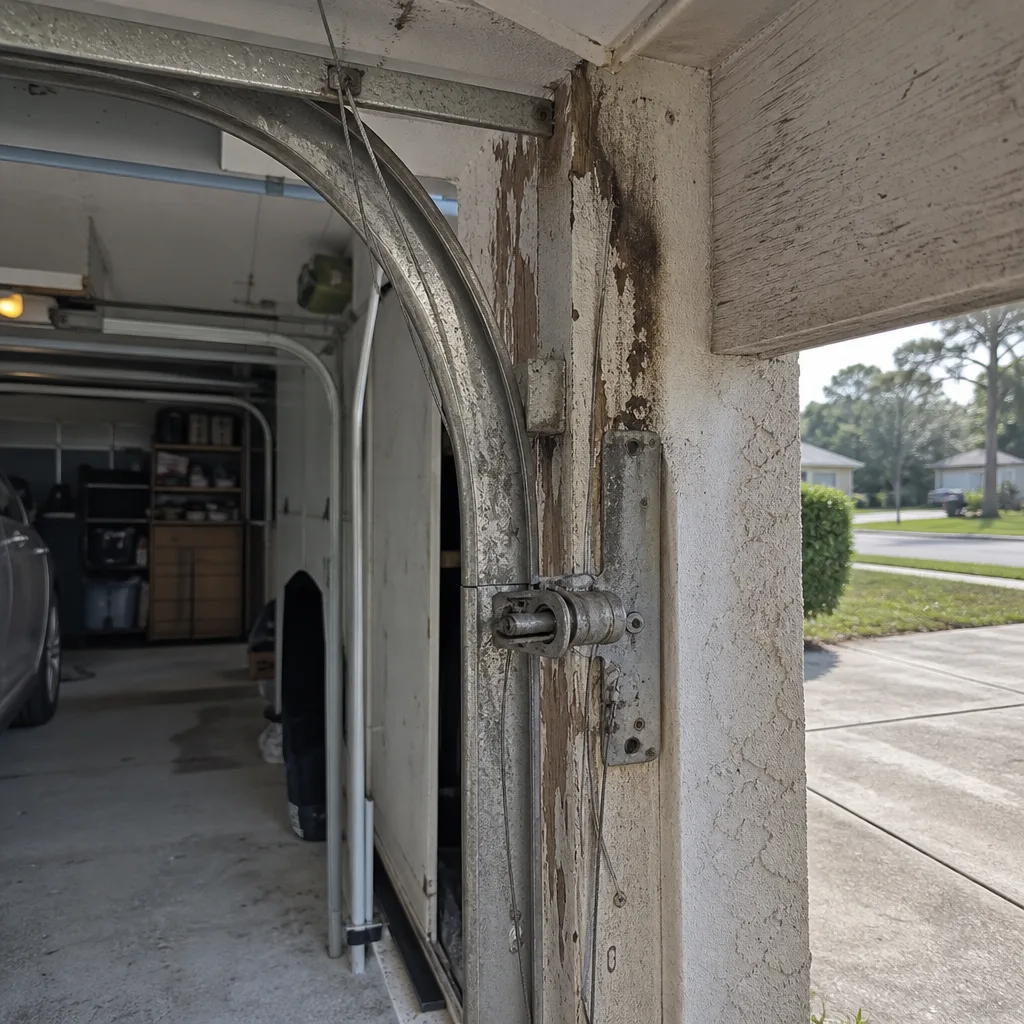 Before
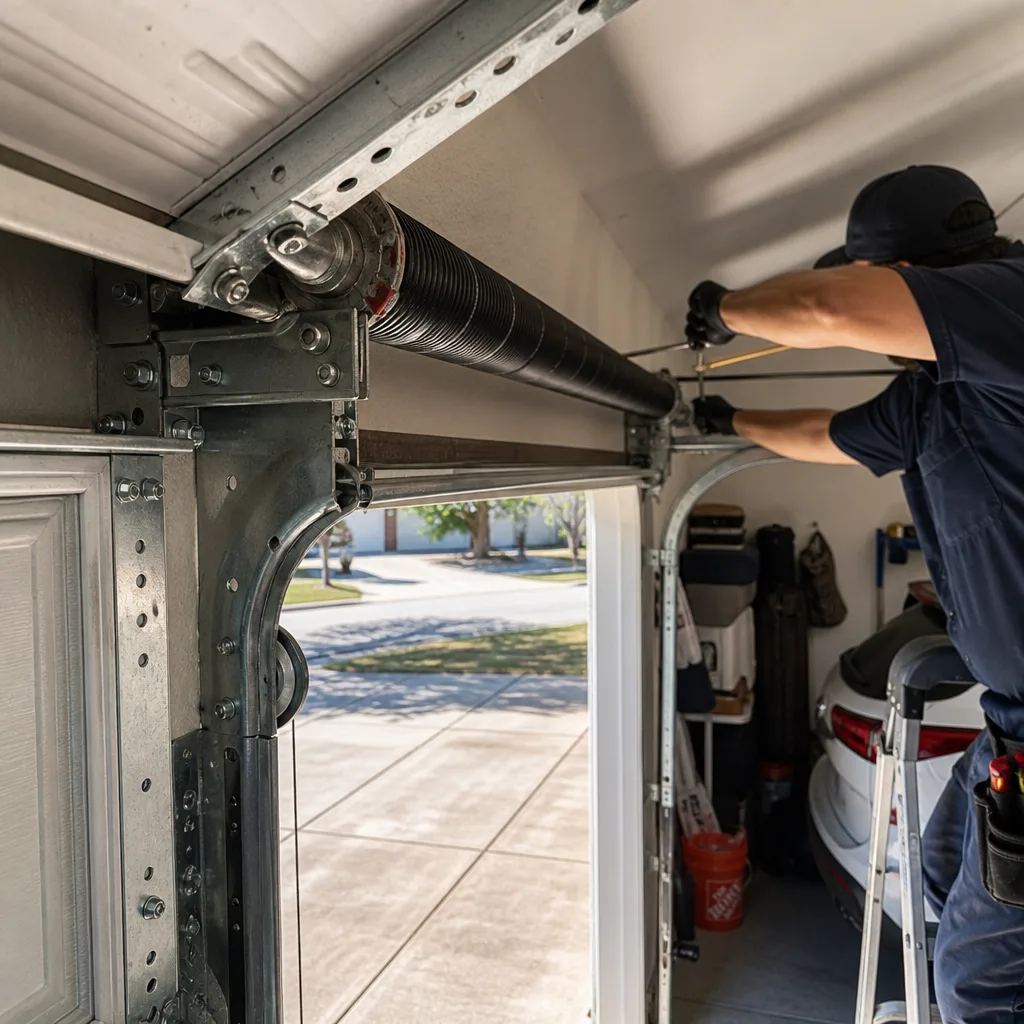 After
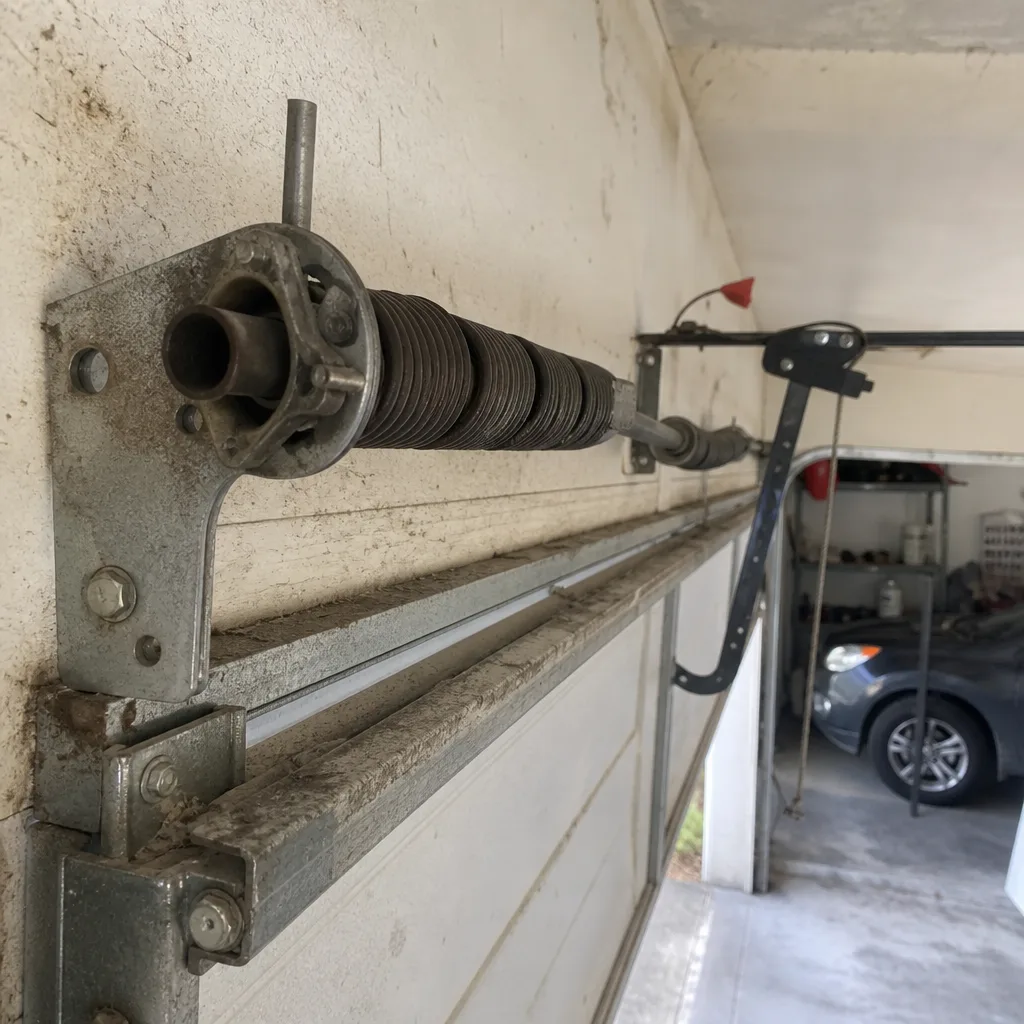 Before
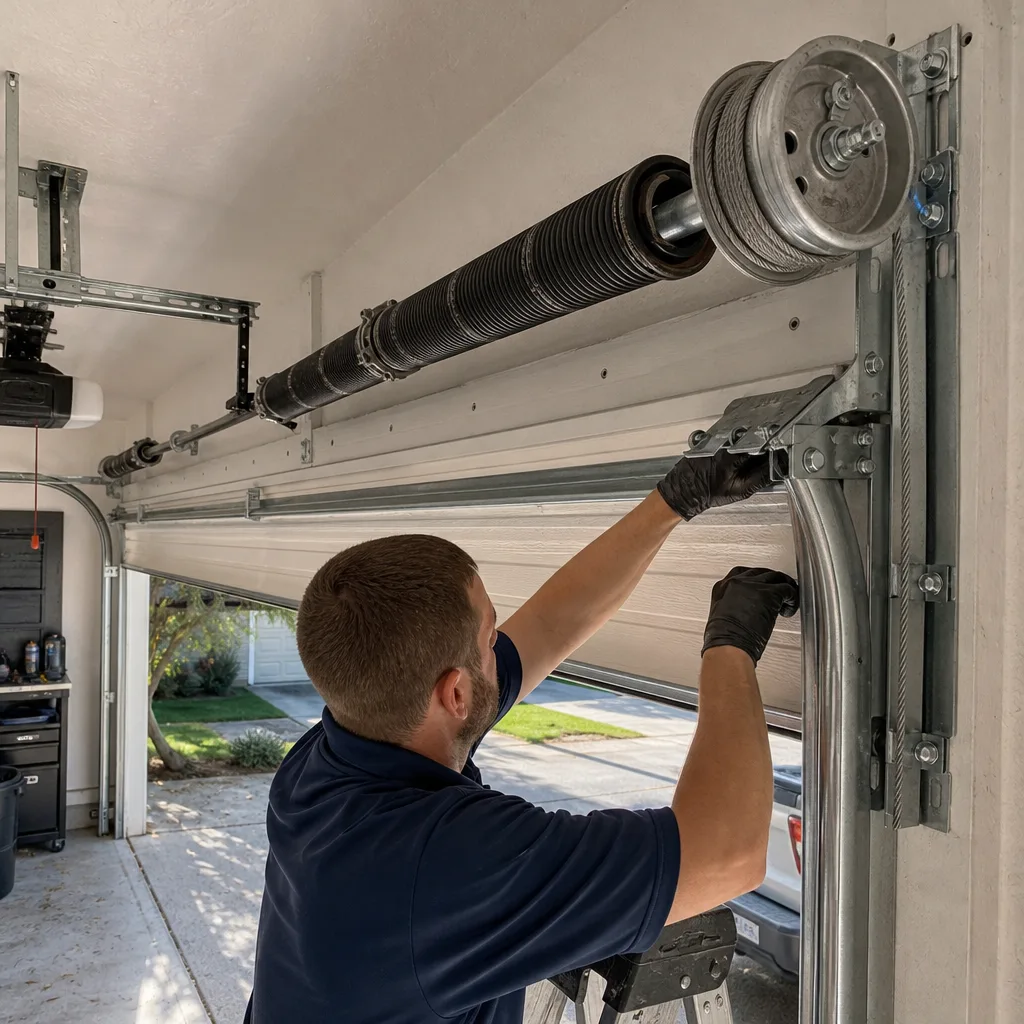 After