
Last updated October 31, 2026
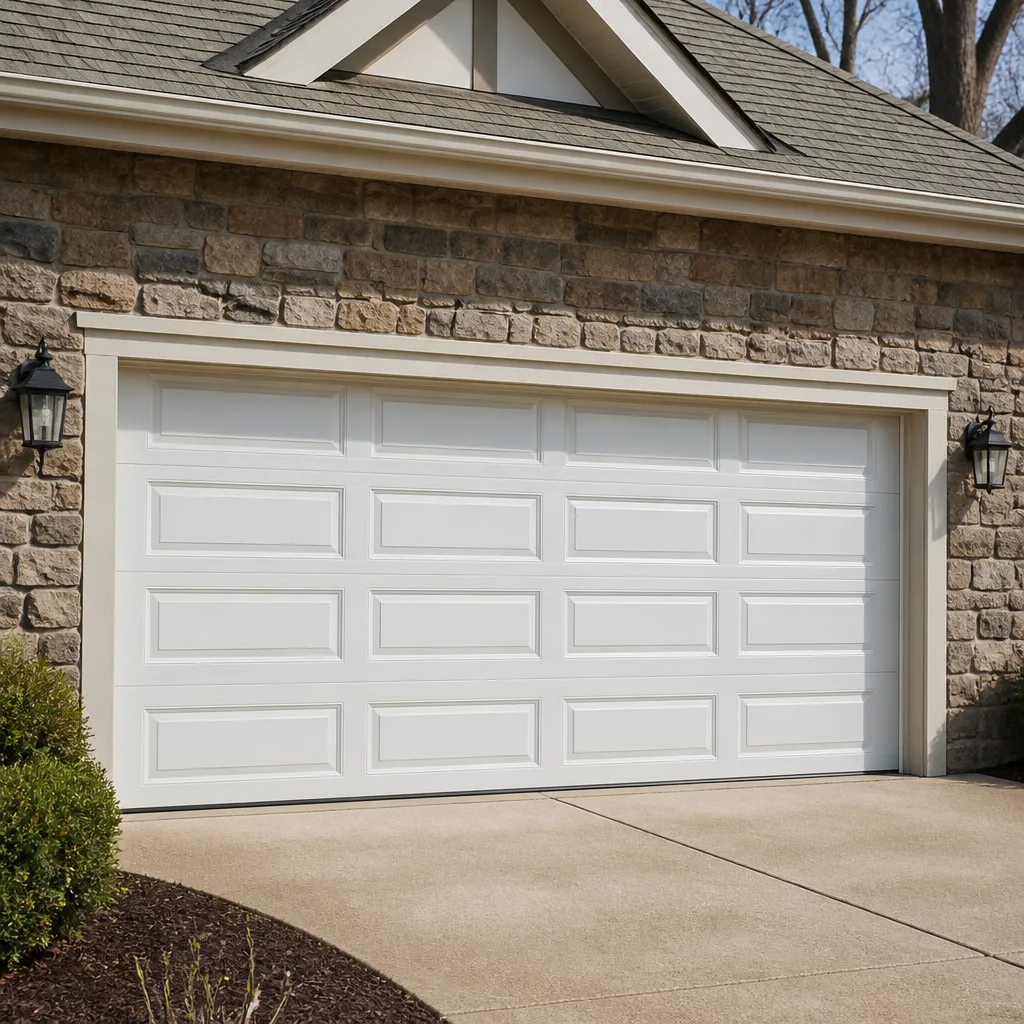 Raised-panel steel
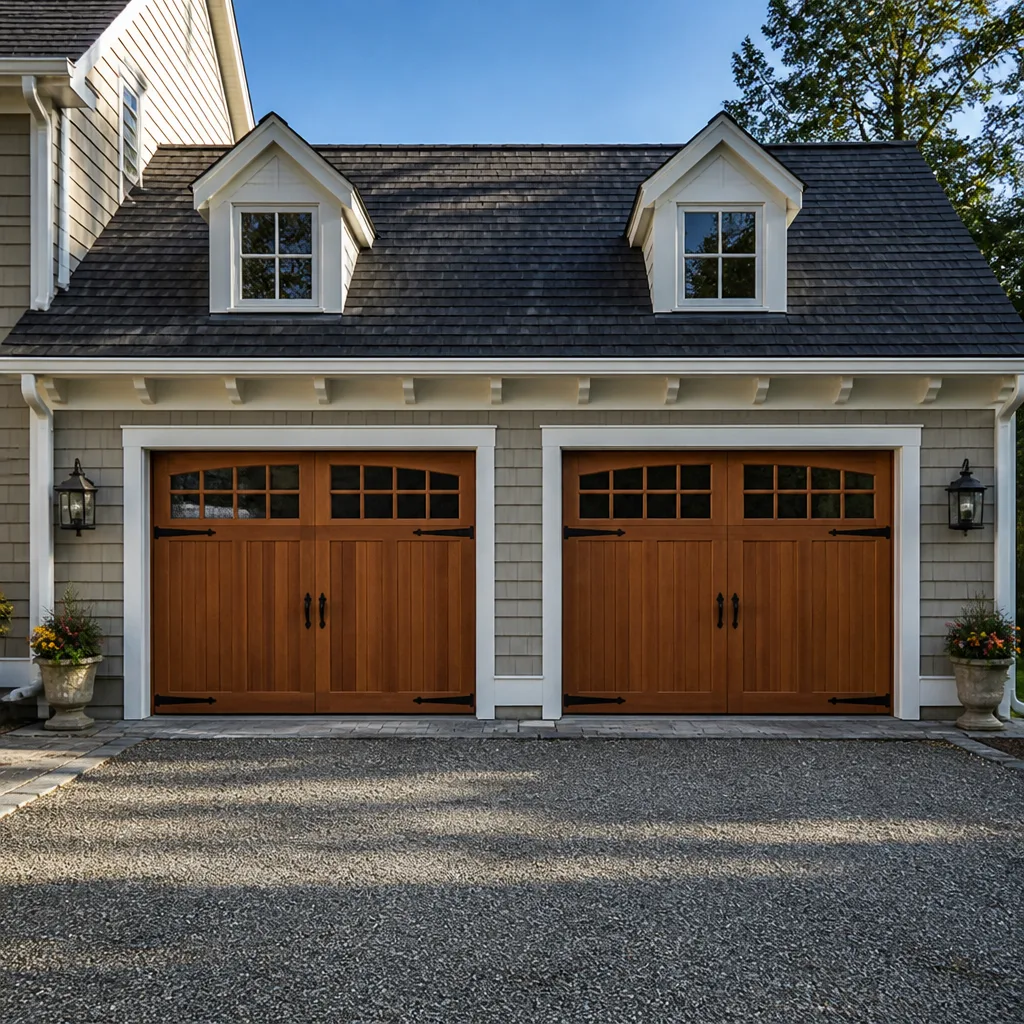 Carriage house
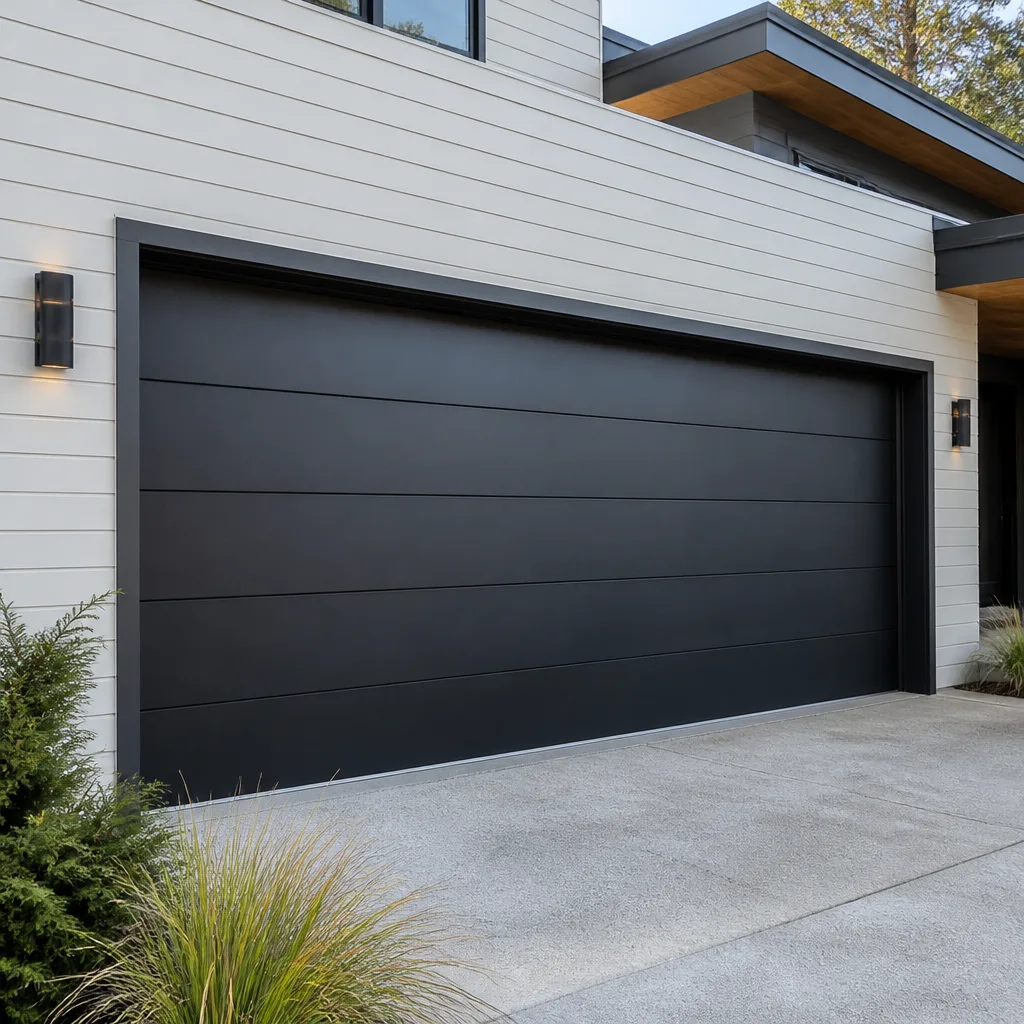 Modern flush
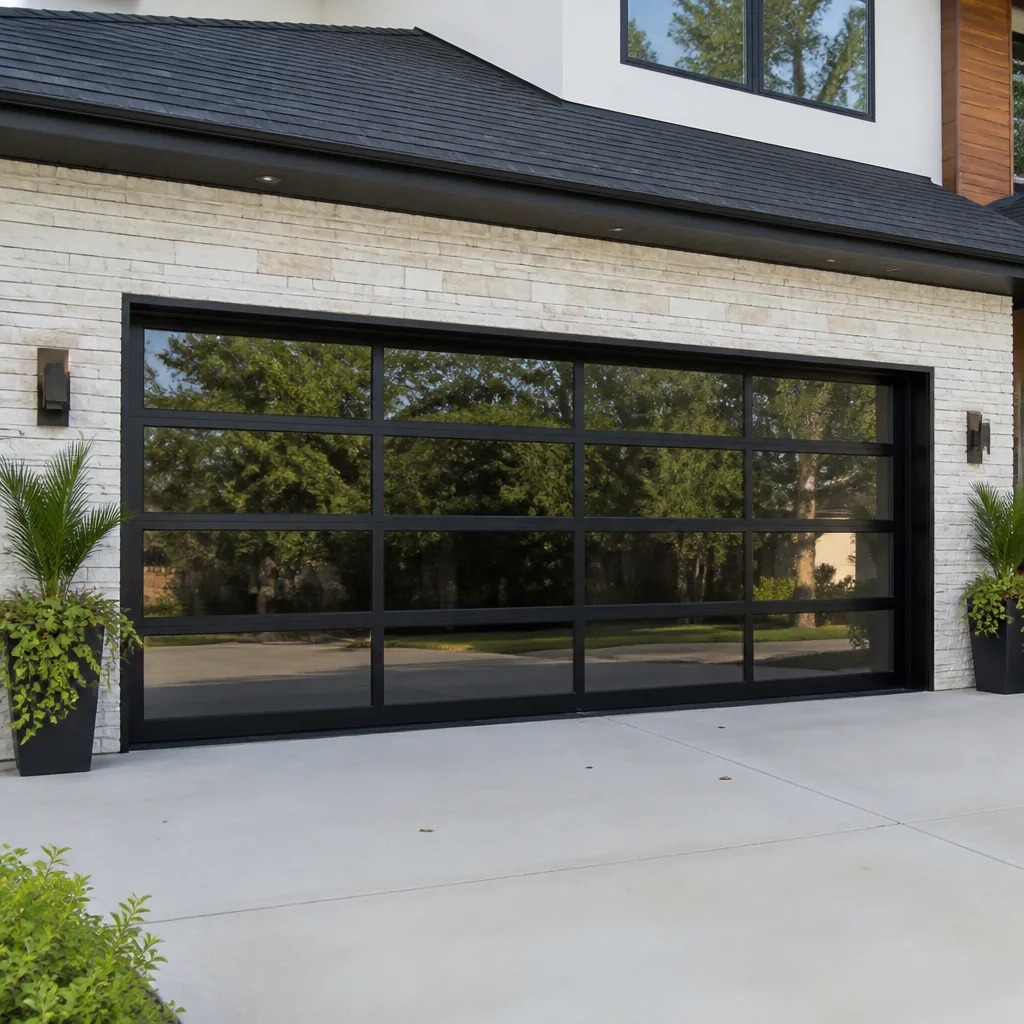 Full-view glass
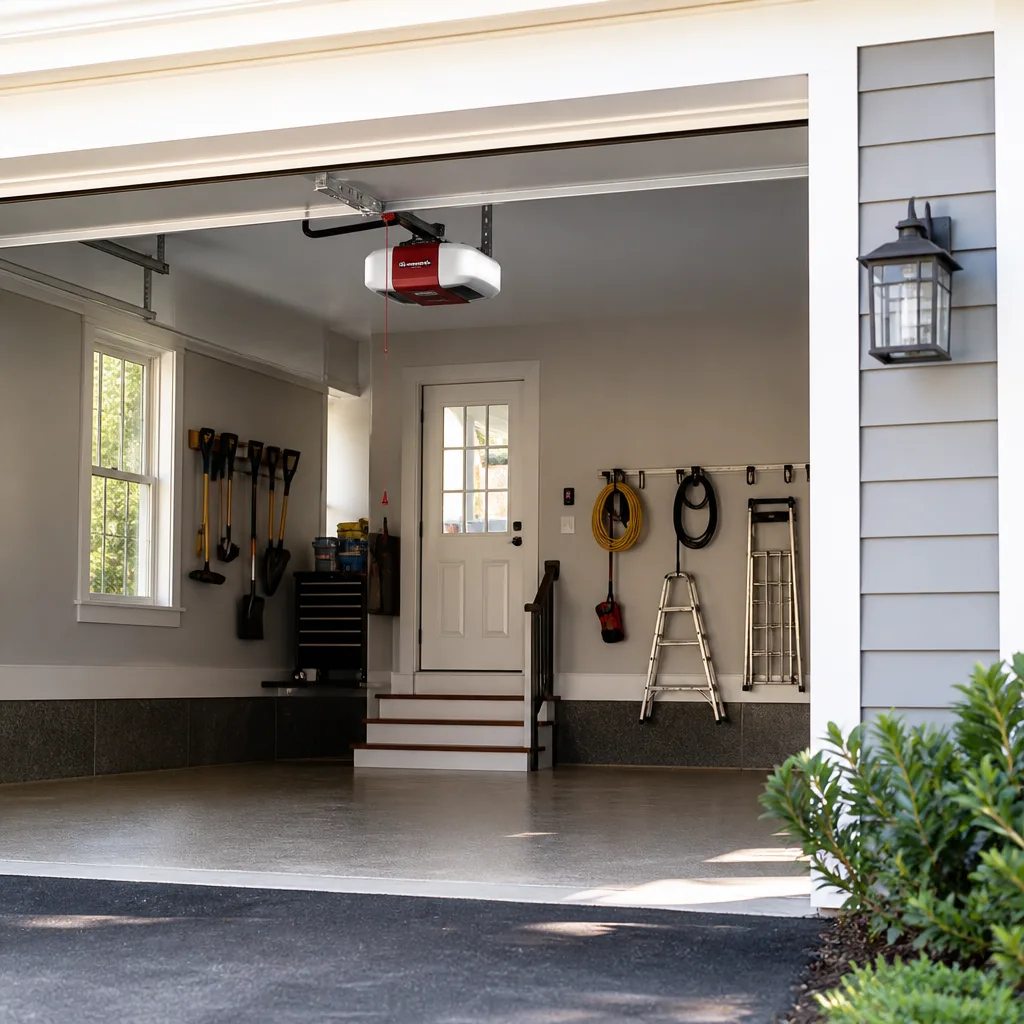 LiftMaster openers
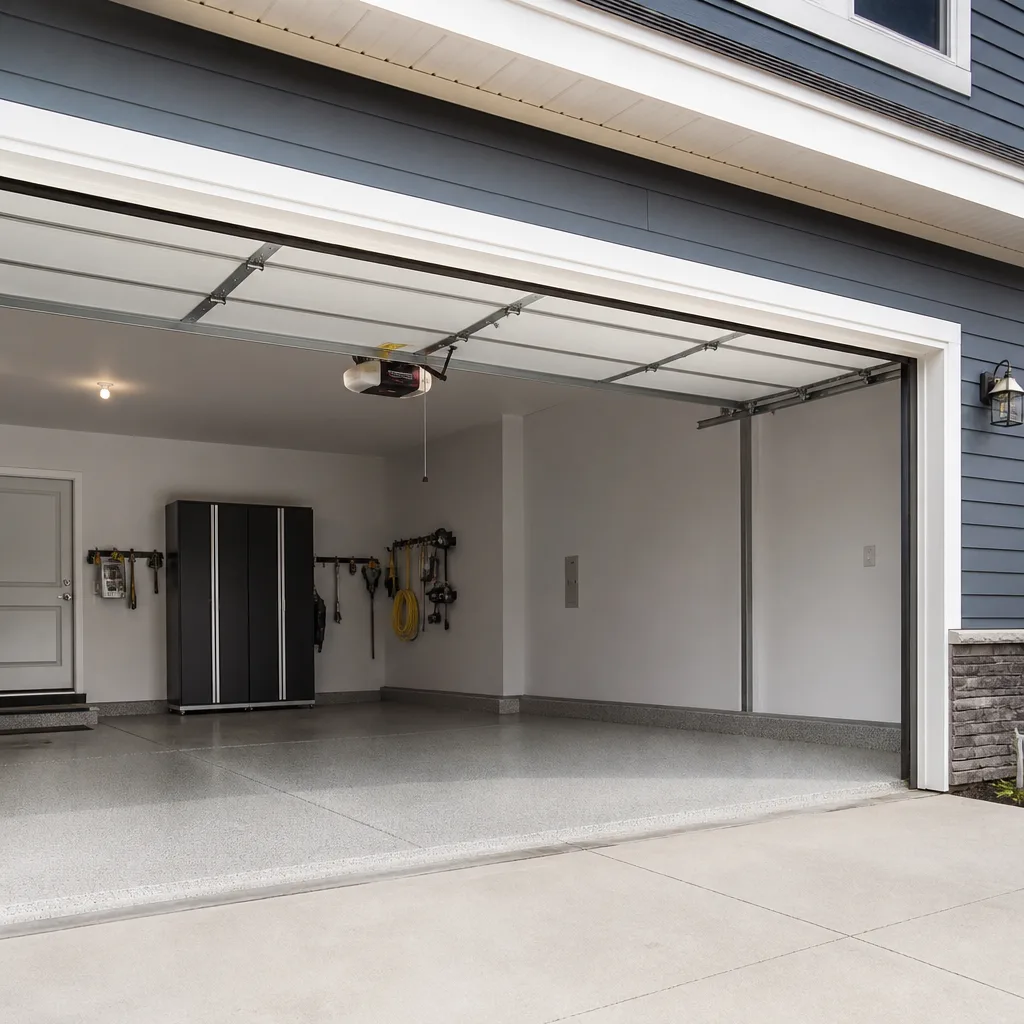 Chamberlain openers
Full 25-point door and opener safety check with every visit - springs, cables, rollers, tracks, and your LiftMaster or Chamberlain opener included
You get a price before we start. It does not change when the truck arrives.
Get your free estimateGarage Door Emergency Preparedness Guide for Tampa Homes
FEMA’s own damage assessment teams have documented the same finding after every major hurricane to hit the Gulf Coast: the garage door is the first point of structural failure. When it goes, the pressure differential that follows can lift a roof off an otherwise intact home. Tampa homeowners spend weekends boarding windows and trimming palms, but the single largest opening in the house – the one that faces the street and takes the wind head-on – rarely gets a second thought. This guide covers how to assess your door before a storm, what to do in the 48 hours before landfall, and what mistakes we’ve seen cost homeowners thousands in avoidable damage. For Garage Door Repair Troubleshooting: Common Problems and How to Fix Them, see our dedicated resource.
Quick Answer
Garage door hurricane preparedness for Tampa homes starts with one question: does your door meet current wind-load requirements, and if not, do you brace it or replace it? Preparation falls into three phases: verifying your door’s wind rating against Hillsborough County code, practicing the manual release so you’re not fumbling in the dark during an outage, and knowing exactly what not to do in the final hours before a storm. A properly rated, properly maintained garage door reduces the risk of structural roof failure more than any other single retrofit you can make. Our Garage Door Repair Maintenance Checklist for Tampa Homeowners covers what “properly maintained” actually means.
Styles & brands we work with
Table of Contents
- Understanding Hillsborough County Wind-Load Requirements
- The Manual Release Cord: What It Does and How People Use It Wrong
- Bracing Kits vs. Replacement: When a Retrofit Works
- The 48-Hour Pre-Storm Protocol
- Post-Storm Documentation: Insurance, Photos, and Permits
- Common Mistakes to Avoid
- When to Call a Professional
- Frequently Asked Questions
Understanding Hillsborough County Wind-Load Requirements
Hillsborough County sits in a High Velocity Hurricane Zone, which means garage doors installed after the 2001 Florida Building Code update must meet specific design pressure ratings. The current baseline for most of Tampa is a design pressure rating of at least +45/-50 PSF for garage doors in residential structures, but your exact requirement depends on your home’s location, exposure category, and whether the door opening faces open water or dense neighborhood blocks.
Here’s the problem many Tampa homeowners run into: they bought their house with a garage door already installed, and they have no idea what its rating is. A door installed in 1998 in Carrollwood may have been perfectly adequate then, but it’s now two code cycles behind and sitting on the windward side of a house that catches every tropical breeze off the bay.
Three ways to assess your current door without waiting for a storm to force the question:
- Check the label: Look inside the door panels. Most rated doors carry a sticker or embossed plate from the manufacturer listing the wind-load rating, the Florida Product Approval number, and the date of manufacture. No sticker means the door was likely installed before wind-load labeling became mandatory.
- Look at the track and brackets: Wind-rated doors use heavier gauge metal in the vertical tracks and larger mounting brackets than pre-2001 doors. If your brackets look thin enough to bend by hand, they probably are. In our experience, the bracket is often the failure point long before the door panel itself.
- Get a professional assessment: A technician who works on wind-rated systems daily can tell you in five minutes whether your door was engineered for Tampa’s wind loads or installed back when the requirement didn’t exist. Garage Door Repair in Tampa includes this kind of assessment as part of a standard service call.
One detail worth knowing: Hillsborough County requires permits for garage door replacement, and part of that permit process involves verifying the new door meets current wind-load standards. See Garage Door Permits, Codes & Inspections in FL: What You Need to Know for specifics. A door installed without a permit may not carry the documentation your insurance company will ask for after a storm. That’s a problem with a time limit.
The Manual Release Cord: What It Does and How People Use It Wrong
The manual release cord – that red T-handle hanging from the opener rail – disconnects the door from the motorized carriage so you can lift the door by hand when the power is out. In a storm or after a power outage, it’s how you get your car out of the garage. Simple enough, but we’ve repaired enough post-storm damage in Tampa to know the two ways homeowners use it incorrectly.
Mistake number one: pulling the cord while the door is under tension. If the door is partially open, or if a spring has failed and the full weight of the door is hanging on that carriage, pulling the release can send the door slamming down. The correct moment to pull the release is when the door is fully closed. That’s when the cables and springs are under the least strain, and it’s when you’re most likely to need the door to work manually.
Mistake number two: leaving the door in manual mode. Once you pull that cord, the opener carriage is disconnected. If you then use the opener remote, the motor will run and the carriage will travel down the rail – but the door won’t move. When power returns and you press the button, nothing happens, and now you’re on the phone trying to figure out why the opener “broke.” It didn’t break. It’s just not re-engaged. Re-engaging is usually a matter of running the opener until the carriage clicks back into the release mechanism, but it varies by brand. We work on LiftMaster, Chamberlain, Genie, Craftsman, Raynor, and most other major systems, and each one has its own re-engagement quirk.
The manual release cord should never be locked in the disengaged position. During a storm, that’s an open invitation for the door to bounce, shift, or flex without the added resistance of the opener rail holding it in place. A door that’s locked in manual mode is a door that can lift under wind pressure, and once the bottom panel lifts, the pressure differential does the rest.
Bracing Kits vs. Replacement: When a Retrofit Works
Garage door bracing kits exist for a reason: a well-designed retrofit brace, properly installed before a storm, can add meaningful reinforcement to an otherwise unrated door. Aluminum vertical braces, mounted to the interior face of the door panels and anchored into the floor and header, distribute wind load across the door’s full height. They work. But they work best on doors that are structurally sound to begin with.
Here’s where homeowners in Tampa get a false sense of security. A brace kit bolted to a 1980s door with rusted panels, weak hinges, and six-inch track brackets doesn’t turn it into a wind-rated door. It just gives the wind something to hold onto while it rips the brackets out of the wall. The brace transfers load to the mounting points. If the mounting points are already marginal, the brace fails catastrophically – and now you have metal bars flying around inside your garage too.
The honest calculation is this:
- Retrofit bracing makes sense when the door is relatively recent, the panels are in good shape, the track is solid, and you need temporary added protection for one storm season while you budget for a proper replacement.
- Replacement makes sense when the door is original to a home built before the 2001 code update, when the rollers rattle, when the hinges show rust at the stress points, or when an inspection reveals any structural weakness the brace would rely on.
Fieldstone Garage Door Repair takes the position that a brace is a temporary measure, not a solution. If your door needs replacing, replace it. Garage Door Installation in Tampa can put in a door that carries its own wind rating, which is better engineering than asking an old door to survive on add-ons. We install Amarr, Clopay, Wayne Dalton, and other major brands, so the rating isn’t tied to one manufacturer’s catalog.
The 48-Hour Pre-Storm Protocol
When a storm enters the Gulf and Tampa is in the cone, the list of things to do gets long fast. The garage door needs to be on that list – and in the right order. Here’s the sequence we recommend, based on what we’ve seen work (and fail) across Tampa in storm seasons past.
- 48 hours out: Test the door under its own power. Open and close the door three full cycles, watching and listening. Does it bind? Does one side lift before the other? Does the opener strain or reverse? Any of these symptoms means something is already wrong, and it won’t get better when the wind starts. Schedule a repair now, while there’s time. If you’re in South Tampa or along the Bayshore corridor, do this early – demand spikes fast.
- 48 hours out: Check the manual release function. Pull the cord once while the door is closed. Lift the door by hand – it should move smoothly with moderate resistance, and it should stay in place about three feet off the ground. If it slams or won’t hold, the springs are failing. A door with failed springs is a door that can’t be manually secured. This is a repair that can’t wait.
- 36 hours out: Clear the garage interior. Store loose items. The wind that gets past a compromised door turns a rake into a projectile. Put cars in the garage if you have room – a car parked nose-in against the door adds real mass and reduces panel flex.
- 24 hours out: Close and secure the door, then disconnect the opener. Unplug the opener unit from the ceiling outlet. This protects the circuit board from power surges when the grid gets hit, which in Tampa happens during every serious storm. A surged opener is one of the most common post-storm repair calls we get – and one of the easiest to prevent. Garage Door Opener Repair in Tampa handles this repair regularly in the weeks after a major storm passes.
- 12 hours out: Do not touch it. The door is closed, the opener is unplugged, the manual release is in the engaged position, and the cars are parked against it. Leave the door alone. Don’t run a last-minute errand, don’t test it again, don’t pull the cord. Every cycle you run adds wear, and the window to fix anything has closed.
What not to do: do not lock the manual release in the disengaged position. Some homeowners think that if the power goes out, they want to be able to open the door easily. What they’re actually doing is removing the opener rail as a stabilizing element. The door needs every connection point holding it in place. Leave the release engaged.
Post-Storm Documentation: Insurance, Photos, and Permits
If your garage door takes storm damage, the sequence of what you do next determines whether your insurance claim goes smoothly or becomes a four-month argument. Here’s the protocol we recommend to Tampa homeowners, based on what adjusters actually want to see.
Take photos before the storm. This is the step nobody thinks about until they need it. Clear, dated photos of your garage door – inside and out, including the track, springs, panels, and opener – give you a baseline. After a storm, the adjuster wants to know what changed and what was already there. Without pre-storm photos, you’re relying on your memory and the adjuster’s patience.
After the storm, photograph everything before touching anything. Stand far enough back to capture the full door and the surrounding frame. Then get close-ups of every panel, hinge, track section, spring, and cable. Shoot from multiple angles, including looking up at the header. By the time a technician arrives, the scene has sometimes been disturbed, and the insurance company wants documentary evidence of the initial state.
Do not attempt to open a damaged door. If panels are bent, if the door is off its track, or if cables are hanging loose, the door is under unpredictable tension. A spring under tension that suddenly releases can cause serious injury. This is the point where touching it yourself goes from risky to genuinely dangerous. A bent door off its track can pin a person against the wall. Leave the door alone and call a professional.
Know what your permit status means for the claim. If your door required a permit for installation and it was installed without one, the insurance adjuster may deny a claim for the door itself and possibly for water damage attributed to the door failure. Hillsborough County keeps permit records, and insurers know how to check them. Unpermitted work that fails during a storm is a coverage gap that shows up at the worst possible moment. This is another reason to make sure your door was installed properly, with the paperwork to prove it.
Common Mistakes to Avoid
- Waiting until the storm is in the Gulf to inspect the door. By the time a named storm is approaching Tampa, every qualified technician is booked solid. The time to assess your door is in April and May, before the season starts.
- Assuming an old door passes code because it survived previous storms. Surviving one storm is not an engineering rating. Wind loads are calculated for a reason, and a door that held once may have been held by luck, a different wind angle, or the fact that a stronger neighbor took the brunt.
- Pulling the manual release cord during a power outage while the door is half open. The door will drop. You might not expect the weight or the speed, and now you have a dented bottom panel and potentially broken hinges on top of the outage.
- Bracing an unrated door and calling it done. A brace on a structurally unsound door provides comfort without protection. It may even make the failure worse by giving the wind more leverage against the mounting points.
- Forgetting to unplug the garage door opener before the storm knocks out power. The surge from a downed line or transformer blow is not something most opener boards survive. Unplug it when you know the storm is heading your way.
- Leaving the manual release disengaged during the storm. A door disconnected from the opener rail loses a critical stabilizer. Keep it engaged, and keep the opener unplugged separately.
- Filming the storm with the garage door open for a “better view.” It sounds absurd, but Tampa sees it every season. The wind doesn’t wait for the camera battery to die.
When to Call a Professional
Some garage door work is safe to assess yourself. Checking for a manufacturer’s sticker, testing the manual release when the door is closed and the power is on, looking for visible rust or bending – these are observation tasks. But when the door is off its track, when a spring is visibly broken, when cables are hanging loose, or when the door has taken wind damage and will not close, that’s a job for someone who works on these systems daily. The garage door is the heaviest moving object in your house, and the springs and cables that balance it are under constant tension that can injure or kill if mishandled. Fieldstone Garage Door Repair offers free estimates in Tampa – call (855) 360-5925 for a straight assessment of what you’re working with.
Frequently Asked Questions
Look for a manufacturer’s label inside the door panels listing the design pressure rating and Florida Product Approval number. If the label is missing and your home predates the 2001 Florida Building Code, your door likely does not meet current Hillsborough County standards, and a professional inspection is the fastest way to find out for sure. Call (855) 360-5925 to have it assessed.
Test the door under power, verify the manual release engages and disengages properly, clear the garage interior, park a car against the door if possible, then unplug the opener and leave the door closed and engaged. That sequence, done in the 48 hours before landfall, gives your door its best chance of staying intact.
A retrofit brace can add meaningful reinforcement to a structurally sound door that’s relatively recent, but it won’t fix a door with rusted hinges, weak brackets, or failed springs. On an undersized door with compromised mounting points, the brace transfers wind load to the weakest part of the system, which can actually make the damage worse.
Only if you need to open the door manually, and only when the door is fully closed. Pulling the release when the door is partially open or under spring tension can cause it to slam down. After power returns, the door will need to be re-engaged with the opener carriage before the remote will work again.
Take wide shots of the full door and surrounding frame, then close-ups of every panel, hinge, track section, spring, cable, and the opener unit. Photograph everything before you or anyone else tries to move the door, and don’t touch a damaged door that’s off its track or has hanging cables – those conditions require a professional.
Unplugging the opener protects the circuit board from power surges that are common along Tampa’s grid during storms with high lightning activity. It’s a two-second action that prevents one of the most common post-storm repair calls we see – and it’s backed by the same reasoning that tells you to unplug sensitive electronics anywhere in the house.
The Bottom Line
Your garage door is the largest movable opening in your Tampa home, and it’s the first thing that fails when a hurricane hits. Wind-load ratings, manual release discipline, and a practiced pre-storm sequence are all part of the same job: giving the door its best chance of staying closed under pressure. Start by knowing what your door is rated for. Then practice the manual release so it’s muscle memory. And when the storm has passed, document before you touch, and call a professional before you climb. From a stuck spring to a full replacement, Fieldstone Garage Door Repair home has seen it all across Tampa – and we’d rather help you prepare than pick up the pieces.
Written by the team at Fieldstone Garage Door Repair, serving Tampa since 2013. Browse more guides & resources from our team.
See the difference
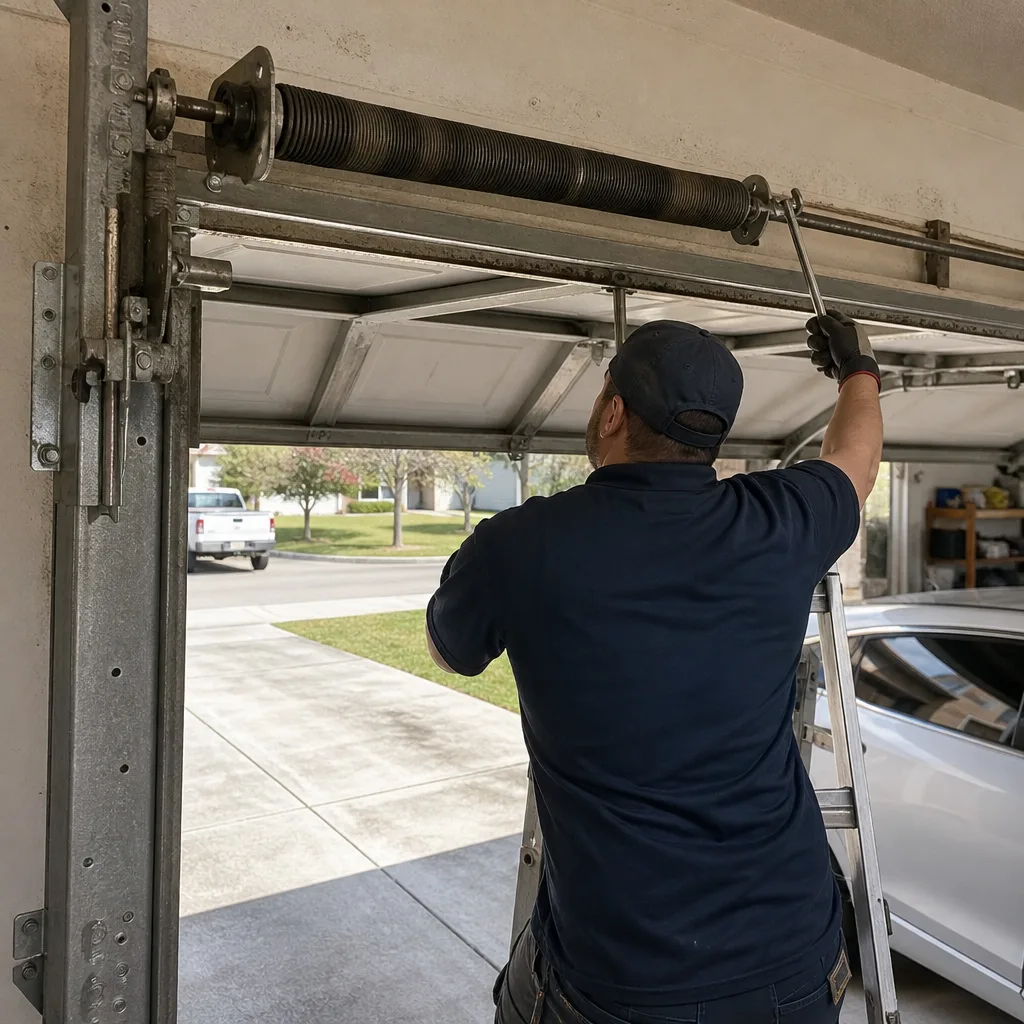 Before
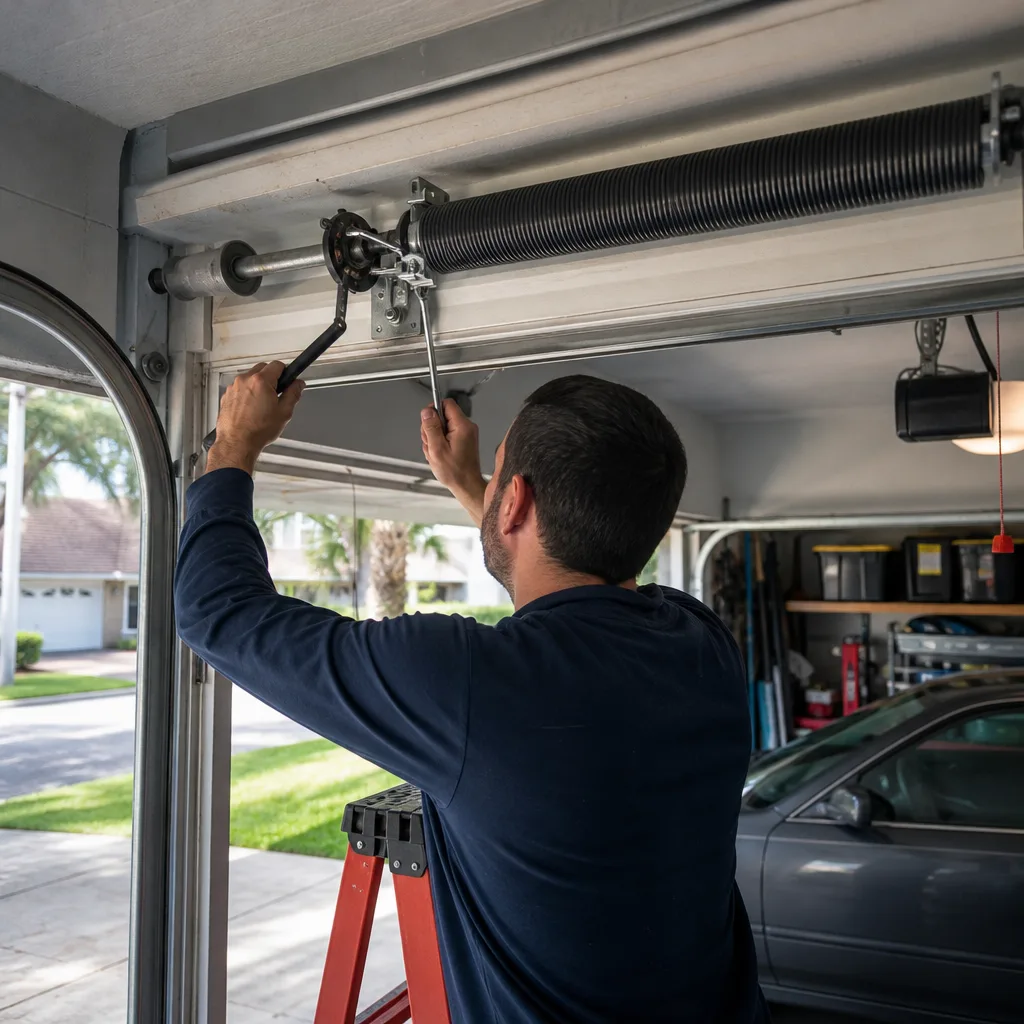 After
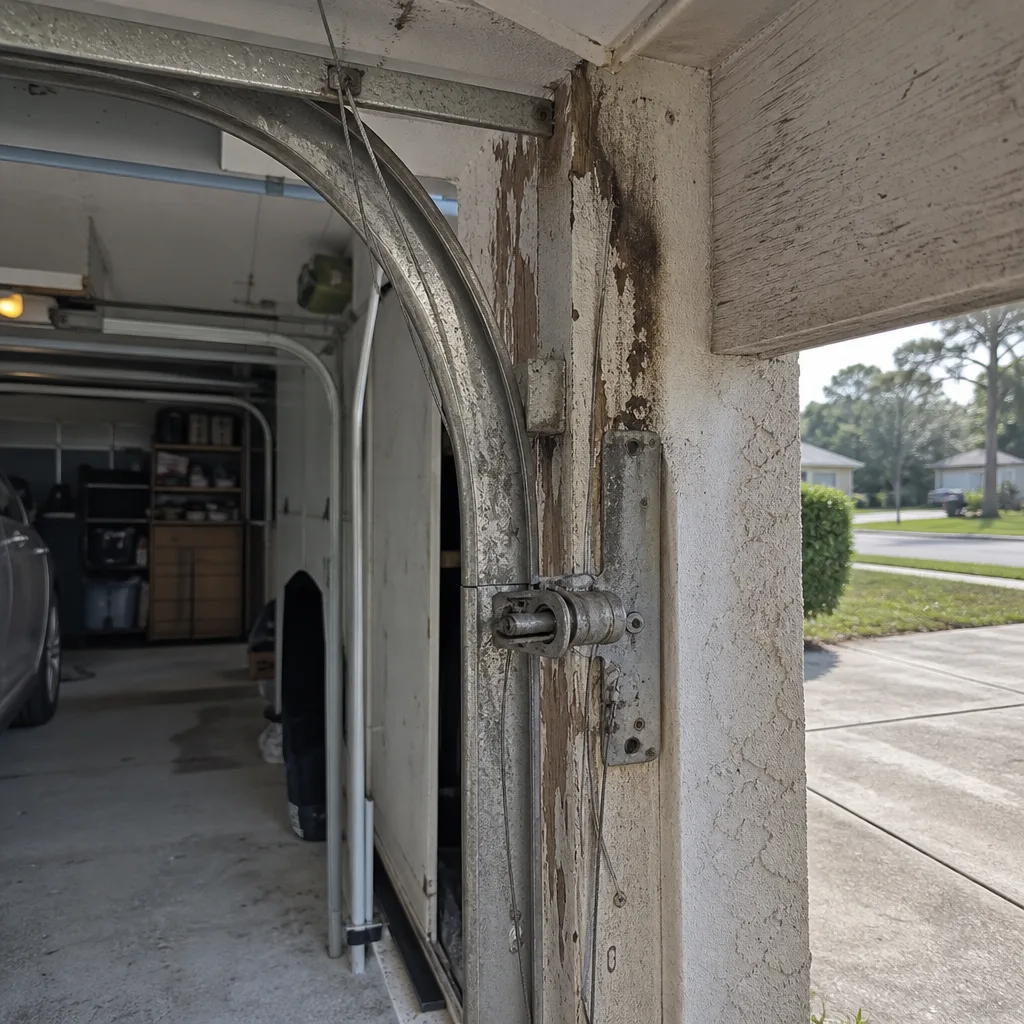 Before
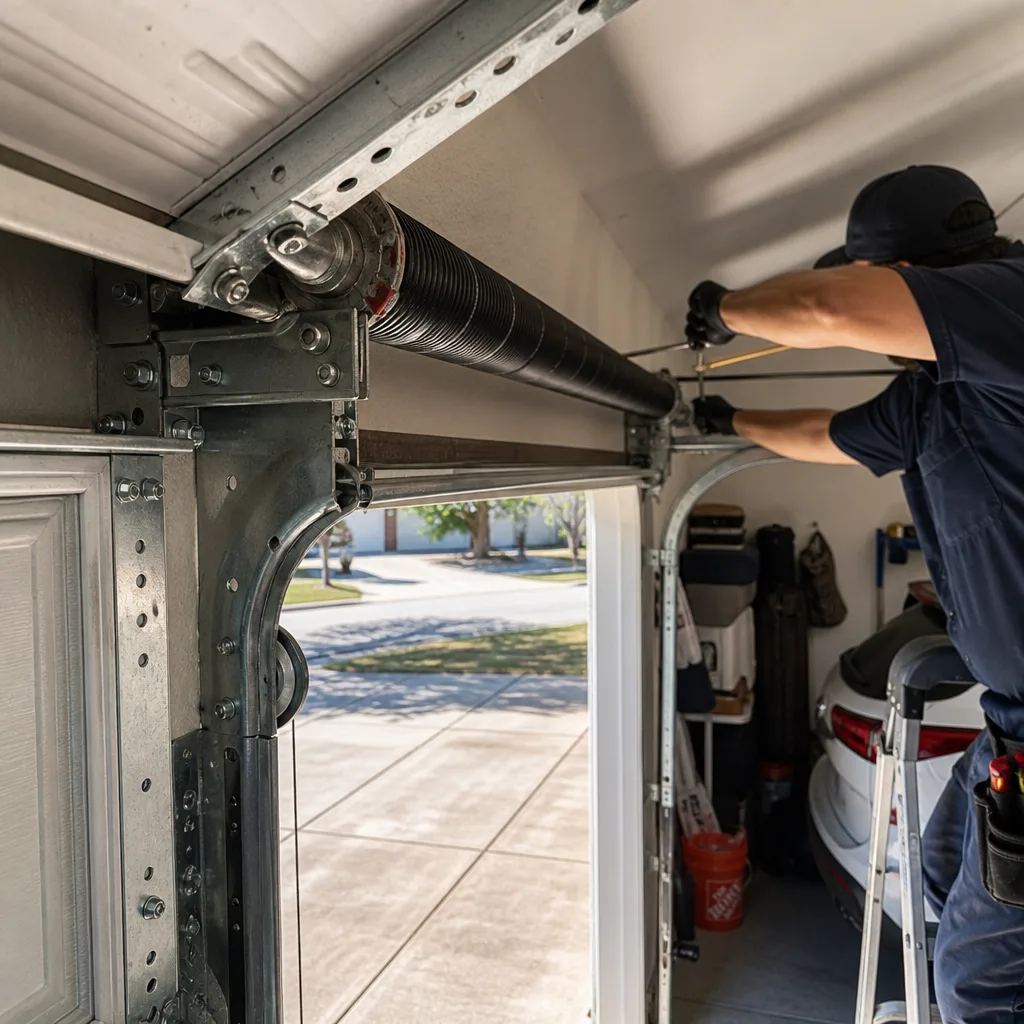 After
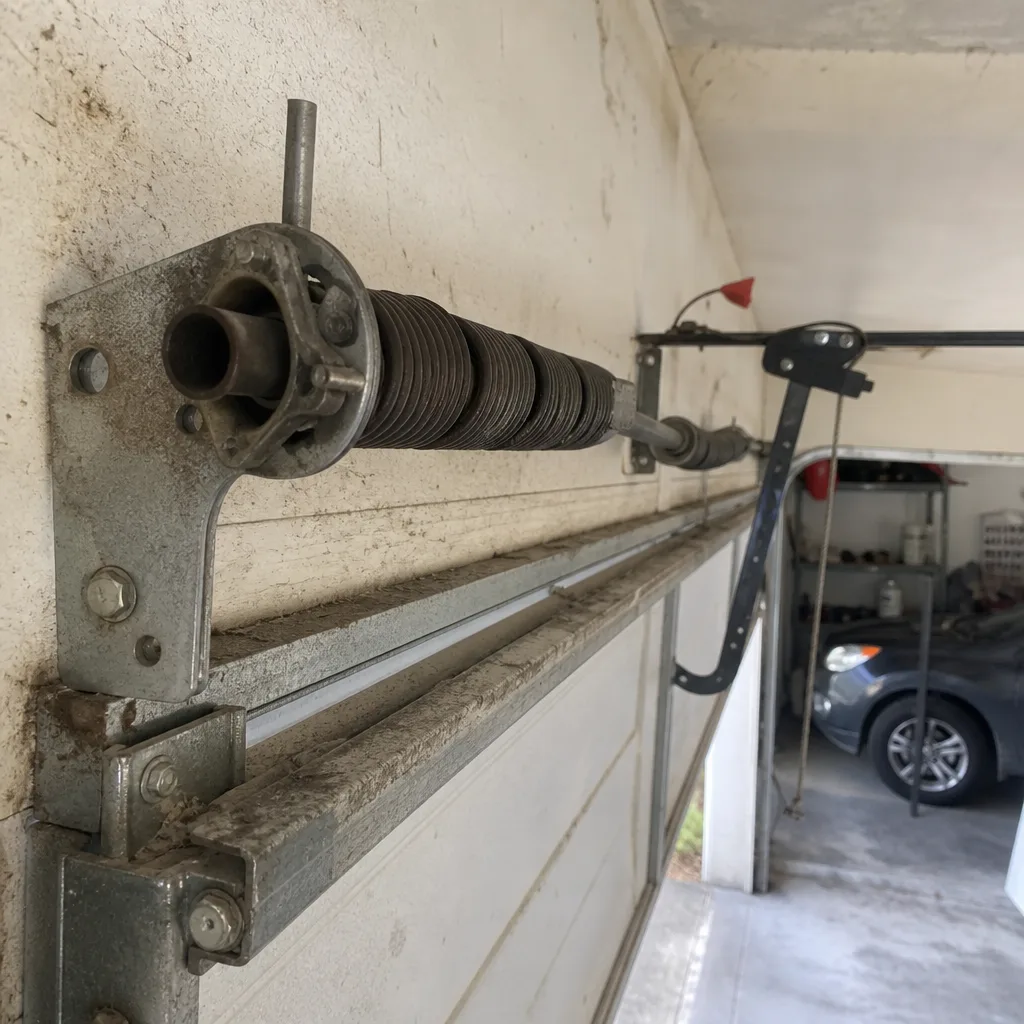 Before
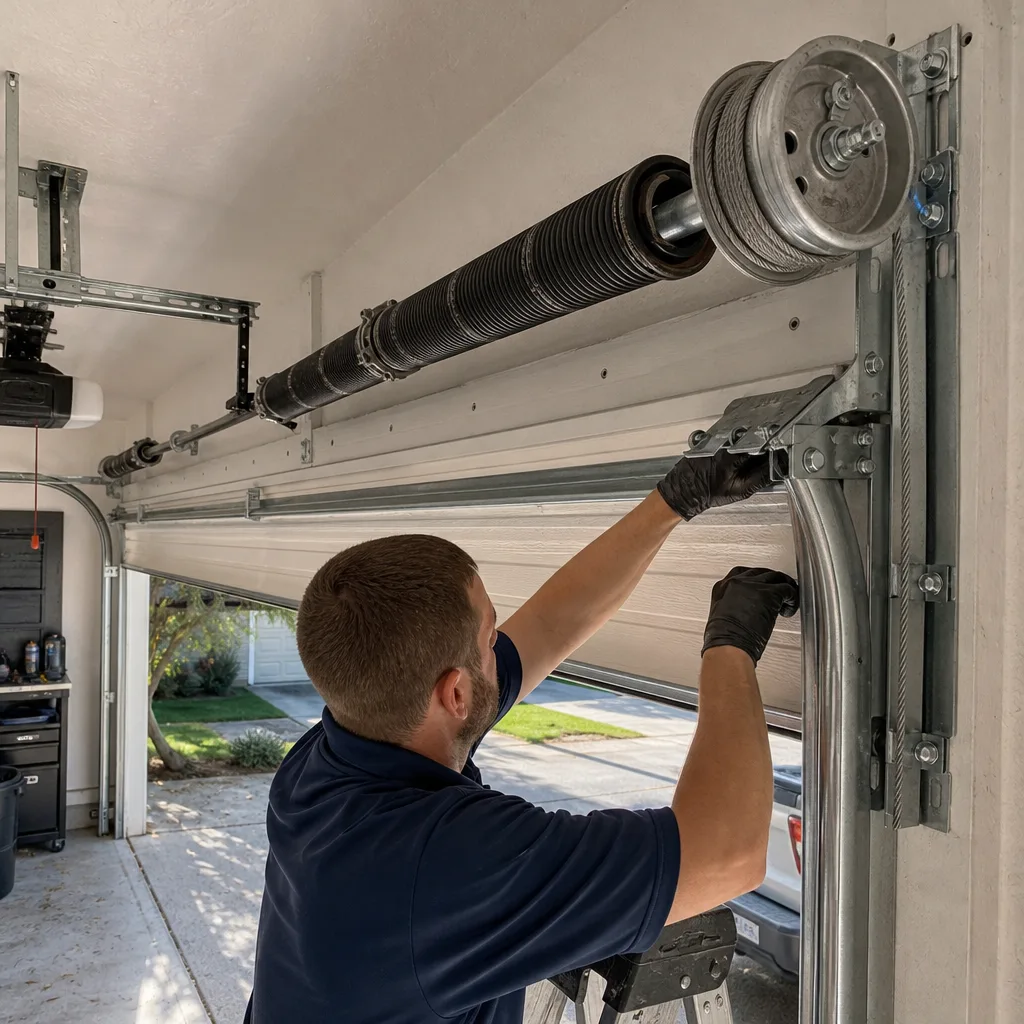 After