
Last updated October 31, 2026
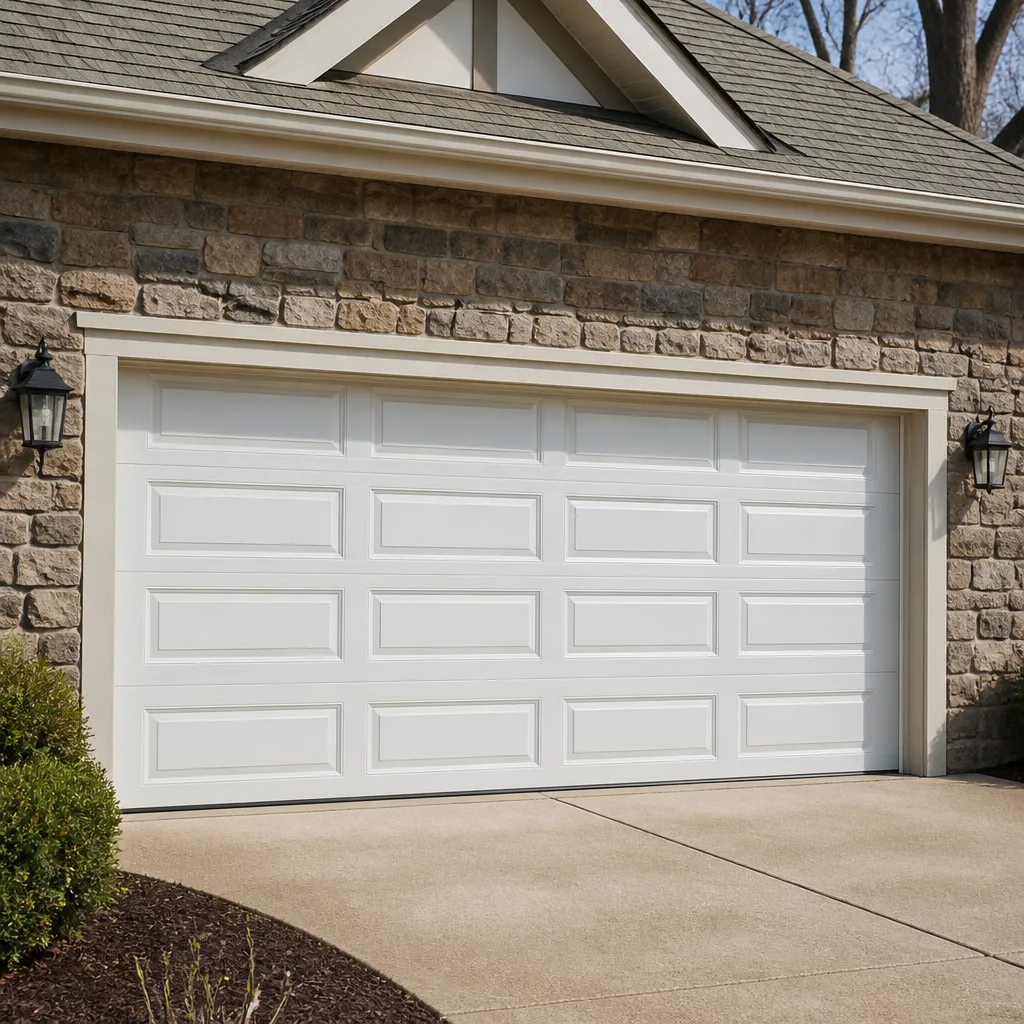 Raised-panel steel
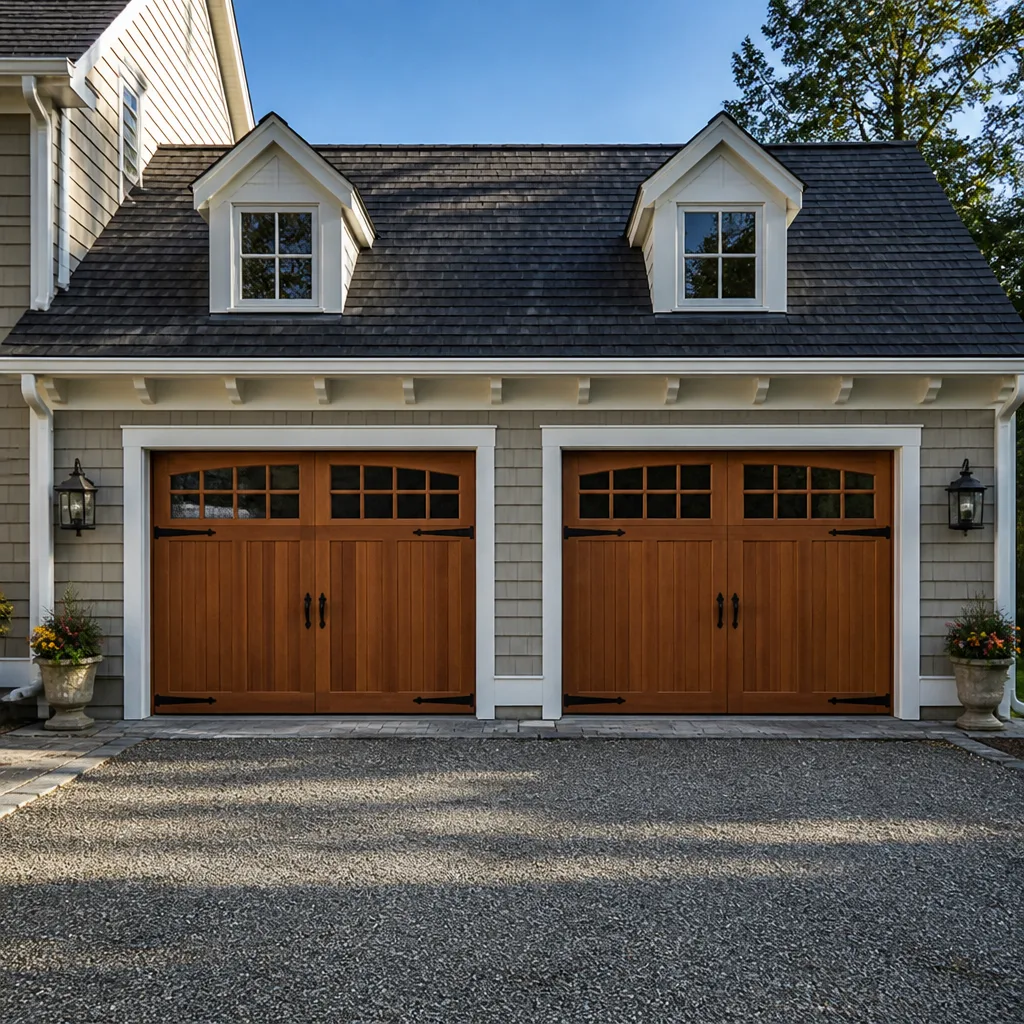 Carriage house
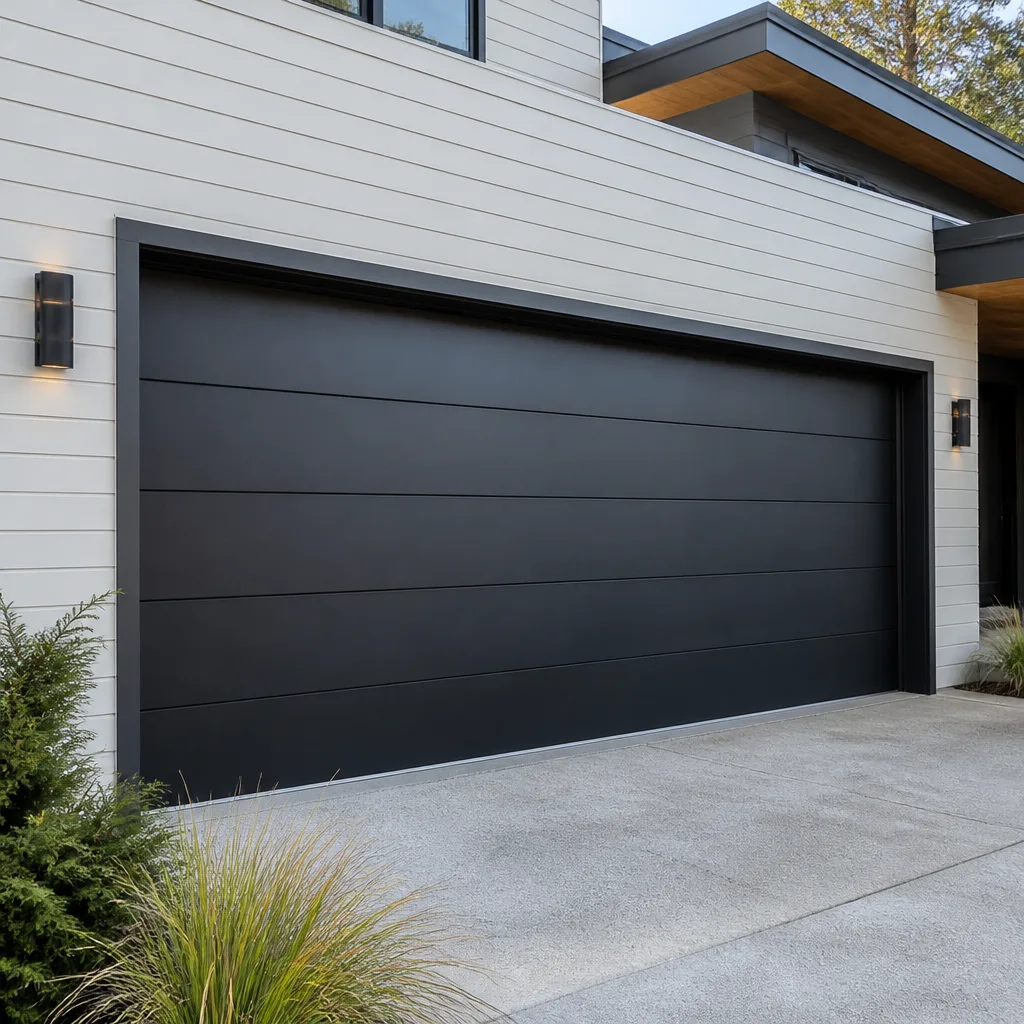 Modern flush
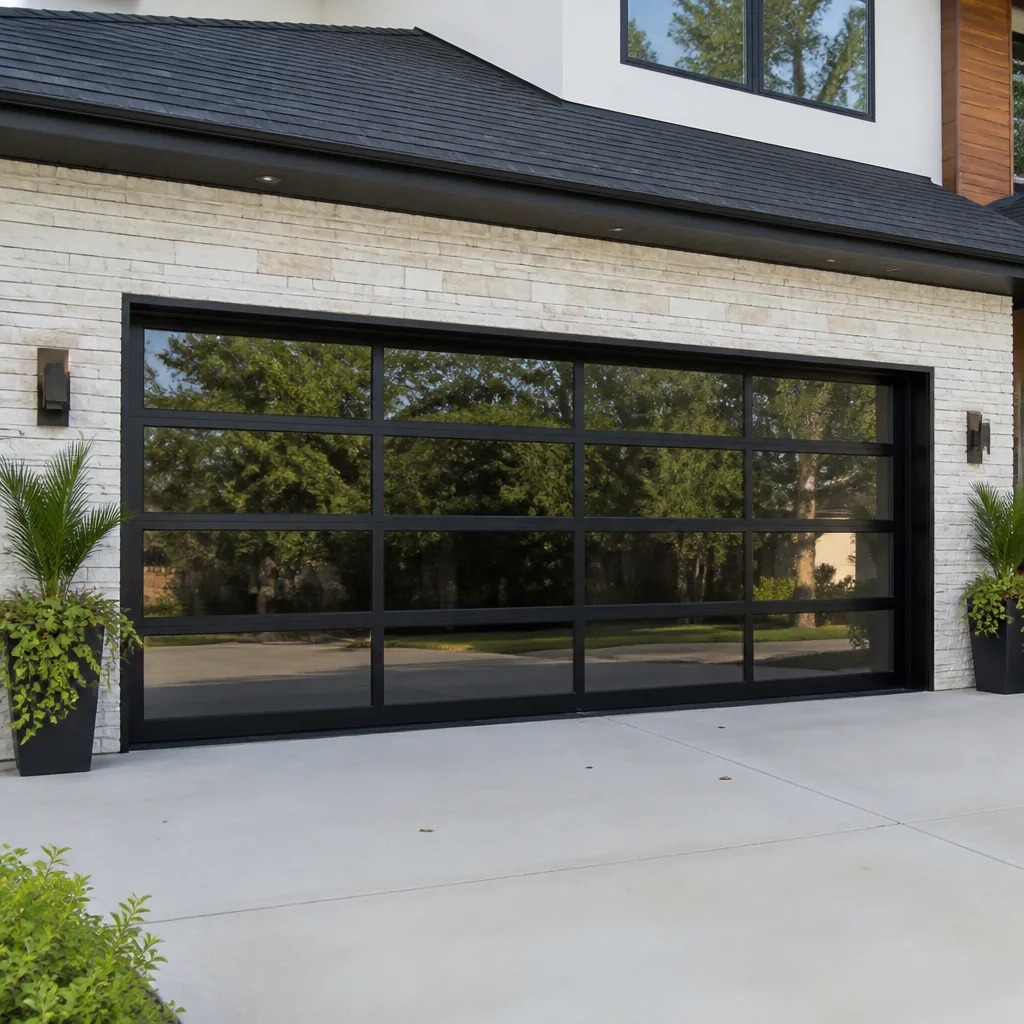 Full-view glass
 LiftMaster openers
 Chamberlain openers
Full 25-point door and opener safety check with every visit - springs, cables, rollers, tracks, and your LiftMaster or Chamberlain opener included
You get a price before we start. It does not change when the truck arrives.
Get your free estimateGarage Door Repair Troubleshooting: Common Problems and How to Fix Them
Most garage door problems announce themselves long before the door stops working entirely. Your door is telling you exactly what’s wrong: a grinding sound, a gap on one side, a door that reverses halfway down. Each means something different, and treating the wrong one wastes money and time. In Tampa, where humidity and salt air accelerate wear on springs, rollers, and cables, knowing how to read those signals matters even more. This guide works backward from what you’re seeing and hearing to a specific diagnosis, so you can decide what’s a safe DIY fix and what needs our Garage Door Repair services.
Quick Answer
Garage door troubleshooting starts with identifying the symptom: a door that won’t open, opens partway, reverses, or makes unusual noise. Most mechanical issues trace to one of five components: torsion springs, extension springs, cables, rollers, or the opener’s drive and logic board. In Tampa’s climate, rust and humidity accelerate spring fatigue and roller wear, making regular inspection a practical necessity.
Styles & brands we work with
Table of Contents
- Sound-First Diagnosis: What Your Garage Door Is Saying
- Movement Problems: Won’t Open, Opens Partway, Reverses
- Cable Problems vs. Spring Problems: How to Tell Without Touching
- Garage Door Opener Troubleshooting: Logic Board, Motor, or Sensors
- Three Symptoms That Mean Stop Using the Door Immediately
- When a Fixed Problem Comes Back Within 30 Days
- Tampa-Specific Wear Patterns and What They Mean
- Maintenance That Prevents Most Repairs
Sound-First Diagnosis: What Your Garage Door Is Saying
Every garage door has a baseline sound: a low rumble, the click of the opener engaging, the soft rattle of rollers on their tracks. When the sound changes, the change itself is diagnostic. A garage door that suddenly sounds like it’s dragging gravel usually means worn rollers. A metallic pop followed by a loud bang is almost always a torsion spring breaking. A rhythmic grinding that matches the door’s movement points to the opener’s gear or chain. The human ear is the first diagnostic tool, and it’s remarkably accurate if you know what to listen for.
Here’s the sound map we use at Fieldstone Garage Door Repair when a homeowner calls from South Tampa, Westchase, or Riverview describing a noise:
- Loud bang or pop from above the door: A torsion spring snapped. The door may still open with the opener, but it’s straining and dangerous. Stop using it.
- Grinding or rasping during travel: Worn or dry rollers. If the rollers are metal, they’ll eventually chew into the track. If they’re nylon, the bearing inside is failing.
- High-pitched squeal on startup: The opener’s drive gear is wearing. This is especially common on older Genie and Chamberlain screw-drive and chain-drive units.
- Rumbling that gets louder over weeks: The torsion spring is fatiguing and losing tension. The door is getting heavier for the opener to lift, which stresses the motor.
- Clicking that repeats rapidly and the door doesn’t move: The opener’s logic board is sending a signal but the motor isn’t engaging, or the travel module is out of sync.
Sound gives you the first clue. Movement confirms it. The next section matches specific movement failures to their causes.
Movement Problems: Won’t Open, Opens Partway, Reverses
When a garage door refuses to move or stops mid-cycle, homeowners across Tampa call us with descriptions that fall into a handful of patterns. The specific pattern tells us a lot before we even arrive. Here are the four most common movement failures and what they mean.
- Door won’t open at all; opener hums for 2-3 seconds then stops. This is a mechanical lock, not an electrical failure. Either a spring has broken and the opener can’t lift the weight, or the door is bound in its tracks. A door that weighs 150-250 pounds cannot be lifted by a residential opener without functioning springs. The opener’s motor is trying, but it’s hitting an immovable object.
- Door opens half a foot, then reverses back down. Two likely causes. First: the safety sensors at the bottom of the track are misaligned or obstructed, so the opener thinks something is in the way. Second: the opener’s force setting is too low for the door’s actual weight, which often happens after springs lose tension. In Tampa, humidity causes wooden doors to swell and absorb moisture, adding real weight that the opener wasn’t calibrated for.
- Door opens partway and stops, then closes normally. This points to a broken or stretched extension spring on a two-spring system. One side of the door is doing all the lifting. The door gets out of level, binds against the track, and the opener’s safety circuit cuts power. You can see this from outside: the door will sit visibly crooked when open a few feet.
- Door reverses after hitting the floor. The travel limit setting is off. The opener thinks the floor is higher than it is, so it reverses as if it hit an obstacle. This can happen after a power surge resets the opener’s memory, or when the door’s closed position shifts slightly after a cable adjustment. On LiftMaster and Chamberlain units, the travel limits are typically set with a screw or dial on the motor housing.
Movement problems fall into two camps: electrical/electronic (sensors, limits, logic board) and mechanical (springs, cables, rollers, tracks). The next section explains how to separate a cable issue from a spring issue without putting your hands near either one.
Cable Problems vs. Spring Problems: How to Tell Without Touching
Cables and springs both live under tension, and both can cause a door that stops working. But they fail differently, and telling them apart from the outside is straightforward. The key is in what you see when the door is closed or when it’s stuck partway open.
Cable symptoms: One of the two lift cables will be visibly slack, hanging loose from the drum, or frayed with broken wire strands poking out. The door will sit unevenly: one corner lower than the other when closed, or one side dropped when the door is stuck partway. Cables wear in Tampa because salt air and humidity cause rust, especially where the cable meets the bottom bracket. A frayed cable often snaps within days of first showing visible damage.
Spring symptoms: A broken torsion spring shows a visible gap in the coil, usually in the middle of the spring mounted above the door. A broken extension spring (on older doors, typically with a side-mounted spring running parallel to the track) will have separated into two pieces if it snapped, or show visible stretching and gaps between coils if it’s fatiguing. The door may still open, but it will feel dead-heavy if you release the opener and try to lift it manually.
The practical rule: if you see a gap in a spring, it’s the spring. If you see loose or frayed cable, it’s the cable. If the door is crooked and neither the spring nor cable shows obvious damage, call a technician because the problem is in the track or the door itself. Do not attempt to adjust either cables or springs. Torsion springs hold enough stored energy to cause serious injury or death, and even “just a small adjustment” without the right winding bars is dangerous. In our experience at garage door repair in Tampa, homeowners who try to save a service call on springs often end up paying for a new door, a new opener, or worse.
Garage Door Opener Troubleshooting: Logic Board, Motor, or Sensors
The opener is an integrated system of three distinct components, and each fails differently. When you call garage door opener repair in Tampa, a technician who knows the distinction will diagnose faster and fix right the first time. Here’s how to think about the three failure points.
Logic Board Failures
The logic board is the opener’s brain. It processes signals from your remote, keypad, and wall button, and it controls the motor. When a logic board fails, the symptoms are inconsistent: the door opens sometimes but not others, the remote works from ten feet but not thirty, or the opener responds to the wall button but not the remote. On older Genie and LiftMaster units, a failing capacitor on the board can cause the opener to run for a moment and then quit. Logic board failures are often misdiagnosed as motor failures because the symptom is “the opener is dead.” The difference: a failed motor usually still allows the opener lights to turn on and the remote to click the relay. A failed board often means no response at all.
Motor Failures
A motor failure is progressive. The door moves slower over weeks, the motor gets hot enough to smell, or the opener starts and stops repeatedly mid-cycle as the thermal overload trips. Motors are durable; most last 10-15 years in Tampa if the door is balanced properly. What kills them early is a door that’s too heavy for the opener to lift because the springs have lost tension or the rollers are worn. When you fix the door and the springs, the motor usually stops struggling. Replacing the motor without fixing the underlying door problem means the new motor will fail the same way.
Sensor Misalignment
The photo-eye sensors mounted near the floor on each side of the door are a safety device: if anything breaks the beam while the door is closing, the door reverses. When sensors are misaligned, the opener behaves as if something is always in the way. The door will close an inch and reverse, or refuse to close at all without holding the wall button down continuously. Check sensor alignment visually: each sensor has a small LED. If both LEDs are solid, the beam is aligned. If one is blinking or off, the beam is broken or the sensor has failed. Cleaning the lens and realigning the sensor to face its partner often solves the problem without any parts replacement. This is the one opener fix that’s genuinely safe for a homeowner to attempt, and it’s the most common cause of “opener works, door won’t close” calls we get in Carrollwood and Temple Terrace.
Your opener is part of the system. We treat it that way at Fieldstone Garage Door Repair, because a perfectly functioning opener on a door with a bad spring is still a broken garage door.
Three Symptoms That Mean Stop Using the Door Immediately
Some garage door problems are inconvenient. A few are genuinely dangerous. Here’s the difference. If you notice any of these three things—see our Garage Door Warning Signs: A Tampa Homeowner’s Reference Guide for details—stop using the door until it’s been inspected by a professional.
- A broken or visibly separated spring. When a torsion spring snaps, the door is operating on the opener’s motor alone, or worse, on a single remaining spring on a two-spring system. A door held by one spring can drop without warning. The door itself is heavy enough to cause injury, and the remaining spring is under even more stress than before.
- A frayed or slack lift cable. A cable that’s down to a few strands is a door that’s about to fall on one side. When the cable fails, the door drops unpredictably and can damage anything beneath it, including a car or a person. From a spring to a full replacement, we’ve seen cables snap mid-cycle and bend the door frame beyond repair.
- A door that visibly jumps, jerks, or bangs during travel. This means something is binding, broken, or out of track. Continuing to run the door grinds the problem component into the track or the drum, turning a $100 roller replacement into a $400 track and panel repair.
The common thread: all three symptoms involve components under tension or a door that’s not under control. A door that makes noise but moves smoothly can usually wait a few days. A door that’s lost control of its own movement cannot.
When a Fixed Problem Comes Back Within 30 Days
This is the most frustrating pattern in garage door repair, and it’s almost always avoidable. If a problem is fixed and returns within a month, the original fix addressed the symptom, not the cause. Here are the three most common scenarios we see at Fieldstone Garage Door Repair.
The roller was replaced, and the grinding came back. Replacing one worn roller on a door with twelve rollers is a temporary fix. The old rollers have worn grooves into their own track sections, and the new roller is now running on a damaged track while eleven other rollers are still worn. The correct fix is to assess all rollers at once and replace the set if more than a few show wear, then inspect the track for grooves.
The spring was replaced, and it broke again within weeks. This almost always means the wrong spring was installed. Springs are sized by door weight, drum size, and cable length. A spring that’s under-rated for the door’s weight will fatigue and break prematurely. It also means the door wasn’t rebalanced after the first spring replacement: if the door was heavy on one side, the new spring carried extra load from day one. The right fix the first time means measuring the door, not grabbing the most common spring off the truck.
The opener’s force settings were adjusted, and the reversal came back. Adjusting the opener’s force setting to compensate for a heavy door is the classic misdiagnosis. The door is heavy because a spring is losing tension, not because the opener’s settings drifted. The spring then fails completely, and the homeowner now has both a broken spring and an opener that was running too hot for weeks. When you fix the spring and rebalance the door, the opener usually returns to normal operation on its own.
The pattern: recurring problems mean the underlying mechanical issue was never addressed. A proper diagnosis looks at the door as a system, not as a collection of interchangeable parts.
Tampa-Specific Wear Patterns and What They Mean
Tampa’s climate creates specific failure patterns that a generic troubleshooting guide won’t address. Humidity averages above 70% for most of the year. Salt air from the bay and the Gulf works its way into garages across South Tampa, Westshore, and the beaches. High heat cycles stress metal components daily. Here’s what that means for your door.
Rust on cables and bottom brackets. In neighborhoods within a few miles of the water, we routinely see lift cables that have rusted at the bottom bracket, where the cable attaches to the door. The rust weakens individual strands until the cable frays and snaps. This is not a manufacturing defect: it’s salt air doing what salt air does. A visual inspection of your cables twice a year catches this early.
Roller bearing failures in high humidity. Metal rollers with unsealed bearings rust and seize. Nylon rollers last longer in Tampa because the bearing is the only metal part, but debris and grime from humid air still get into unsealed bearings. Sealed-bearing nylon rollers are the standard recommendation for Tampa garages.
Spring fatigue accelerated by heat cycling. Torsion springs are rated for a number of cycles, typically 10,000 for standard springs. Heat doesn’t change the cycle rating, but daily temperature swings cause micro-expansion and contraction that accelerate metal fatigue, especially on older springs that have already done most of their rated cycles. A spring that’s rated for 10,000 cycles on paper will often fail at 7,000-8,000 in Tampa’s climate if the garage faces west and catches afternoon sun.
Wooden doors swelling in summer. Older homes in Seminole Heights and Hyde Park often have wooden garage doors. In July and August, when humidity is at its peak, those doors absorb moisture and gain weight. The opener strains, the springs work harder, and the door may start reversing for no apparent reason. The door isn’t broken; it’s heavier. Adjusting the opener’s force setting is a band-aid. The real answer is a spring re-tension or, on very old doors, a panel replacement with a modern steel or composite door.
If you’re replacing a garage door in Tampa, garage door installation in Tampa should account for these climate factors, not just the door’s appearance. Fieldstone Garage Door Repair works on LiftMaster, Chamberlain, Genie, and Raynor systems, and most others, so a brand-specific blind spot is never the reason for a misdiagnosis.
Maintenance That Prevents Most Repairs
Most garage door repairs are the result of deferred maintenance, not sudden failure. A garage door is a mechanical system with moving parts, and moving parts wear. Here’s a maintenance routine that keeps a Tampa garage door running reliably.
- Visual inspection every month. Look at the springs, cables, rollers, and brackets. Look for rust, fraying, gaps in the spring coils, or anything that looks different from last month. You’re not fixing anything; you’re catching problems before they become failures.
- Lubricate moving parts every six months. Use a silicone-based or lithium-based garage door lubricant, not WD-40. Spray the rollers (not the track), hinges, and bearing plates. Do not lubricate the torsion spring: modern torsion springs are coated and do not need lubrication, and excess lubricant attracts grime.
- Test the safety sensors monthly. Place a roll of paper towels in the path of the closing door. The door should reverse when the beam is broken. If it doesn’t, clean and realign the sensors, then test again.
- Test the balance once a year. Release the opener (pull the red release handle), then lift the door manually to about waist height. A balanced door stays in place. A door that falls or rises on its own has a spring problem. Release the door down gently and call a technician. This test takes thirty seconds and tells you more about your door’s health than anything else you can do.
- Clean the tracks twice a year. Use a damp cloth to wipe accumulated grime and salt residue from the vertical and horizontal tracks. Do not bend or adjust the tracks; just clean the surface.
For readers in Tampa who want a more detailed look at common issues, the Fieldstone Garage Door Repair home page covers the full range of services we provide.
Common Mistakes to Avoid
- Adjusting the opener’s force setting to compensate for a heavy door. The heaviness comes from a weakening spring, and cranking up the force just burns out the motor faster while masking the real problem.
- Replacing one roller when several are worn. New and old rollers don’t wear evenly, and the door will start grinding again within weeks. If more than a third of your rollers show wear, replace the set.
- Using WD-40 on rollers, hinges, or springs. WD-40 is a cleaner and water displacer, not a lasting lubricant. It washes away in Tampa humidity and leaves moving parts dry. Use a garage-door-specific silicone or lithium lubricant.
- Ignoring a door that reverses for no reason. A door that reverses has a safety circuit that’s doing its job. The problem is either sensor alignment or the door’s balance. Ignoring it doesn’t make it go away; it makes the eventual failure more expensive.
- Trying to adjust torsion springs without the right tools. Torsion springs are under enough tension to break bones or worse. A YouTube video does not make this a safe DIY job. Professional adjustment in Tampa costs a fraction of an emergency room visit.
- Replacing the opener before checking the door. A “dead” opener is often a perfectly good opener that’s been asked to lift a door with a broken spring. Check the door’s balance manually before assuming the electronics failed.
See the difference
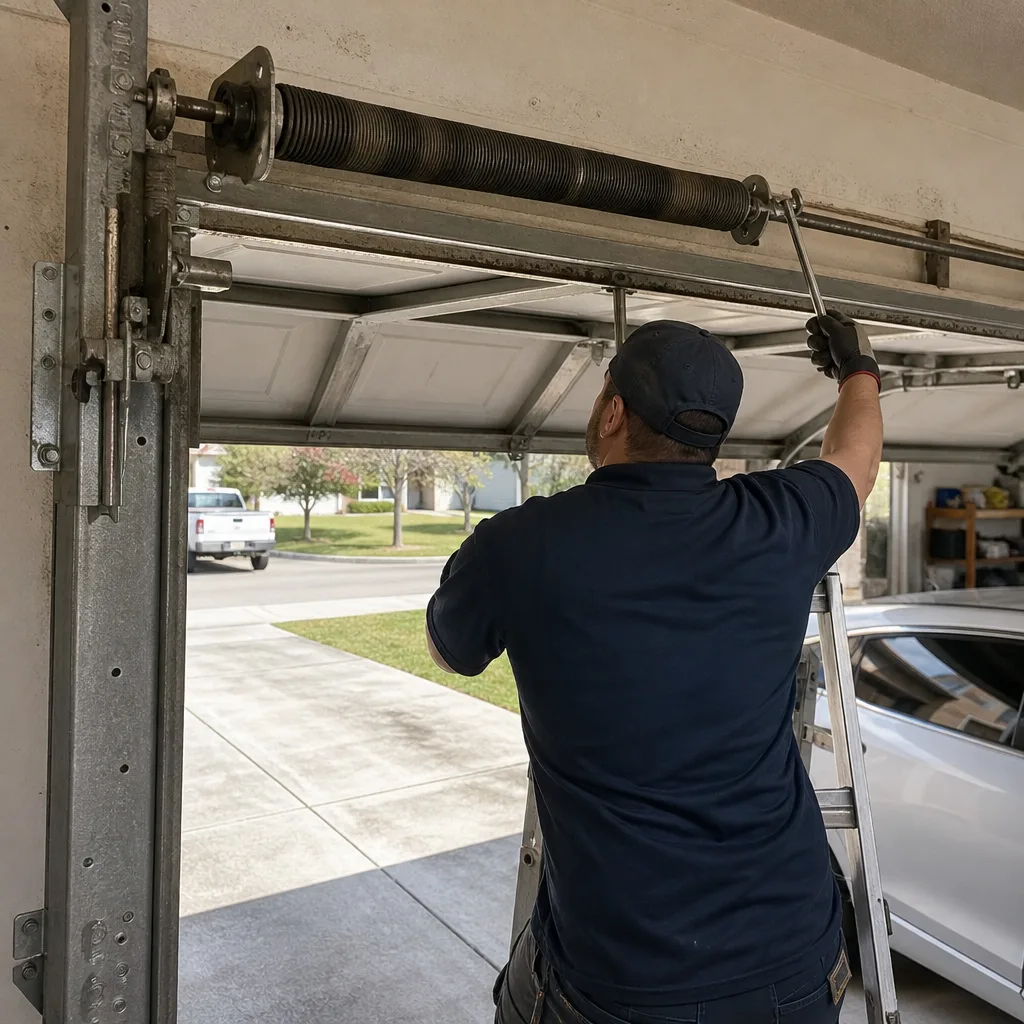 Before
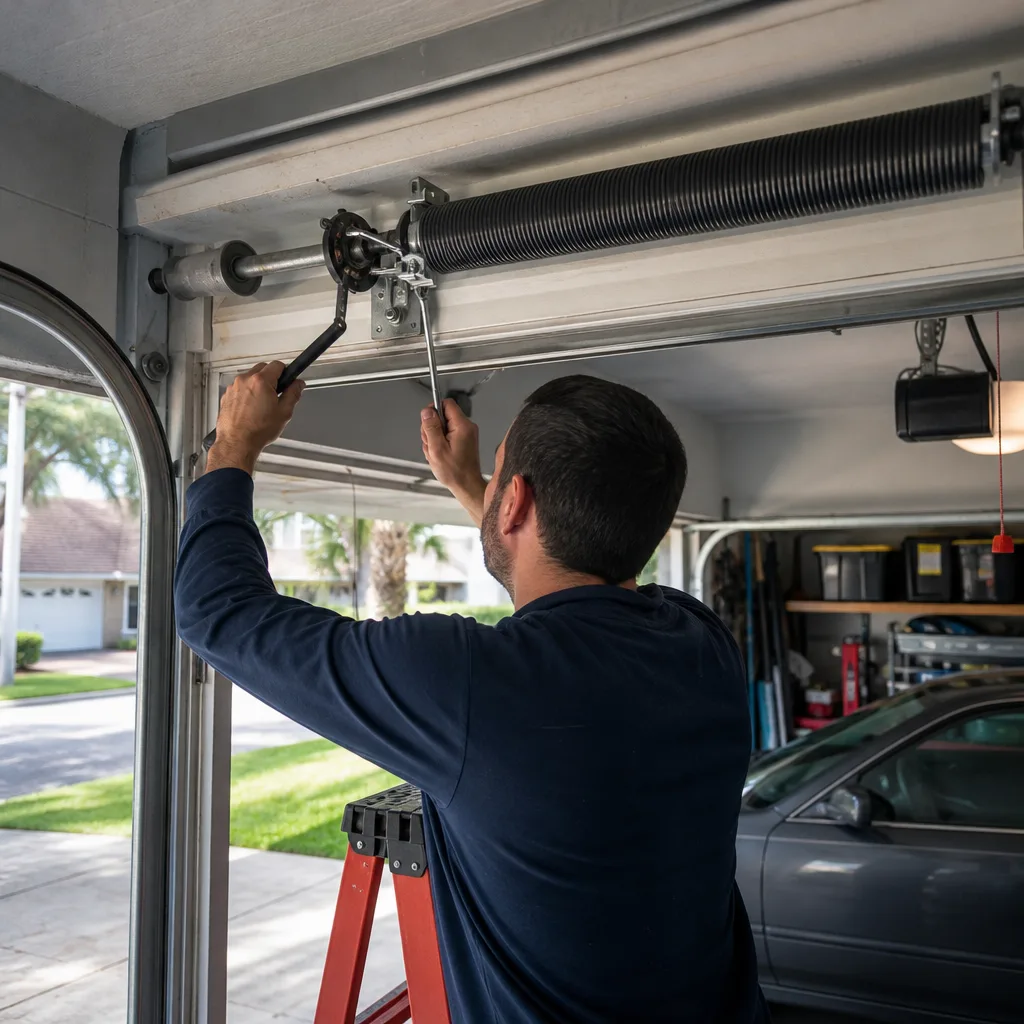 After
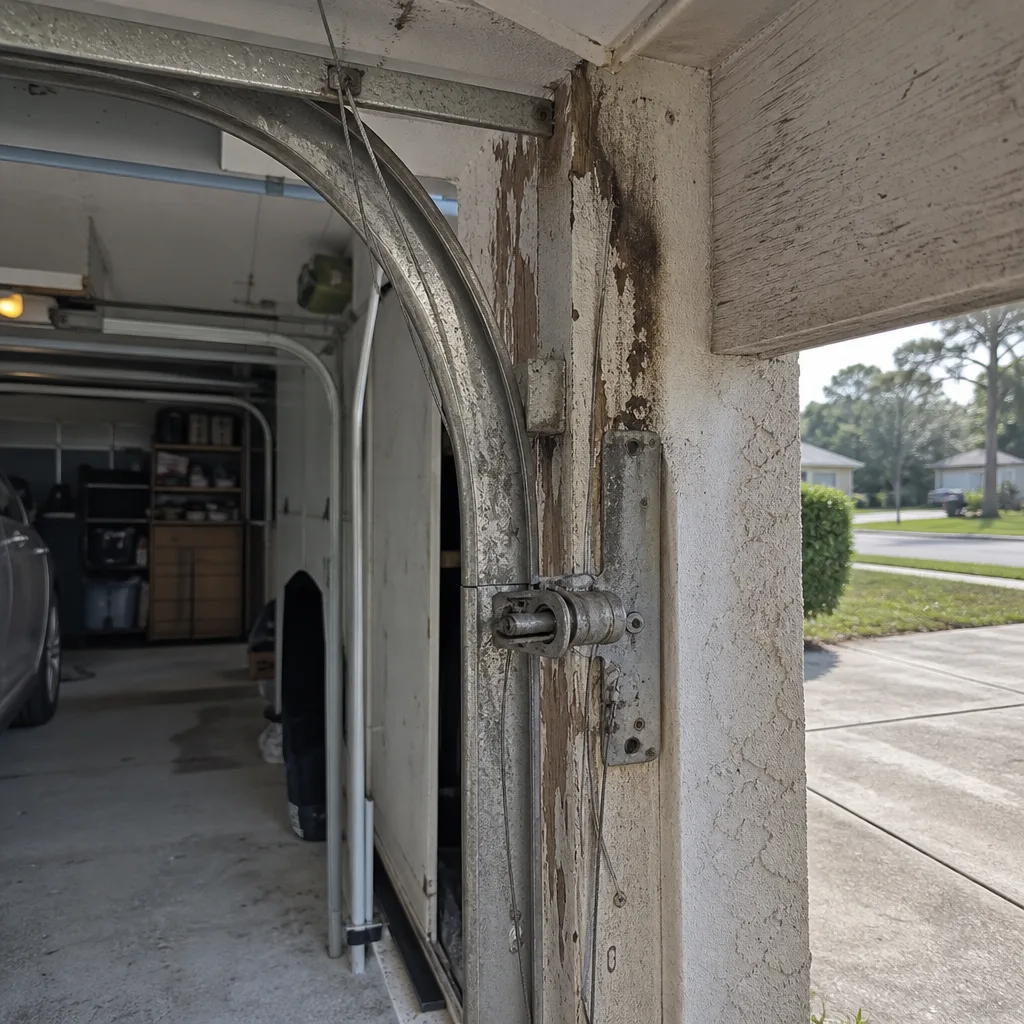 Before
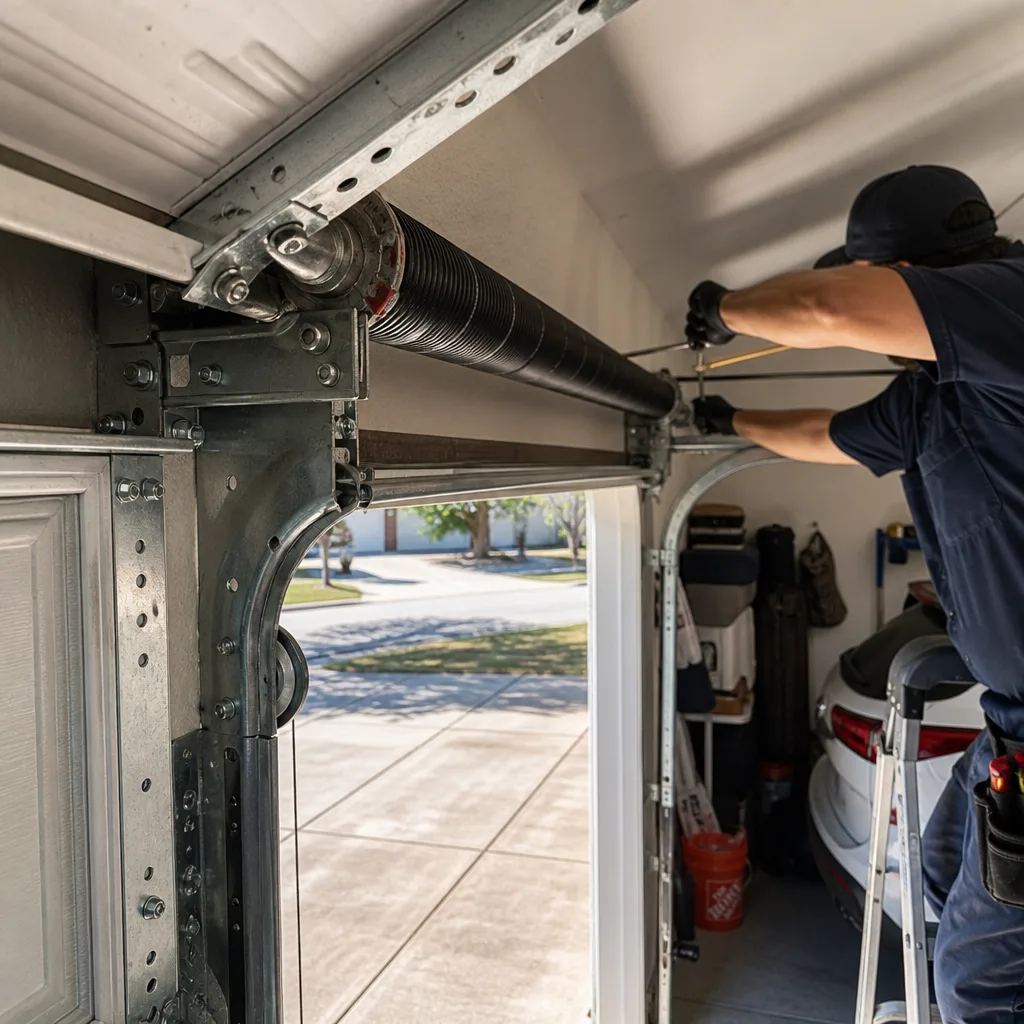 After
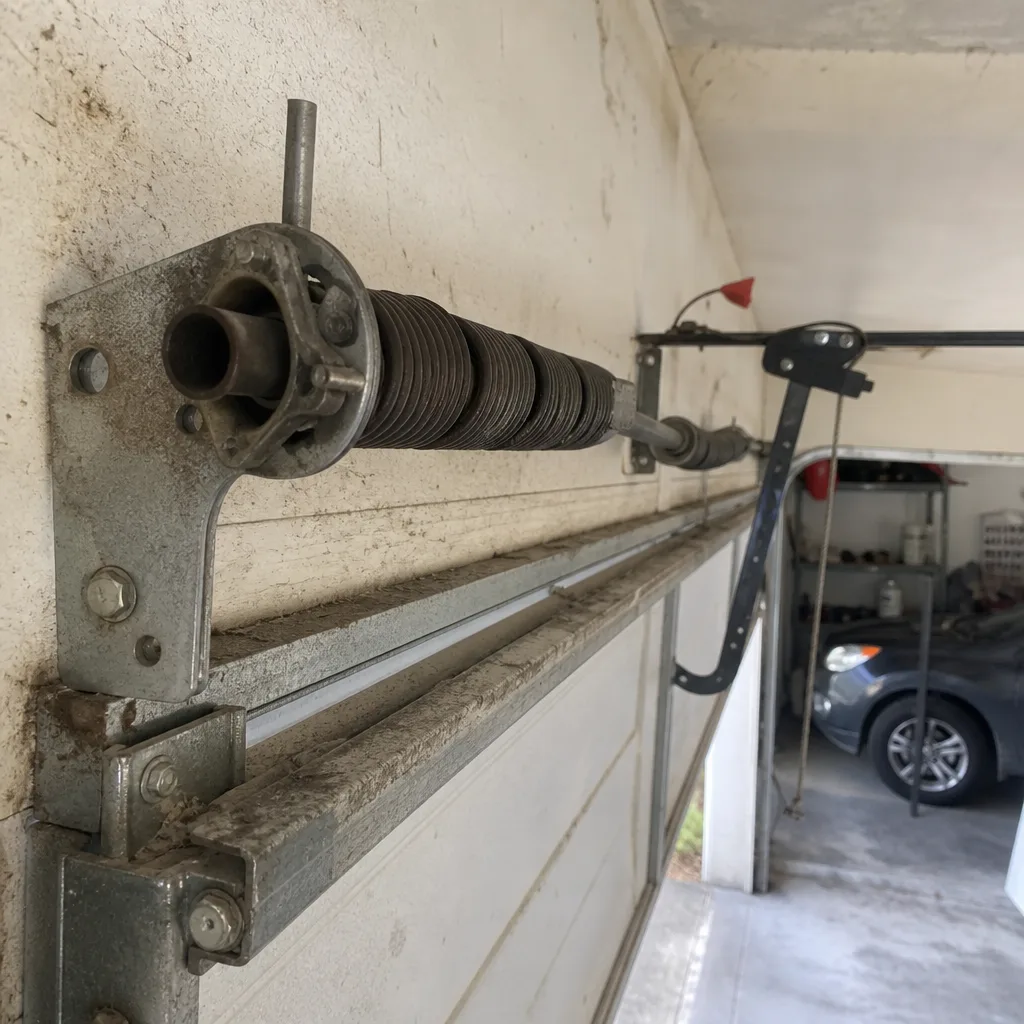 Before
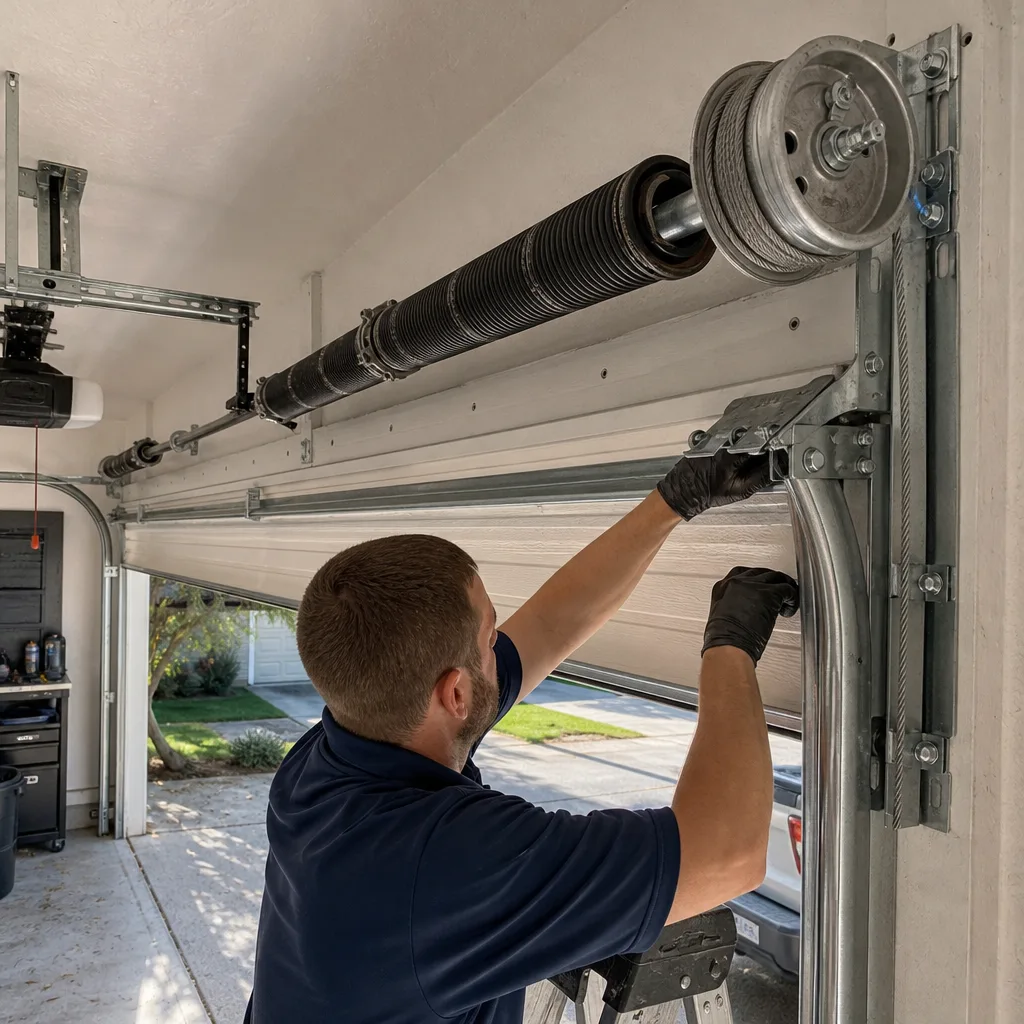 After
When to Call a Professional
Call a professional when the problem involves springs, cables, or a door that’s off its tracks. These components operate under tension that can cause serious injury. Call a professional when you’ve tried the safe fixes (sensor alignment, lubrication, remote batteries) and the problem persists. Call a professional when a repair you’ve already paid for comes back within 30 days; that’s a sign of a deeper misdiagnosis, and a different set of eyes is warranted. And call a professional when your door is older than 15 years and has never had a spring inspection; by that age, something is ready to fail. See How to Hire a Garage Door Contractor in Tampa: A Step-by-Step Guide to choose the right technician. Fieldstone Garage Door Repair offers free estimates in Tampa, and our technicians arrive familiar with LiftMaster, Chamberlain, Genie, Clopay, Amarr, Wayne Dalton, Craftsman, and Raynor systems. Call (855) 360-5925 to schedule a diagnosis.
Frequently Asked Questions
Most garage door repairs in Tampa range from $150 to $350 for common fixes like roller replacement, sensor realignment, or cable replacement. Spring replacement typically runs $200 to $400 for a single spring, and $300 to $600 for a pair, depending on the door’s weight and spring size. Call (855) 360-5925 for an exact quote; estimates are free and the price is agreed before work starts.
Yes, many repair calls can be completed the same day, especially when the problem is diagnosed clearly over the phone and the parts are common. Fieldstone Garage Door Repair prioritizes emergency repair calls for broken springs and snapped cables in Tampa. Call (855) 360-5925 to check current availability.
A door that opens halfway and stops usually has a broken or stretched extension spring on one side, causing the door to bind against its track and trigger the opener’s safety cutoff. It can also indicate an obstruction in the track or a travel limit that needs adjustment. A visual check of the springs will tell you which one it is.
Yes. Torsion springs fatigue internally before showing visible gaps or breaks. An annual balance test and visual inspection catches springs that are near the end of their cycle life before they snap. In Tampa’s heat and humidity, springs often fail before their rated cycle count, so annual inspection is especially important here.
The door is the physical panel system: springs, cables, rollers, tracks, and hinges. The opener is the motorized drive unit: logic board, motor, chain or belt, and safety sensors. A door problem makes the door heavy, crooked, or stuck. An opener problem affects whether the motor runs, how far it runs, and whether it responds to remotes. Fieldstone Garage Door Repair handles both, because a failure in one often stresses the other.
It depends on condition, not age alone. If the door is balanced, the tracks are straight, and the panels are intact, a new opener on an old door is a reasonable investment. If the door is rusted, warped, or heavy from moisture absorption, the opener will wear out early trying to move it. A technician who can assess both as one system will give you a straight answer on which to replace first. Call (855) 360-5925 for a free evaluation.
The Bottom Line
Your garage door tells you what’s wrong if you know how to listen. Grinding means rollers. A bang means a spring. A reversal means sensors or balance. Recognizing the sound and the movement pattern gets you to the right fix without replacing parts on a guess. In Tampa, where humidity and salt air accelerate specific failures, a symptom-first approach saves money by catching small problems before they become door replacements. Explore more guides & resources to keep your door running smoothly. From a stuck spring to a full replacement, the right fix the first time is the standard that keeps a garage door reliable for years. Built to last, that’s the Fieldstone standard.
Written by the team at Fieldstone Garage Door Repair, serving Tampa since 2013.