
Last updated October 31, 2026
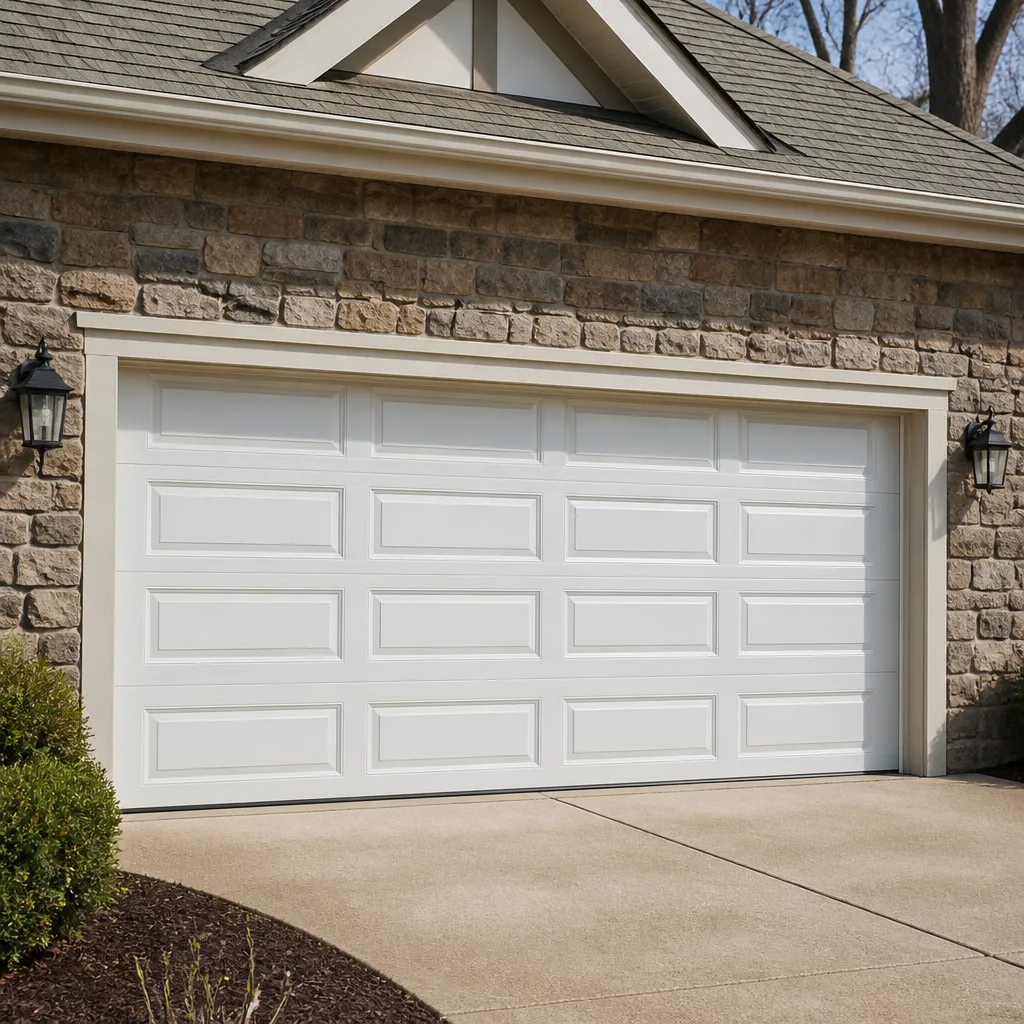 Raised-panel steel
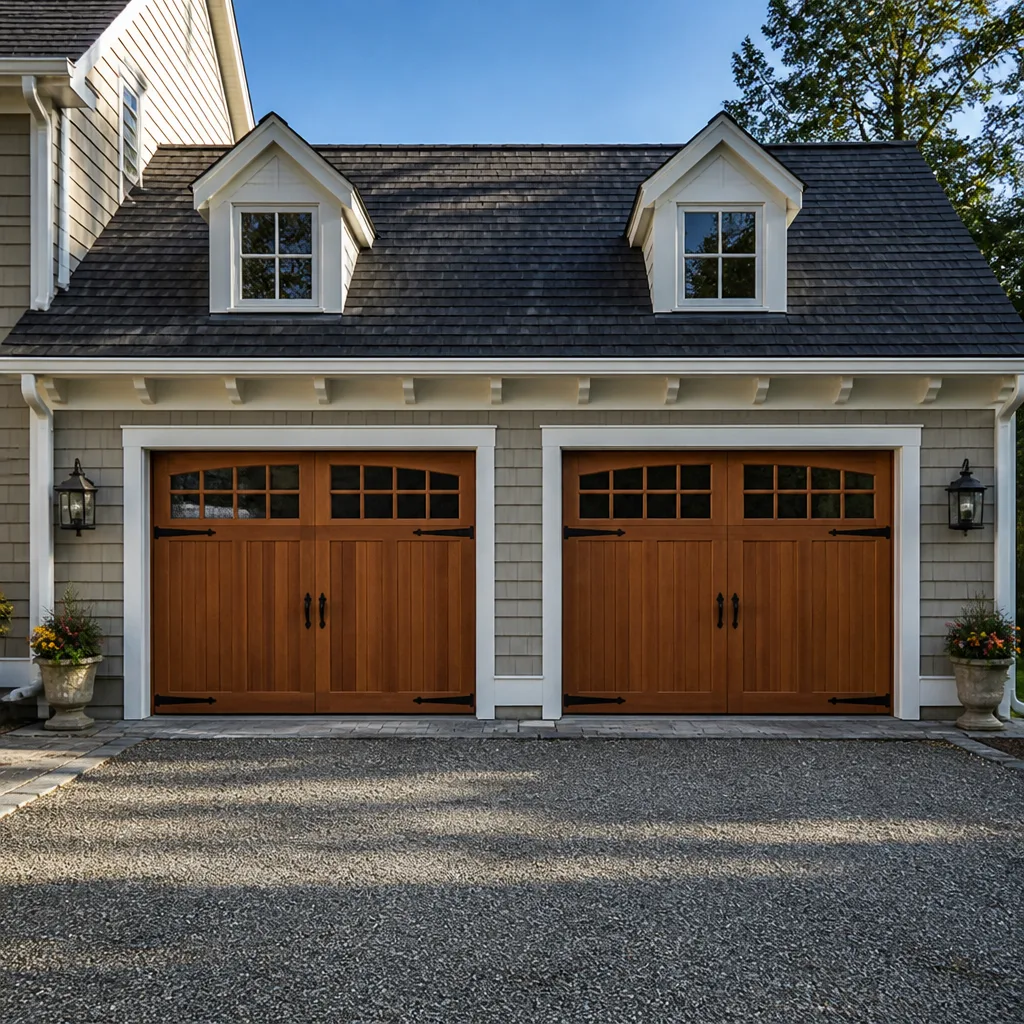 Carriage house
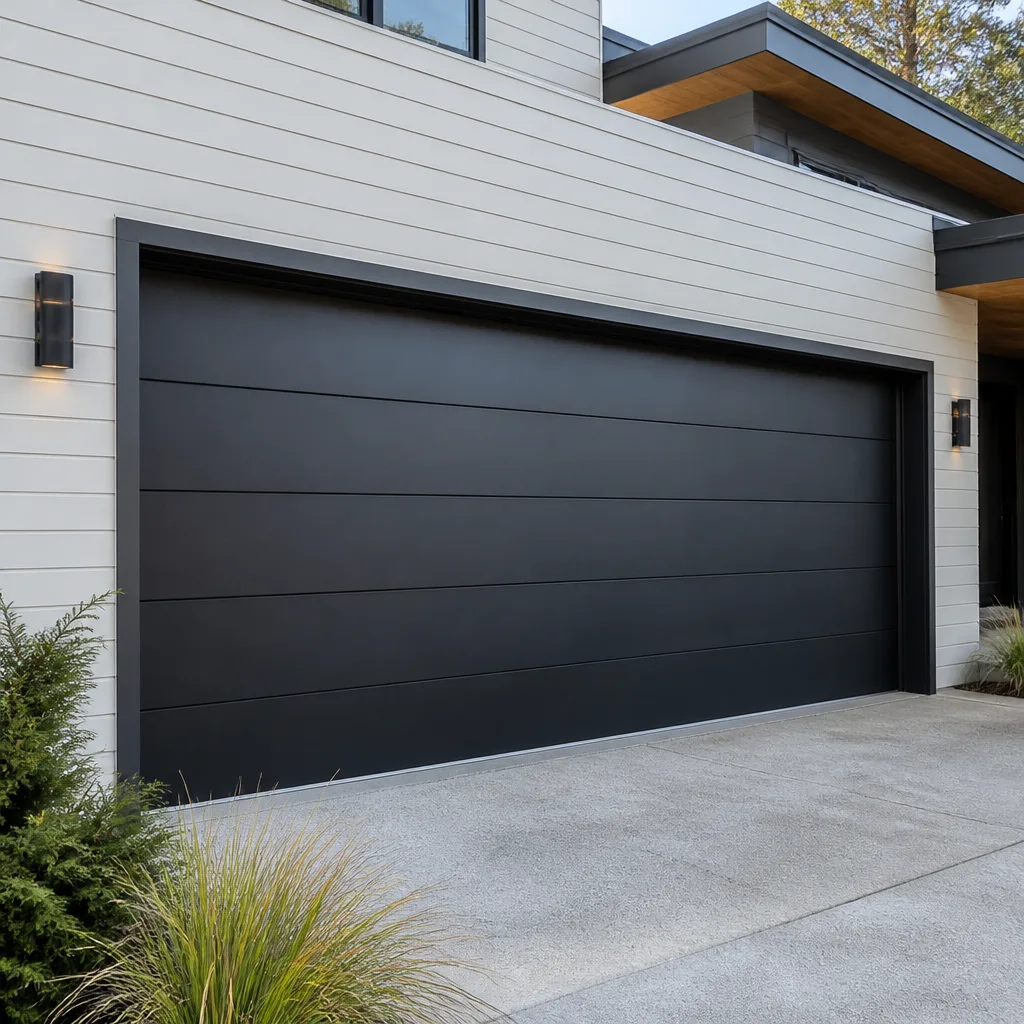 Modern flush
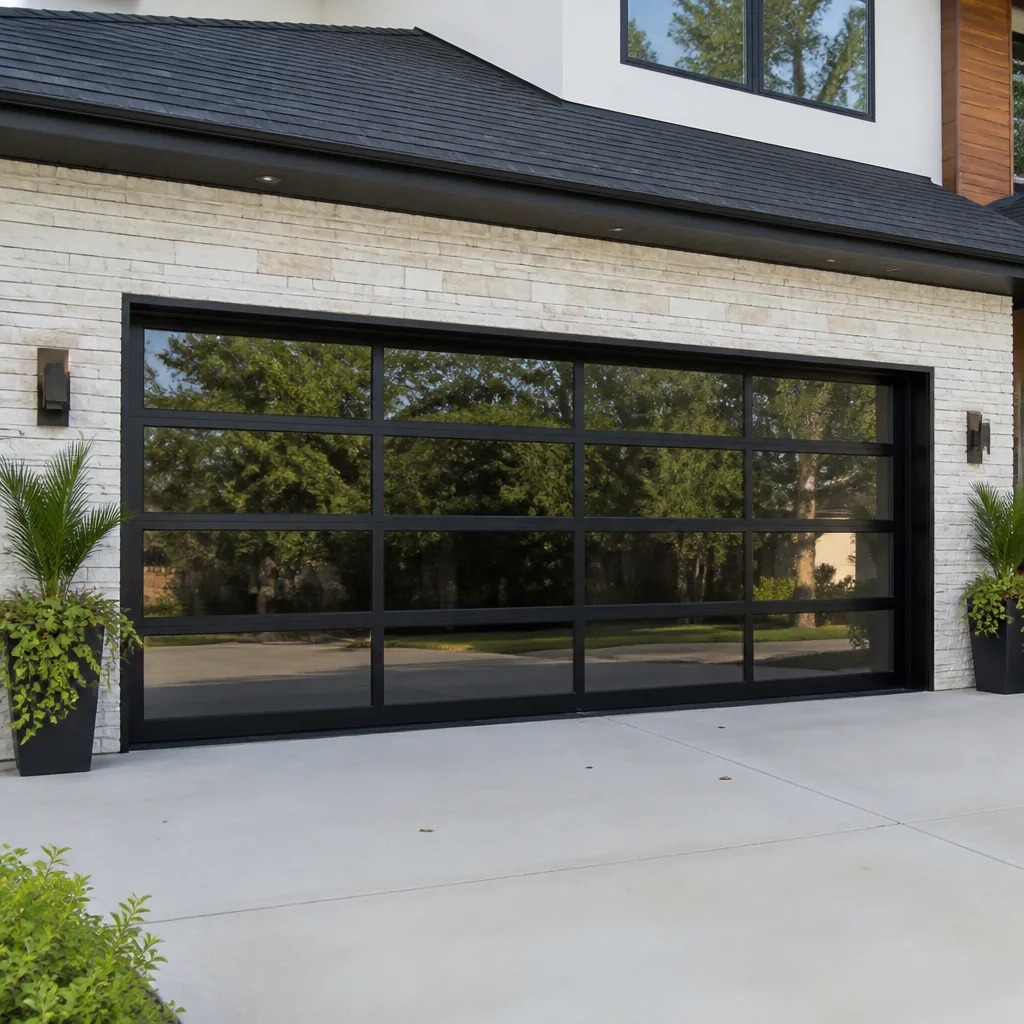 Full-view glass
 LiftMaster openers
 Chamberlain openers
Full 25-point door and opener safety check with every visit - springs, cables, rollers, tracks, and your LiftMaster or Chamberlain opener included
You get a price before we start. It does not change when the truck arrives.
Get your free estimateGarage Door Cost Breakdown: The Tampa Homeowner’s Reference for 2026
The same garage door spring replacement can cost $95 or $350 in Tampa depending on the week, the contractor type, and whether you called during hurricane season. None of that range reflects the actual cost of the part or the labor. It reflects timing, overhead, and how a given company prices urgency. This guide breaks down what Tampa garage door work actually costs in 2026, where the markup hides, and how to read a quote so you’re paying for the repair, not the rush.
Styles & brands we work with
Quick Answer
Garage door repair in Tampa typically costs $150 to $600 for most common jobs in 2026, with spring replacement running $180 to $340, opener repair $135 to $325, and full door installation ranging from $1,200 to $3,800 depending on material and size. The single biggest variable is when you call: June through November pricing runs 15 to 30 percent higher due to storm-season demand. Non-emergency work scheduled outside peak season and quoted upfront almost always lands at the lower end of any range.
Table of Contents
- The Tampa Market in 2026: Why Prices Here Don’t Match National Averages
- Cost by Job: The 10 Most Common Tampa Garage Door Repairs
- Parts Cost Transparency: What Springs, Cables, Rollers, and Openers Actually Cost
- The Storm-Season Premium: How Prices Shift Between June and November
- Why Tampa Labor Rates Differ From National Averages
- Repair-and-Maintain Versus Full Replacement: Total Cost of Ownership by Door Age
- How to Read a Tampa Garage Door Quote in 60 Seconds
- Common Mistakes to Avoid
- When to Call a Professional
- Frequently Asked Questions
- The Bottom Line
The Tampa Market in 2026: Why Prices Here Don’t Match National Averages
Tampa garage door pricing has its own logic. National cost guides will tell you a spring replacement averages $250. That number means almost nothing in Tampa, where three local factors compress and stretch pricing in ways a national average can’t capture.
First, Tampa’s housing stock skews older than the national median in the neighborhoods where garage door calls cluster. Seminole Heights, Palma Ceia, and the bungalow belts around West Tampa have doors installed in the 1980s and 1990s. Those systems use torsion springs that are past their rated cycle life, and the accompanying hardware – cables, drums, bearing plates – often needs replacement alongside the spring. A “simple” spring job in Hyde Park can legitimately be a spring-plus-cable-plus-bearing-plate job in one visit. That’s not upselling. That’s what a 30-year-old door requires.
Second, Tampa sits in a hurricane-prone zone. Building code requires wind-load-rated doors in most of Hillsborough County, and that requirement raises the floor on equipment pricing even for repair parts. A basic steel door panel that costs $220 in Ohio is $285 to $340 here because it has to meet the Florida Building Code’s wind-load standards. If a contractor’s bid looks high because they’re citing wind-rated components, that’s not padding. That’s code.
Third, the contractor mix matters. Tampa has national franchise chains, single-brand dealers, and independent multi-brand shops, and their cost structures are wildly different. A chain with a call center, a fleet lease program, and franchise royalties has to charge $380 for a spring replacement to break even. A two-truck local operation with low overhead can do the same job with the same parts for $225. Neither is gouging. They’re running different businesses.
That’s the core of this guide: once you know what drives each line item, you can benchmark any Tampa quote against the actual market instead of a generic national chart.
Cost by Job: The 10 Most Common Tampa Garage Door Repairs
These are the ranges we see on service calls across Tampa in 2026. Every range assumes a licensed, insured contractor using standard-grade parts. The low end assumes normal-season scheduling and no emergency dispatch. The high end accounts for storm-season timing, older doors with worn adjacent hardware, or premium parts.
1. Torsion Spring Replacement: $180 to $340
Single spring replacement on a standard 7-foot residential door runs $180 to $260. Double-spring systems (common on 16-foot doors in Carrollwood and Westchase) run $260 to $340. The spring itself costs $30 to $70 wholesale. You’re paying for labor, the risk involved in working with wound torsion, and the trip. This is the most common Tampa garage door repair, and it’s also the job where hurricane-season surcharges hit hardest, because springs fail without warning and homeowners can’t wait weeks for a repair.
2. Garage Door Opener Repair: $135 to $325
Opener repair ranges from a $135 logic board capacitor swap to a $325 gear-and-sprocket rebuild on a Chamberlain or LiftMaster unit. A dedicated garage door opener repair in Tampa will cost less than replacing the unit even at the top of the range. The parts inside an opener – drive gears, travel modules, receiver boards – are cheap as individual components. What you’re paying for is diagnosis time and the technician’s familiarity with your specific opener brand.
3. Cable Replacement: $150 to $240
Cables snap when a spring breaks or when rust has been eating at the strands for years. The cable itself costs $15 to $25. The rest is labor and, importantly, the technician’s judgment about why the cable failed. If the spring is also worn, replacing the cable without the spring means a repeat visit in six months. A competent shop will tell you that before starting the work.
4. Roller Replacement: $120 to $220
Nylon rollers cost $8 to $14 each, and a 10-roller door should be replaced in one pass. The upper end of this range includes hinge condition checks and lubrication. If your door sounds like it’s dragging gravel through the tracks, this is the job. It’s also the single best preventive maintenance dollar you can spend on an older Tampa door.
5. Panel Replacement: $250 to $700 per panel
Dented panels from storm debris or a car bumper are common in Tampa. A single steel panel costs $220 to $450 depending on width and wind-rating, plus labor. The caveat: if your door is more than 12 years old, the replacement panel won’t match the faded color of the adjacent panels, and you may be looking at a full door replacement as the honest recommendation. This is where garage door repair in Tampa intersects with replacement, and a straight-shooting shop will show you both numbers.
6. Track Alignment and Adjustment: $125 to $200
A door that binds, shudders, or jumps off its rollers usually has a track alignment issue. This is a labor-only job: no parts, just adjustment, shim work, and rebalancing. The wide range reflects whether the job takes 45 minutes or two hours.
7. Garage Door Opener Replacement: $450 to $850 installed
A new opener, installed, runs $450 for a chain-drive Chamberlain or Craftsman up to $850 for a belt-drive LiftMaster with battery backup. The unit itself is $200 to $450 wholesale. Note that belt-drive openers cost more but matter specifically in Tampa homes where the garage is beneath a bedroom – which is most two-story houses in New Tampa and South Tampa.
8. Full Door Replacement (Single Bay): $1,200 to $2,800
Single-car door replacement runs $1,200 for a basic non-insulated steel door up to $2,800 for a wind-rated insulated steel door with decorative windows. The spread reflects material grade, insulation value, and wind-load rating. In Tampa, the wind-rating is not optional, so budget toward the middle of this range, not the bottom.
9. Full Door Replacement (Double Bay): $1,800 to $3,800
A double door pays a premium because the panel width requires heavier gauge steel and stronger sections to resist sag. Expect $1,800 to $2,400 for a standard insulated steel double door, up to $3,800 for a heavy-gauge wind-rated model on a home within three miles of the bay.
10. Emergency or After-Hours Dispatch: Add $75 to $150
This is the single biggest controllable price variable. Every Tampa shop charges an emergency premium for nights, weekends, and holidays. The premium is $75 to $150 on top of the normal service call. If the door is stuck closed and you can’t get your car out at 6 a.m., that’s an emergency and worth it. If the door is stuck open and the garage is empty, schedule a normal-hour appointment and save yourself a C-note.
Here’s the key takeaway: the highest prices in each range above are almost never the result of a shop inflating its parts markup. They’re the result of timing, door age, and code requirements. Garage door installation in Tampa runs higher than national guides because wind-rated doors and post-2023 code enforcement are real line items, not sales tactics.
Parts Cost Transparency: What Springs, Cables, Rollers, and Openers Actually Cost
When you see a $285 spring replacement on an invoice, it’s fair to wonder what you’re actually buying. Here’s what the parts cost at wholesale, so you can evaluate the markup with clear eyes.
- Torsion spring (single): $30 to $70 wholesale. The markup covers installation torque, cycle-life rating, and the reality that handling wound torsion is the most dangerous part of any garage door job.
- Extension spring (pair): $35 to $60 wholesale. Common on older doors in Temple Terrace and Riverview, extension springs are cheaper than torsion but fail more frequently.
- Lift cable (pair): $25 to $45 wholesale. Aircraft-grade stainless runs higher but resists the salt air that eats galvanized cable in South Tampa and Davis Islands within a few years.
- Roller (nylon, 10-pack): $70 to $120 wholesale for the set. Steel-bearing nylon rollers run twice the cost of plastic, and on a Tampa door that sees daily use, nylon is the only choice that lasts.
- Opener logic board: $60 to $120 wholesale depending on brand. Chamberlain, LiftMaster, and Genie boards are surprisingly interchangeable across model years, which is why brand fluency matters.
- Opener drive gear kit: $25 to $45 wholesale. The gear strips on chain-drive openers every five to eight years of daily use. It’s a $25 part and about an hour of steady labor.
- Complete opener unit: $200 to $450 wholesale for a belt-drive model with basic controls. The installed price adds labor, programming, and sometimes bracket replacement.
What is a fair markup? The honest answer is that you’re not paying for the part. You’re paying for the truck that showed up, the insurance policy behind it, the tech’s training, and the hour it took to drive to your house and back. A service company charging $275 for a spring replacement is making about $100 of margin after labor, overhead, and the part. That’s not greed. That’s what it costs to stay in business with a real shop, real inventory, and a real warranty.
Where you should be suspicious is when a company charges you the after-hours fee for a normal-hour call, or when a single-brand dealer tells you that your Wayne Dalton or Raynor spring can only be replaced with a “factory” part at triple the normal cost. There is no factory-only spring. Springs are springs. A shop that works across brands – LiftMaster, Chamberlain, Genie, Clopay, Amarr, Wayne Dalton, Craftsman, Raynor – can source the right part without brand-gate pricing.
The Storm-Season Premium: How Prices Shift Between June and November
If there’s a single insight in this guide that will save you real money, it’s this: garage door pricing in Tampa is seasonal, and the season is hurricane season.
From June through November, three things happen simultaneously. First, demand spikes because doors that have been creaking for months finally break, and homeowners suddenly need them fixed, because a working garage door is a line of defense against tropical storm force winds. Second, technicians are stretched thin across more calls, which means companies prioritize and price accordingly. Third, the same parts cost more from local distributors, because they’re restocking continuously rather than on a normal cycle.
The net effect: identical jobs cost 15 to 30 percent more between June and November than they do between December and May. A spring replacement that runs $195 in February can run $260 in September. An opener replacement that runs $500 in March can run $625 in August. The work is the same. The part is the same. The timing is different.
Which jobs can you reasonably schedule outside peak demand?
- Roller replacement: This is pure preventive maintenance. If your door is noisy but functioning, schedule it for January or February. You’ll save $30 to $50 and get a time slot that fits your day instead of a two-hour window in the middle of a storm.
- Cable replacement on a functional door: If a cable is frayed but the door still operates, you have a window. Use it. Don’t wait for the cable to snap on August 10th at 3 p.m.
- Opener replacement: If your opener is aging but still runs, replacing it in the dry season avoids the premium and gives you time to choose the right unit instead of grabbing whatever is in stock.
- Full door replacement: This is a measured, scheduled job anyway. You’re never getting a same-day door installation, so there’s no emergency premium to worry about. But lead times stretch by two to three weeks during storm season, so ordering in May for a July install is smarter than calling in July and waiting until September.
What shouldn’t wait: a broken torsion spring or a snapped cable on a door that’s stuck in the down position. That’s a safety issue and a daily-life issue, and the extra $75 to $100 you pay during storm season is cheaper than leaving your house exposed for a week. Use your judgment, but understand what you’re paying for.
Why Tampa Labor Rates Differ From National Averages
National cost guides publish labor rates for garage door work that don’t reflect what it costs to run a licensed service business in Hillsborough County. Tampa labor rates for garage door technicians run $75 to $125 per hour, compared to a national average of $55 to $85.
Three local drivers explain the gap. Insurance costs are the biggest single line: a garage door company carrying proper liability coverage in a storm-prone Florida county pays significantly more than the same company in Kansas or Ohio. Workers’ comp is the second driver; Florida’s construction and service-trade rates have climbed steadily since 2022, and that cost lands in your hourly rate. Third is the simple truth that experienced garage door technicians in Tampa can choose between working for a shop and running their own truck, so the good ones command higher wages.
How do you benchmark a Tampa quote against the local market rather than a national average? Here’s a quick three-step check:
- Know the parts cost. Use the wholesale ranges above. A shop that charges you $300 for a spring and says the spring costs $200 is marking it up 250 percent. That’s the wrong shop.
- Know the labor window. Most common repairs take 45 minutes to two hours on site. Add an hour of drive time. At $100 an hour, that’s $150 to $300 of labor. A quote that lands in that range is honest.
- Know the season. If you’re getting a quote in September for something you could schedule in February, you’re paying the premium. That’s not a rip-off. That’s the market.
The difference between a good Tampa shop and a bad one is rarely the hourly rate. It’s whether they diagnose the whole system or just the symptom, and whether they’ll tell you that a cable failure is really a spring problem waiting to become a bigger one. From a stuck spring to a full replacement, the right fix the first time costs less than two wrong fixes.
Repair-and-Maintain Versus Full Replacement: Total Cost of Ownership by Door Age
Every Tampa homeowner with a garage door older than about 12 years eventually faces the same question: keep patching it, or start over. Here’s the math by age range.
Door Age 0 to 8 Years: Repair. Always.
A door in this range has most of its torsion spring cycles left, the panels are structurally sound, and the opener is likely on its first gear kit. Repair costs during these years are normal wear: a roller set at year five, a logic board at year six. Total repair spend runs $300 to $600 over the full window. Replacing a healthy 6-year-old door makes no financial sense unless you’re looking for a different material or an aesthetic upgrade, and that’s a want, not a need.
Door Age 8 to 15 Years: Repair, With Judgment
This is the decision zone. At year ten, you’ve likely replaced the springs once already, the rollers are on their second set, and the panels are starting to show rust along the bottom edge, especially in Davis Islands or Bayshore-area homes where salt air is relentless. Annual repair spend averages $150 to $300 during this window. If a single year requires more than $600 in repairs, on a door you’d eventually replace with a similar model, start comparing replacement quotes. A $1,800 door spread over 15 years costs you $120 a year. The math flips when repair costs exceed the amortized cost of a new door.
Door Age 15+ Years: The Math Usually Says Replace
Past 15 years, especially on doors installed before the 2010 Florida Building Code updates, you’re usually looking at a non-wind-rated door with steel that’s rusting from the inside. The springs are living on borrowed cycles. The tracks are pitted. The opener is a decade into its lifespan. A door this age that needs a spring-and-cable job ($300), followed by a panel replacement ($450) six months later, and then an opener ($600) next year, costs you $1,350 in two years. A new wind-rated installed door costs $1,800 to $2,500 and resets every component at once. Do the arithmetic on your own door, but be honest with yourself about where the aging curve is.
One more variable specific to Tampa: insurance. Some Florida insurers are beginning to ask about garage door age and wind-rating on renewal applications. A 20-year-old non-rated door can be a small flag. A new wind-rated door can be a small credit. That’s a modest factor, but it shifts the total cost of ownership math a little further toward replacement on very old doors.
How to Read a Tampa Garage Door Quote in 60 Seconds
A fair garage door quote tells you exactly what you’re paying for. A murky one bundles everything into one number and hopes you won’t ask questions. Here’s how to read any Tampa quote in about a minute.
- Look for line items, not a lump sum. A quote that says “spring replacement: $290” without separating parts and labor is not automatically dishonest, but it’s incomplete. Ask for the split. A shop that hesitates to give it to you is one to avoid.
- Check for the emergency fee line, or the absence of it. If you’re scheduling a normal-hour appointment and the quote includes a $100 “dispatch fee” or “expedited service fee,” that’s the emergency surcharge dressed up. Ask why it’s there.
- Confirm the price is quoted and agreed before any work starts. This should be explicit. A shop that gives you a range and says “we’ll see once we get in there” without a ceiling is telling you the price can go up. That’s not always dishonest – some doors genuinely hide problems – but a real shop will show you the upper bound and get your approval before exceeding it.
- Ask about the brand of parts going in. A shop that can’t tell you whether the spring is a standard torsion spring rated for 10,000 cycles or 20,000 cycles is selling you the cheap option without saying so. Cycle-rated springs cost $10 to $20 more and last twice as long.
- Verify the warranty is written on the invoice. If the warranty is verbal, it doesn’t exist. A good Tampa shop writes “parts and labor warranted for 1 year” on the paper. If it’s not there, ask for it.
We see hundreds of quotes come through our shop, and the pattern is consistent: the cheapest quote is rarely honest, and the most expensive is rarely necessary. The fair quote lands in the middle, has line items, and isn’t afraid of questions. Built to last, that’s the Fieldstone standard, and it applies to how the paperwork looks as much as how the repair holds up.
Common Mistakes to Avoid
- Calling a handyman for torsion spring work. Torsion springs are wound under hundreds of pounds of torque, and the failure mode is not a slow leak; it’s a bar spinning through a jaw. This is the one repair where a generalist handyman is genuinely dangerous. Hire a garage door specialist, even on a tight budget.
- Replacing one roller instead of the full set. A single worn roller is a symptom. The other nine are the same age, same material, same wear pattern. One roller costs $20 installed. Ten costs $150. The $20 one saves money for about three months until the next one fails.
- Waiting until hurricane season to call about a noisy door. That creak you’ve been hearing since March is a bearing wearing out. It will finish wearing out in August, and you will pay the August price to fix it. Schedule the fix in the dry season and skip the premium.
- Assuming a national cost guide reflects Tampa pricing. National averages don’t include Florida wind-rating requirements, Tampa insurance costs, or the storm-season markup. Benchmark against local ranges, not a national chart.
- Accepting a verbal quote for anything beyond a basic service call. If you can’t see the number on paper or on a screen, you don’t have a quote. Get it written, with the line items, before work begins.
- Choosing a contractor based on the first number they quote without asking what it includes. A $150 spring replacement rarely includes the trip fee, the part, and the labor. The final invoice lands at $250. A $275 quote that’s all-in is cheaper than a $150 bait number.
- Replacing the door when the opener is the problem. A dead opener on a healthy 8-year-old door is a $500 opener replacement, not a $2,000 door replacement. Some companies will sell you the bigger job because it’s more revenue. Your opener is part of the system, and a shop that treats it that way will fix the actual problem first.
When to Call a Professional
You should call a garage door professional any time the repair involves torsion springs, cables under tension, or a door that has come off its tracks with the springs still wound. Those three scenarios account for the majority of serious garage door injuries every year, and none of them is a DIY job. You should also call a pro when the door makes a sharp cracking sound and stops mid-cycle, when the opener runs but the door doesn’t move, or when you can see a visible gap in a spring. These are mechanical failures, not maintenance items, and they don’t fix themselves.
For opener problems, the line is softer: a remote that needs reprogramming is something you can troubleshoot yourself. A door that reverses on the way down, or an opener that hums without moving, usually means a logic board or drive gear failure, and that requires opening the unit. Let someone who works on the electronics handle it. Fieldstone Garage Door Repair offers free estimates across Tampa. Call (855) 360-5925, and you’ll get a straight answer and a written price before any work begins.
Frequently Asked Questions
A single torsion spring replacement in Tampa runs $180 to $260 for a standard 7-foot door, and $260 to $340 for a double-spring system on a 16-foot door. The range reflects the number of springs, the cycle-life rating of the spring, and whether you’re scheduling during storm season. Call (855) 360-5925 for an exact quote before any work starts.
Yes, most spring, cable, and roller repairs can be completed the same day, and a repair truck carrying standard replacement parts can typically handle the job in one visit. Same-day service depends on call volume and time of year, so call in the morning if your door is stuck and you need it addressed that afternoon. Garage door repair in Tampa at Fieldstone is scheduled around your availability, not the other way around.
A full single-bay door installation ranges from $1,200 for a basic non-insulated steel model to $2,800 for a wind-rated insulated door with windows. Double-bay doors run $1,800 to $3,800. Tampa building code requires wind-load-rated doors in most of Hillsborough County, which is why the low end is higher than national guides suggest. Ask for a written, itemized quote and a firm installation date before committing.
Demand spikes from June through November as homeowners address failing doors before and during storm season, which drives up both labor and parts costs. The result is a 15 to 30 percent premium on most repairs during those months. If your door is functional but noisy or aging, scheduling the work in the dry season avoids the markup entirely.
The price quoted over the phone is the price you should pay unless the technician discovers a separate failure that couldn’t be seen from a description. A reputable Tampa shop will show you the written quote on arrival, walk you through what they’re seeing, and get your approval on any additional work before starting. The price is agreed before any work begins, not after.
Yes, a properly stocked garage door service truck carries torsion and extension springs, cables, rollers, hinges, and common opener parts for LiftMaster, Chamberlain, Genie, Clopay, Amarr, Wayne Dalton, Craftsman, and Raynor equipment. That’s the difference between a company that treats opener repair as a specialty and one that considers it an afterthought. If the needed part isn’t on the truck, a specialist will tell you that upfront and schedule a return visit rather than improvising.
The Bottom Line
The Tampa garage door market in 2026 is predictable once you understand its levers: seasonality, parts costs, labor rates, and door age. A fair spring replacement ranges from $180 to $340. A fair opener repair runs $135 to $325. A fair full-door replacement starts around $1,200 and climbs with material, insulation, and wind-rating. The premium you pay during hurricane season is a market reality, not a scam, but the same work in February costs less, so schedule preventive maintenance in the dry season. Get every quote in writing, with line items, before work starts. Ask questions. And when the answer matters, call someone who works on all eight major brands and knows the difference between a door problem and an opener problem. Call (855) 360-5925 or visit the Fieldstone Garage Door Repair home page for a free estimate in Tampa.
Written by the team at Fieldstone Garage Door Repair, serving Tampa since 2013.
See the difference
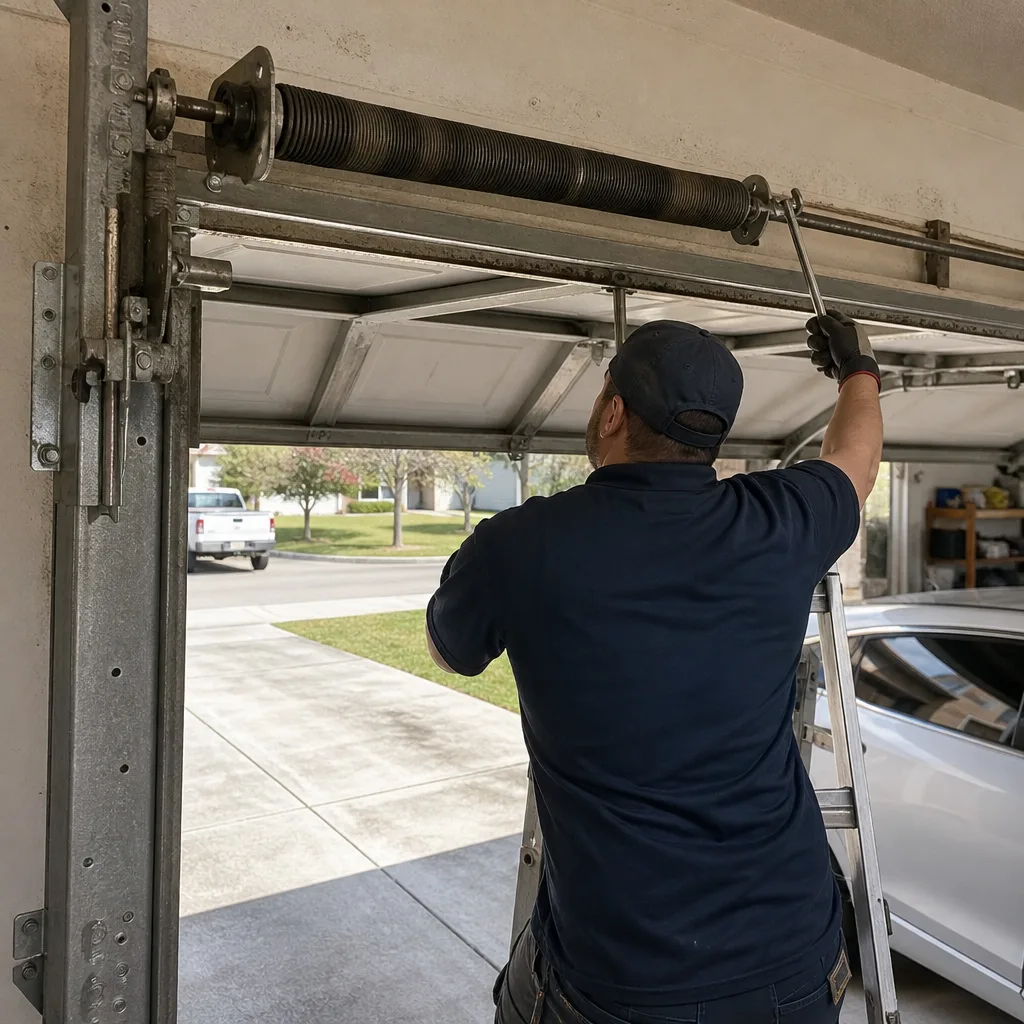 Before
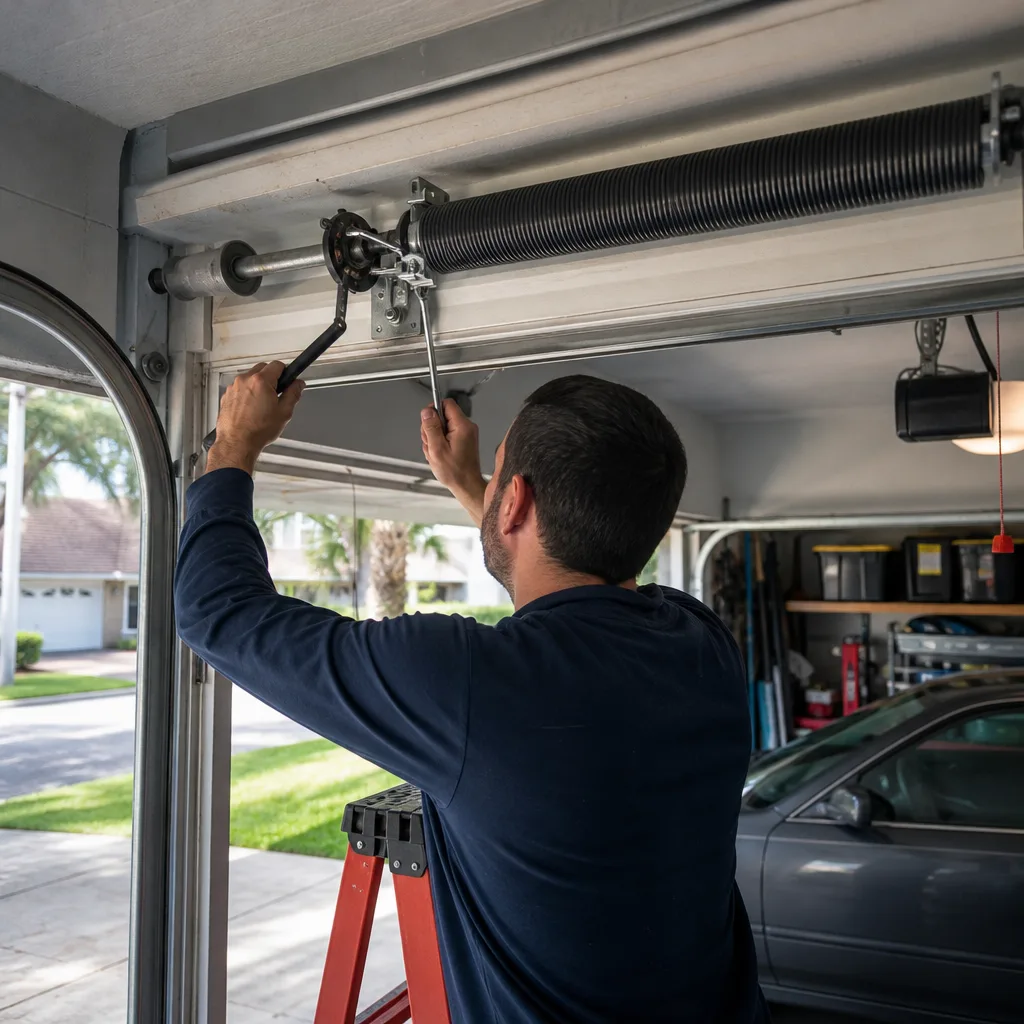 After
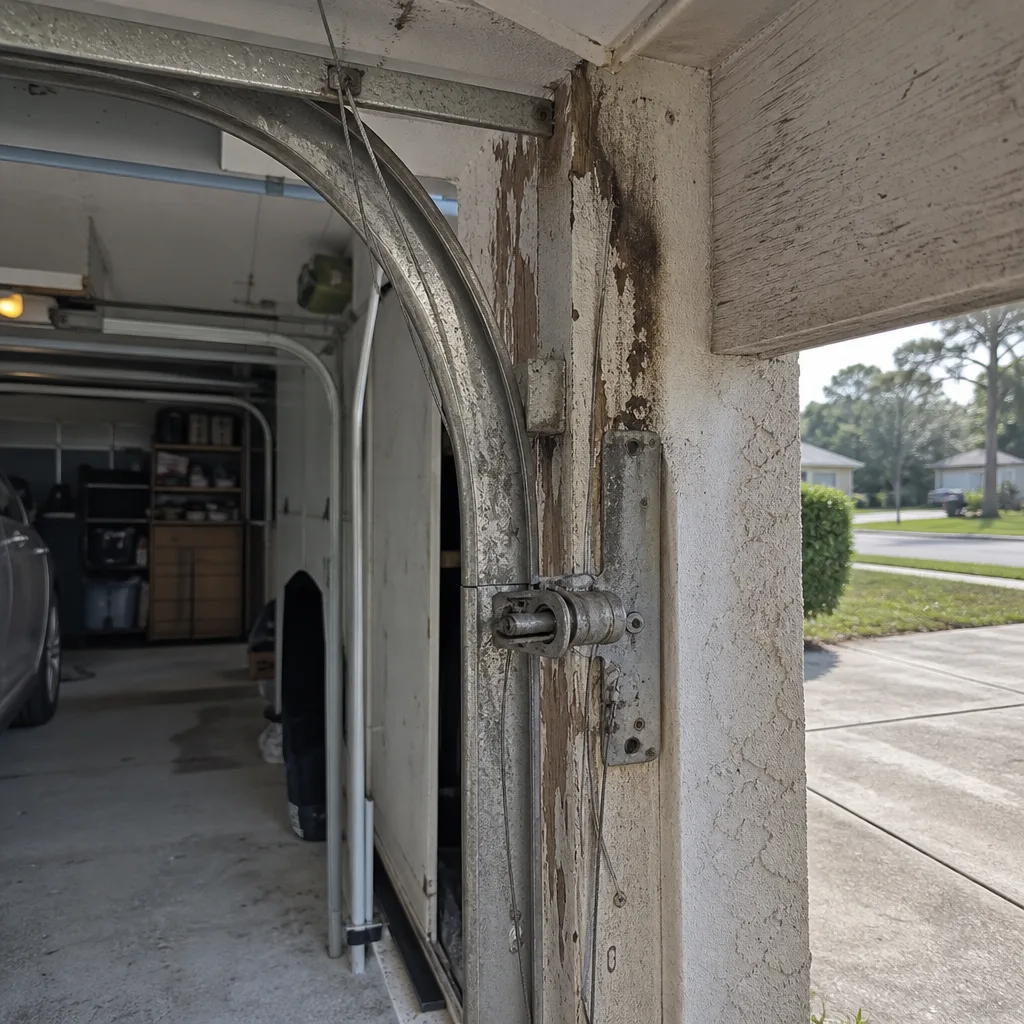 Before
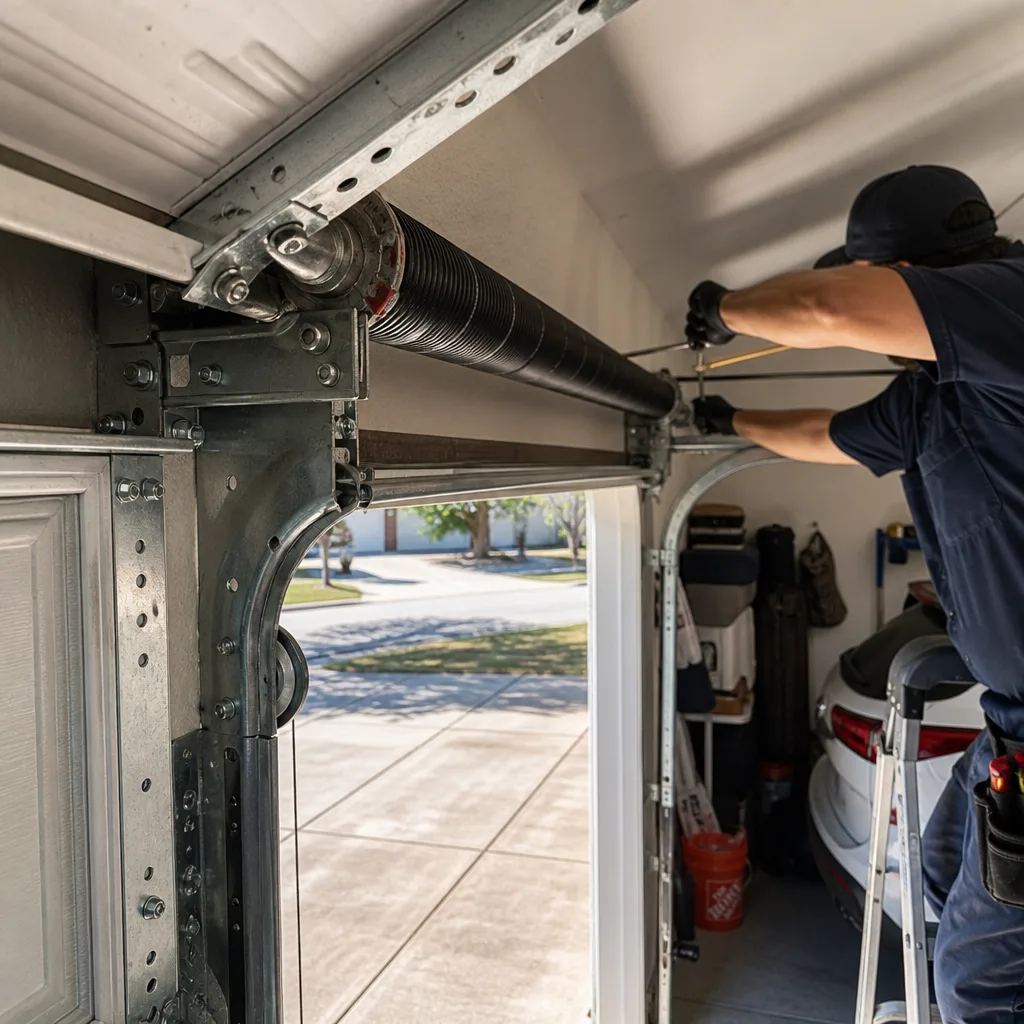 After
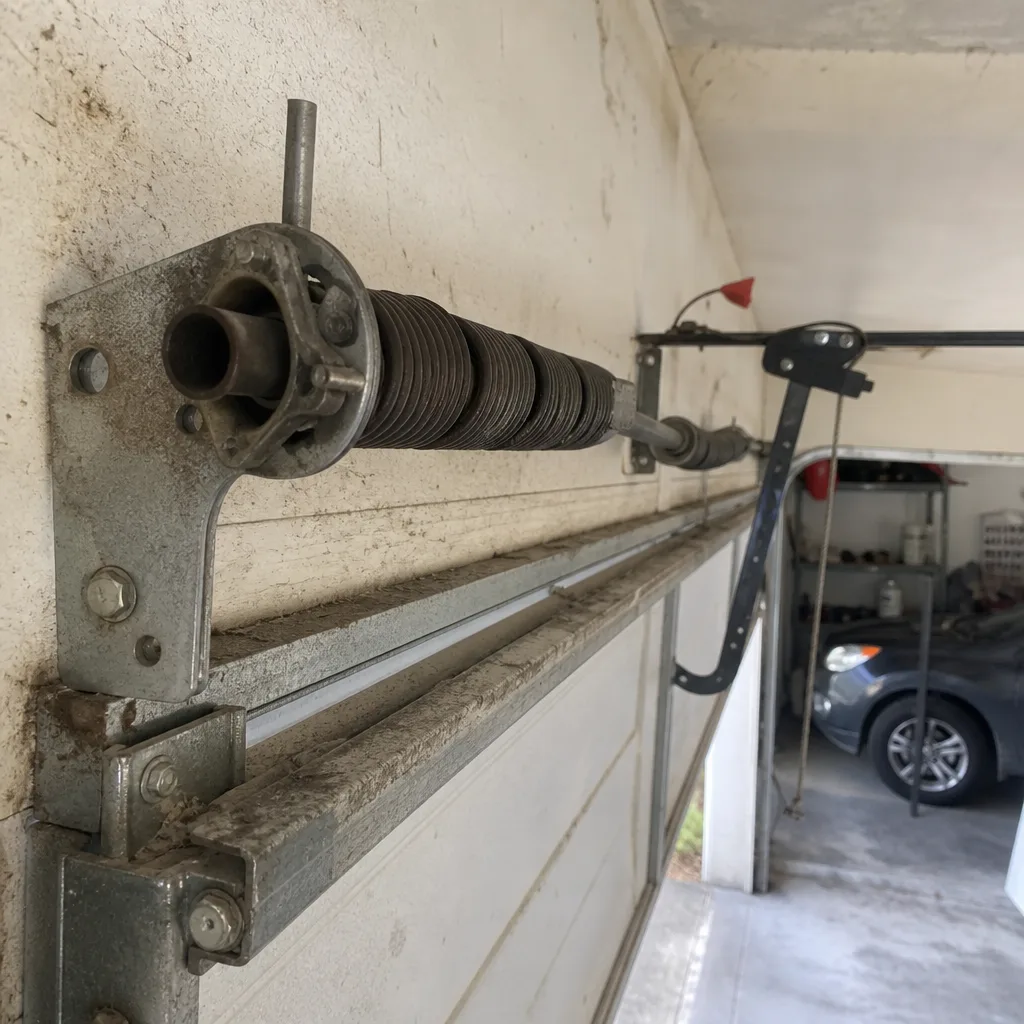 Before
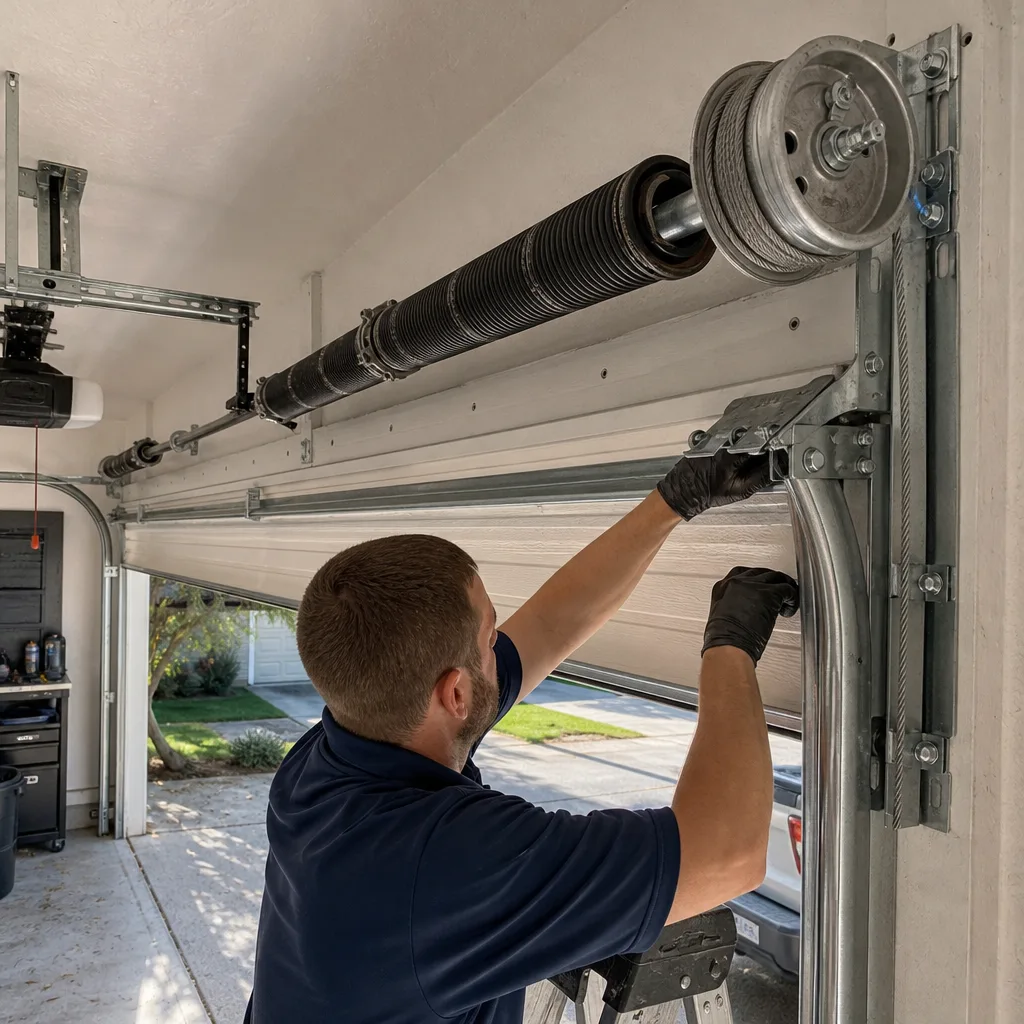 After